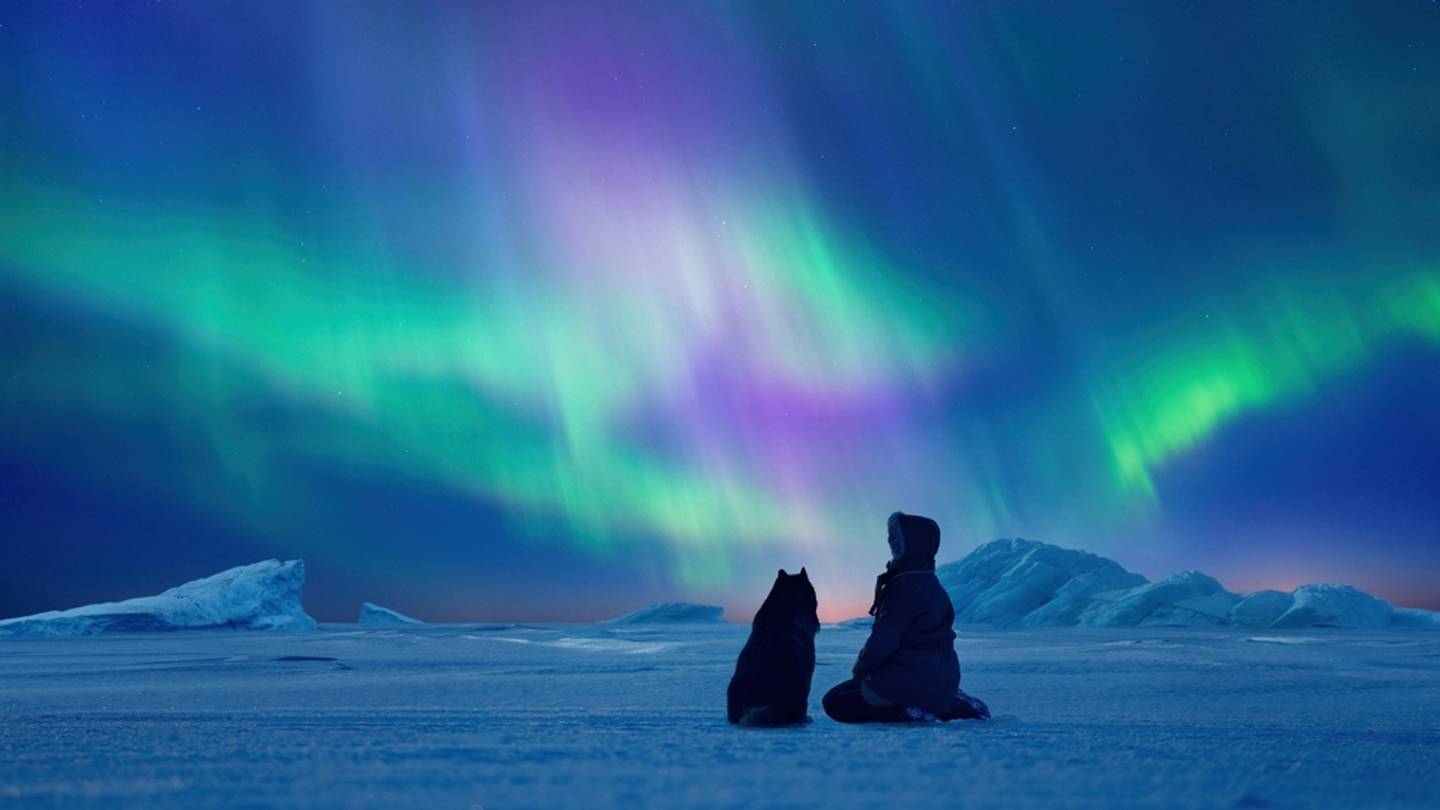
The aurora borealis is a majestic celestial phenomenon that occurs when, according to the National Oceanic and Atmospheric Administration (NOAA), “electrons from space flow down Earth’s magnetic field and collide with atoms and molecules of the upper atmosphere in a ring or oval centered on the magnetic pole of Earth.”There may now be a known scientific explanation for this unearthly light show, but it’s understandable that people have ascribed spiritual significance to it through the ages. After all, imagine living in the early years of human existence, climbing out of your cave to gaze at the stars, and seeing strands of colors weaving their way across the atmosphere like a collection of fluorescent, starlit serpents. Something like that, you would likely think, could only be the work of something divine. Of course, the fact that the sun creates pretty lights in the sky rather than burning us to death or freezing us seems miraculous no matter how well you understand why that happens. Ahead, read about different explanations, stories, and legends that surround the northern lights from cultures around the world. A Cosmic Sports GameA Fiery FoxSpirits of the DeadFiresSigns From the GodsOmensA Celestial ChariotEasy ChildbirthCelestial WeddingsFish ScalesA Cosmic Sports GameNorthern lights above snowy mountain | Abstract51 / ShutterstockSome Inuit peoples of North America refer to the aurora as “aqsarniit,” which translates to “football players.” This is because of a story that suggests the lights are created when ancestral spirits kick a walrus head around in the sky. Other tales, however, propose that the lights are actually created by walruses kicking human skulls around the sky.A Fiery FoxArctic fox in Svalbard | DanGhent / ShutterstockThe Finnish word for the northern lights is “revontulet,” which translates to “fire fox.” In Finnish lore, the aurora is created when a fox runs across the Arctic plains, lighting up the sky with sparks from its tail. Spirits of the DeadNorthern lights above Lapland in Norway | Kjell Petter Hetland / ShutterstockThe Sámi are an Indigenous people who inhabit northern Finland, Sweden, and Norway and are the European Union’s only recognized Indigenous group. According to Sámi traditional beliefs, the lights are created by the souls of the dead. People were traditionally expected to act respectfully and solemnly when the lights were visible, and behaving disrespectfully beneath their glow could lead to bad luck, sickness, and even death. If one caught the attention of the lights, it was believed that they could possibly spirit you away into the sky.Simultaneously, the lights were also believed to be spiritually potent, and their glow was thought to ease tensions and resolve conflicts. Shamans’ drums, meanwhile, were often emblazoned with runes signifying the aurora, which were thought to help them harness the lights’ energy.Many Native American tribes also have stories that link the northern lights to the souls of the dead. Some believed the aurora would allow them to speak with dead loved ones, like the Cree, who have legends that the lights were created by dancing spirits and that when dogs barked at the aurora, they were barking at deceased relatives and friends.Some Vikings also shared versions of this belief, with some Norse stories connecting the lights to a bridge that led souls from the land of the living to the dead and others saying the lights were the breath of lost warriors.FiresNorthern lights above bonfire in forest | Anakin Fox / ShutterstockMany different cultures have stories that connect the aurora borealis to celestial bonfires or flames. The northern lights are referred to as “puae buae,” or ashes, by the Gunditjmara community of western Victoria. Meanwhile, Dieri and Ngarrindjeri communities of South Australia believe that the auroras are fires lit by spirits in the sky. The Menominee of the Midwest linked the lights to the torches of benevolent giants looking to go fishing amid the stars. And many Algonquin people of what is now Canada attributed the lights to the Earth’s creator, Nanabozho, who they believed had moved north but lit luminous fires in the sky to signal that he was thinking of his creations.Signs From the GodsNorthern lights above mountains and lake over Lofoten, Norway | Denis Belitsky / ShutterstockAnother group that ascribed godly significance to the aurora was the Vikings, though for a very different reason. Some Vikings believed that the northern lights were signs from the god Odin. They were seen as an indication that he had dispatched his female warriors, the Valkyries, to select great fallen Viking warriors, who would go on to aid the gods during a battle at Ragnarök, the end of the world. Some Norse also believed that the lights were reflections from the Valkyries’ shields.OmensNorthern lights above Lapland, Norway | PaoloBruschi / ShutterstockAhead of the overthrow of the French monarchy in the late 18th century, the sky became filled with a blood-red aurora, which many people saw as a bad omen of coming bloodshed. That was far from the first time the lights had been linked to impending misfortune, though. Some Inupiat people of northern Alaska believed the lights were evil, and carried weapons when they were visible. The Meskwaki people of modern-day Wisconsin also have stories that suggest the lights were the ghosts of their enemies, returned to further threaten them. Scottish folklore, meanwhile, refers to the lights as “the Mirrie Dancers,” or “Merry Dancers,” and suggests that they represent a celestial battle. The aurora was sometimes also said to be a sign of major changes coming and a warning that people should seek spiritual protection.A Celestial ChariotNorthern lights in Norway | Vadym Lavra / shutterstockIn Greek mythology, the goddess Eos races across the sky each morning in her chariot, thus bringing the dawn. Similarly, in Roman mythology, Aurora is known as the goddess of the dawn and the sister of the sun and the moon. The word “aurora borealis” is actually a blend of two words: the Latin term “aurora,” which means sunrise, and the Greek term “boreas,” which means the north wind.Easy ChildbirthNorthern lights above icy glacier in Iceland | Smit / ShutterstockIn some Icelandic legends, the aurora was said to help reduce the pain of childbirth—but pregnant women were warned not to gaze too closely at the lights, otherwise their children would be born cross-eyed. In Japan, meanwhile, another legend holds that children conceived under the northern lights will be lucky, intelligent, and good-looking.Celestial WeddingsAccording to some Estonian stories, the lights were created by sleighs bringing guests to a cosmic wedding. “In another story, a bright auroral display indicates a magical wedding ceremony occurring in the sky,” said Tom Kerss, author of The Northern Lights: The Definitive Guide to Auroras. “Flying horse-drawn carriages take guests to the exclusive, celestial party, leaving trails that shimmer and dance behind them.”Fish ScalesNorthern lights seen from Greenland | Milosz Maslanka / ShutterstockIn coastal Sweden, the traditional name for the lights was “sillblixt,” which translates to “herring flash.” This corresponds to the belief that the lights were a good omen for fishermen, as the glow was thought to be created by the reflection of countless shining fish scales in the sky. Other Swedish beliefs hold that the lights were positive signs that indicated a bountiful harvest was coming.Read More:
Fire Foxes and Dancing Spirits: 10 Legends About the Northern Lights
Full Article
Original Source
Read the full article at Mentalfloss →KhanList aggregates and links to publicly available news content. We do not host full articles from third-party sources. Always verify important information with original sources.