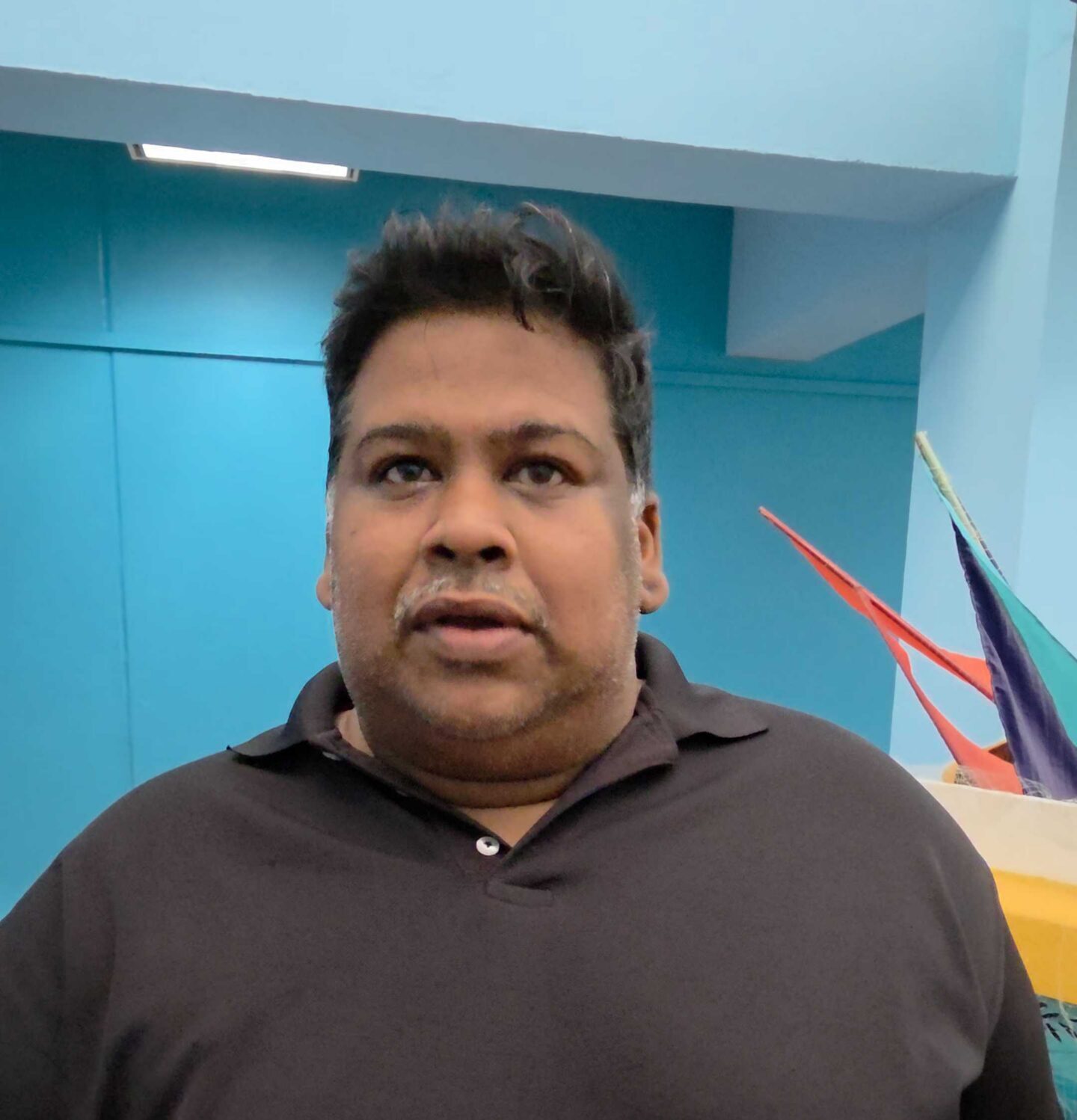
President of the Black Fin Fleet Co-operative Society Moonesh Dharampaul. (Photo Credit: Ricardo Roberts) An inter-Caribbean passenger ferry service will need strict regional safety standards and coordinated emergency systems to work, an experienced mariner and fisherman has warned, citing Saturday’s Guyana river ferry disaster as a stark lesson for governments. Moonesh Dharampaul, the president of the Black Fin Fleet Co-operative Society, said the fatal incident in Guyana highlighted critical regulatory failures that regional authorities cannot afford to repeat. “The situation in Guyana was unfortunate because it shows a lack of maintenance on that vessel as well as safety gear devices, and even life boats and life rafts,” Dharampaul said. “For the Caribbean situation, it all comes down to the type of vessel that we are using to ensure that the passengers are in a safe position.” While expressing strong support for the economic potential of inter-Caribbean travel, Dharampaul emphasised that clear legal and administrative protocols must be formalised before operations begin. He called for a CARICOM unified response mechanism to handle potential maritime emergencies: “If a ferry vessel was travelling and it got into difficulties, which Caribbean territory is responsible for either towing that vessel or lending support?” You Might Be Interested In “I believe it should come from the regional security system. If it is a CARICOM vessel, we should have CARICOM input to support that vessel and make sure that it is going well.” Dharampaul suggested that a “catamaran-style vessel” would be the most appropriate for the region owing to its superior stability across the deck. But he raised concerns over operational consistency during the hurricane season, the impact of climate change, and specific seasonal hazards unique to Caribbean waters. “The Caribbean is known as a climate change resilient area, so we are going to be going through changing of the weather so quickly,” he said, highlighting further dangers such as massive sargassum seaweed blooms and submerged logs known as “shooting stars” migrating from South American rivers. “What happens when a ferry carrying outboard engines or inboard engines has to deal with a sargassum bloom? It is something that you have to consider because you can’t see what’s going on in the water.” To mitigate these risks, regional authorities should implement specific operational safeguards rather than relying on a single vessel, Dharampaul suggested. He recommended deploying a dual-capacity system in which multiple vessels run a staggered schedule, ensuring that one is always available to assist the other in an emergency. “Definitely they should have a rescue boat that carries the capacity to be able to either tow or lend assistance when this vessel is in troubled waters,” Dharampaul insisted. Despite current anxieties among investors and financial institutions regarding legal ambiguities, Dharampaul remained optimistic that the social and economic benefits of a regional ferry service would ultimately outweigh the logistical hurdles: “Imagine you’re here, you have a family in Trinidad or Guyana, and you can say, ‘OK, I’m gonna hop on the vessel and just go visit my family and come back.’ That’s something that you have to consider as well. It’s something that I believe what’s done right, it can really help the region.” (RR)
Ferry plan must learn from Guyana disaster, fisher warns
Full Article
Original Source
Read the full article at Barbadostoday →KhanList aggregates and links to publicly available news content. We do not host full articles from third-party sources. Always verify important information with original sources.