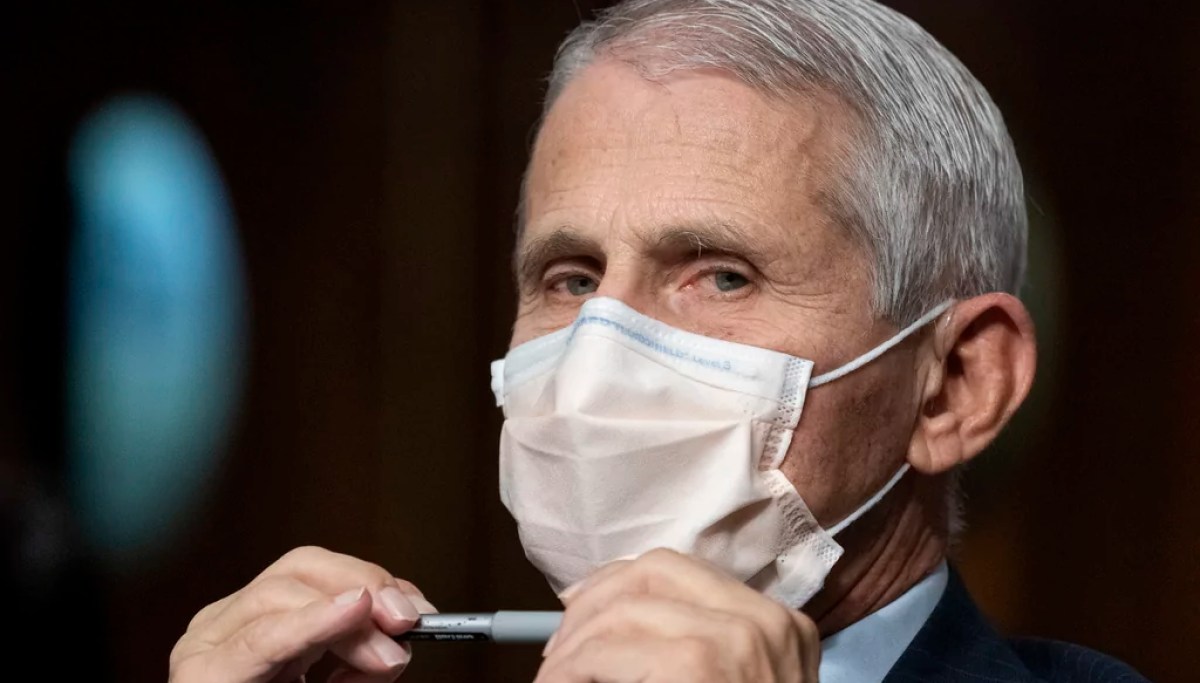
In Focus delivers deeper coverage of the political, cultural, and ideological issues shaping America. Published daily by senior writers and experts, these in-depth pieces go beyond the headlines to give readers the full picture. You can find our full list of In Focus pieces here.Anthony Fauci’s diary musing about dinners with famed journalists during the COVID-19 lockdowns evoked memories of neighbors who couldn’t have guests at their child’s funeral, or attend the birth of their grandchildren, or buy seeds at a local garden center. Those narcissistic entries about his towering fame reminded me of local children who were barred from attending high school with their friends, couldn’t have proper graduations, or start college on time, many of whose lives were needlessly thrown off course forever. Kentucky Sen. Rand Paul’s document dump of the diary entries and emails of former director of the National Institute of Allergy and Infectious Diseases accentuates what we already knew about Fauci. Though his fans portrayed him as a saintly public health official merely sharing advice and evolving science with decision-makers, Fauci was a self-serving authoritarian operator who relied on fearmongering, coaxing, and lying to manipulate the behavior of hundreds of millions of Americans. On Feb. 8, 2020, for example, Fauci acknowledged privately that after speaking with former CDC Director Tom Frieden, he believed COVID’s fatality rate was likely at 0.2-0.3% not 2%, and “acting like a bad influenza.” Less than a month later, under oath in front of a House oversight committee, Fauci warned that COVID was “10 times more lethal than the seasonal flu.” The man who claimed to represent science itself was stoking fear to implement obedience. In a June 18, 2020, email to Dr. Deborah Birx, the White House coronavirus coordinator, Fauci voiced frustration that viral transmission has been unaffected by lockdowns: “I have been obsessing about the increases in cases that do not seem to be related to openings or closings or massive crowds.” Fauci’s apprehension, “we may be looking for the lost keys under the light of the lamppost,” didn’t stop him from spending the next days, weeks, and months attacking any politician who proposed easing lockdowns as anti-science. Fauci privately and publicly criticized Florida Gov. Ron DeSantis for opposing mask mandates, school lockdowns, and pushing back against federal public health guidance that the head of the NIAID knew was questionable. When ABC News asked Fauci in 2022 if it was a mistake for schools to be shuttered as long as they were during the COVID pandemic, he claimed that we “should realize, and have realized,” that “there will be deleterious collateral consequences when you do something like that.” In a later interview with the New York Times, he demanded, “[s]how me a school that I shut down and show me a factory that I shut down. Never. I never did.” But in his entries, we learn that Fauci took credit for convincing New York Mayor Bill de Blasio and others to shut down schools. In a March 15, 2020, entry, Fauci approvingly notes that California Gov. Gavin Newsom’s chief of staff Ann O’Leary told him that “based on my TV appearances today and yesterday, the Governor has decided to close the schools in California as well as the bars and restaurants.”There was no mention of deleterious collateral consequences.Though Fauci absorbs most of the anger over COVID-era shutdowns, he’s not wrong to point out that he had no power to dictate state policy decisions. Public officials, possessing little if any knowledge of virology, are perhaps the most risk-averse people in the country. They were never going to challenge a man canonized by the media as the embodiment of science. There will never be any reckoning for them. But when dissent did pop up, Fauci was there to suppress it. Dr. Anthony Fauci, director of the National Institute of Allergy and Infectious Diseases, listens during opening statements during a Senate Health, Education, Labor, and Pensions Committee hearing on Capitol Hill, Nov. 4, 2021, in Washington. (AP Photo/Alex Brandon, File) In an Oct. 14, 2020, entry, Fauci says — after noting Julia Roberts had sent him beautiful flowers — that he’d had “long talk” with Trump adviser Jared Kushner “asking his help in getting rid of” White House pandemic adviser Dr. Scott Atlas, whom was giving him a hard time on the “herd immunity issue.” In the same entry, Fauci grouses about “Great Barrington Declaration,” a document authored by three scientists — Martin Kulldorff of Harvard, Sunetra Gupta of Oxford, and Jay Bhattacharya of Stanford — which questioned the efficacy of lockdowns, warning (correctly) about deleterious collateral consequences of closing schools. Fauci colluded with others to suppress the document, plotting a “quick and devastating published takedown” even though he admitted in his own emails and diary entries that he was frustrated about the efficacy of lockdowns.One of the most politically contentious issues during the pandemic was the origins of COVID. We all remember the concerted effort by the government to pressure tech companies to censor any theorizing about COVID’s lab origins. Joe Biden accused Facebook of killing people and leaned on social media outlets to both “elevate” and “suppress” users based on their stances on COVID. Twitter suspended tens of thousands of accounts. Facebook banned any talk implicating the Chinese communists. Fact-checkers and left-wing press regularly treated anyone who brought up the Wuhan lab theory as a disinformation peddler and likely racist. In a diary entry dated Jan. 26, 2020, Fauci notes that “now we know the market” — by which he means the Huanan Seafood Market in Wuhan, where some theorized the virus had jumped from bats to humans — “was not the source, it was the amplifier.” Critics have pointed out that even five months after this revelation, Fauci was still blaming the wet markets in an interview with National Geographic, a piece used in numerous “fact checks” by the media. But it was worse. In June of 2021, about a year and a half later, Fauci told Kara Swisher on her New York Times podcast — “America’s chief immunologist claps back” — that the evolutionary virologists who’d studied the virus believed that the wet market theory was “absolutely totally compatible with something that evolved from bat viruses because of the closeness to.” Conversely, Fauci said, the notion that the Wuhan virus was created in a lab was a “very, very, very, very remote possibility.” Four verys.Even taken in the most generous framing, it’s perfectly clear that Fauci was blatantly misleading the public about the origins of COVID. “It is not hyperbole to say that today I am the most famous and talked about person in the country and one of the most recognizable person in the world,” Fauci wrote to himself on May 21, 2020. It’s easy to mock the narcissism, but it was also inarguably true. And that’s the problem. The Fauci diary entries expose a man imbued with far too much influence, prestige, and power. Fauci was given a historic responsibility, and he failed on every front. Then again, perhaps his enduring offense will have been helping to shatter public trust in institutions and genuine expertise. The void he left is already being filled by the ravings of quacks, cranks, and conspiracists. These are the people millions of Americans will turn to next time we have a public health emergency. That’s Fauci’s legacy.
Fauci’s legacy: Shattered public trust
Full Article
Original Source
Read the full article at Washingtonexaminer →KhanList aggregates and links to publicly available news content. We do not host full articles from third-party sources. Always verify important information with original sources.