
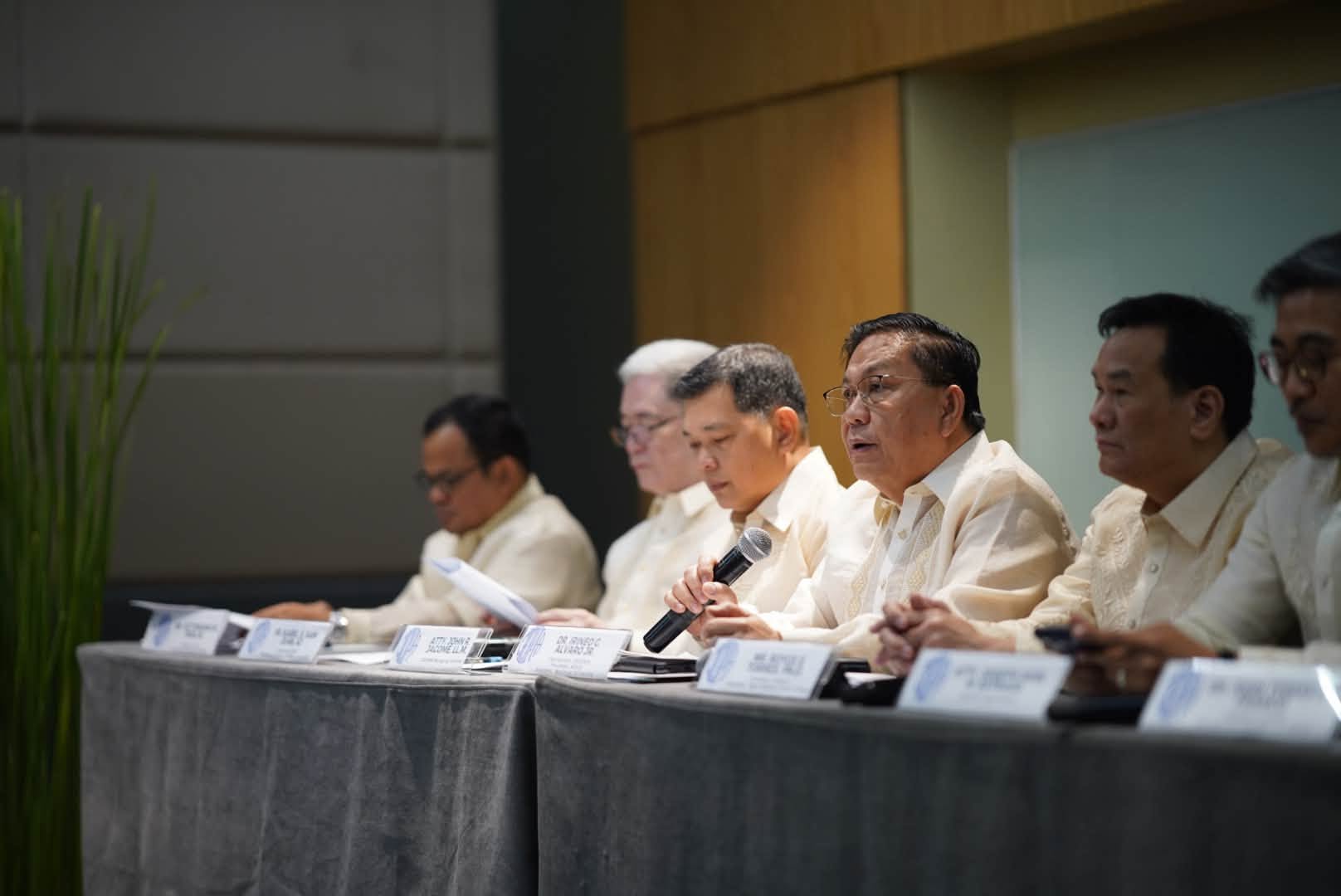
COCOPEA. Irineo Alvaro Jr., chairperson of the Coordinating Council of Private Educational Associations, speaks to media ahead of the 10th COCOPEA National Congress in Taguig City on November 24, 2026. COCOPEA's Facebook page ‘We really need to sustain our existence.... And this RA 12327 is a good start,’ says COCOPEA chairperson Irineo Alvaro Jr., as private schools also feel the effects of a sluggish economy The newly passed Republic Act No. 12327 expands the voucher program for poor students in private K to 12 schools. COCOPEA emphasizes that the reform will help alleviate financial burdens on families and decongest public schools. The organization calls for urgent measures to address economic pressures on private schools. This is AI-generated. Read the article for full context. Report any errors. MANILA, Philippines – The newly passed law that expanded the voucher program for poor students in private K to 12 schools is seen to help sustain operations of private institutions amid declining enrollment and economic pressures, the Coordinating Council of Private Educational Associations (COCOPEA) said on Tuesday, November 24. Republic Act (RA) No. 12327 or the Basic Education Voucher Assistance Act broadened the Expanded Government Assistance to Students and Teachers in Private Education (E-GASTPE) Act to include kindergarten and elementary school. Currently, the decades-old E-GASTPE Act only provides tuition aid to students in private junior and senior high schools. COCOPEA chairperson Irineo Alvaro Jr. said the reform would help decongest public schools, and affirms the inherent right and responsibility of parents to choose the best education setting for their children. “By subsidizing a significant portion of tuition in recognized private schools, the government can alleviate financial burdens on families,” Alvaro said in a press conference. “The voucher program is a real game changer in re-centering our education policy around the Filipino family, not just decongestion.” Alvaro noted that enrollment rates in private schools, particularly small institutions, declined by 6% to 10% compared to last year, as they cannot match subsidized institutions and the level of teachers’ salary in public schools. Some have already closed this year, he added, without providing further details. “We really need to sustain our existence despite all of these. And this RA 12327 is a good start. I hope this is a work in progress that could extend up to the tertiary [level],” Alvaro said. To prevent “ghost students,” COCOPEA said it is coordinating with the Department of Education (DepEd) in pushing transparency for all transactions. The group will also collaborate with the DepEd as the agency crafts the implementing rules and regulations of the new law. COCOPEA legal counsel Joseph Noel Estrada wants a stronger role for the Private Education Assistance Committee (PEAC), which is the co-implementer of the tuition aid for junior high and senior high school students. The new law does not mention PEAC, but it mandates the creation of the Bureau of Private Education under the DepEd. “We will continue to help PEAC and explore systems to ensure that there will be no leakage, no corruption, no anomalies and irregularities,” Estrada said. ‘Stagflation’ among considerations for tuition hike COCOPEA also called for urgent action to help schools survive economic pressures. “Like every Filipino household, private educational institutions are hit hard by rising inflation, surging electricity and operating costs, and frequent calamities. These pressures threaten the survival of many schools and make life harder for their students, faculty, and staff,” Alvaro said. He said sustainability of private schools would be ensured if there are policy changes promoting freedom to use flexible learning and training setups, fair and timely tuition adjustments, prompt release of government subsidies, less red tape, and respect for academic freedom. Particularly, COCOPEA is pushing for a review of existing tuition policies so that private institutions can sustain fair compensation and support for faculty, invest in modern facilities, and continuously improve the quality of instruction. Father Karel San Juan, president of Ateneo de Davao University and the Catholic Educational Association of the Philippines, said private schools are “very sensitive” to economic forecasts as they are tuition-dependent. “The inflation rate in the Philippines is really escalating…the economists are projecting stagflation in the Philippines. [At the] macro level, we’re considering that. At the micro level, in our respective cities, towns where we operate all over the country, we’re considering local inflation as well,” San Juan said in the same press conference. Stagflation refers to the combination of weak economic growth and high inflation. Other considerations cited by COCOPEA were climate disruptions, including the impact of El Niño, adjustments in minimum wage, and competition. San Juan said consultations with parents, students, and faculty must also be done before proposing tuition increases. – Rappler.com How does this make you feel? Loading
Expanded voucher program to help sustain private schools — COCOPEA
Full Article
Original Source
Read the full article at Rappler →KhanList aggregates and links to publicly available news content. We do not host full articles from third-party sources. Always verify important information with original sources.