
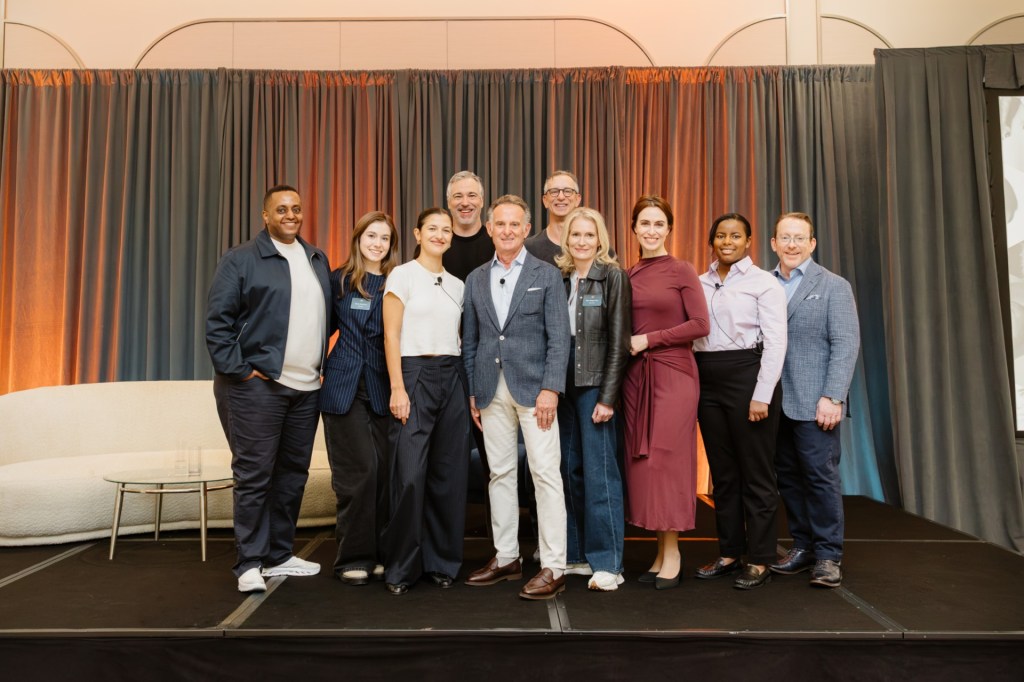
Key topics included the merging of independent companies and the financial prospects for rights holders as streaming revenues soar. Yonas Aregai (Chief of Staff, GoldState Music), Kristin Robinson (Senior Music Business Correspondent, Billboard), Tatiana Cirisano (VP, Music Strategy, MIDiA Research), Andy Moats (EVP Music, Sports, & Entertainment, Pinnacle Financial Partners), Charles Goldstuck (founder & managing partner, GoldState Music), David Israelite (President & CEO, NMPA), Mary Megan Peer (CEO, peermusic), Liz Dilts Marshall (Senior Finance Correspondent, Billboard), Olivia Jones (Associate Music Analyst, MIDiA Research), Michael Poster (Partner and Chair of Music Acquisitions and Financing, Michelman & Robinson LLP) Chrisél Moulton / GoldState Music Earlier this month, GoldState Music founder and managing partner Charles Goldstuck held a three-day conference about the newsiest topics in the music business and among others, he shared this takeaway: “We should expect 2027 to be a bonanza year for investment activity.” A major-label executive, Goldstuck co-founded J Records with Clive Davis, later building it into the RCA Music Group, served as BMG’s president and chief operating officer, led TouchTunes’s shift toward connected, interactive digital jukeboxes and founded HitCo Entertainment with L.A. Reid. More recently, he has led GoldState Music’s investments in the catalogs of artists like Alan Walker and companies like indie audiobook platform Podium and distributor Too Lost and authored an academic paper on how the music industry can adopt and monetize AI music. Since he founded a state-of-the-art recording studio and music academy in the Bahamas called The Sanctuary at Albany in 2018, GoldState has had a unique vantage point into the broadening commitment to invest in music. Related For the second year, Goldstuck hosted more than 100 executives from music companies, investment firms, banks and artists at Pier Sixty-Six resort in Ft. Lauderdale, Florida, for conversations about indie sector consolidation, an overabundance of investment capital, generative AI and the lofty expectations performance rights organizations are pressured to meet. Among the conference highlights: Dolly Parton’s longtime manager Danny Nozell shared stories of touring the world by bus with the country music icon and the plans she outlined for the next 20 years of her business empire. Walker and manager Gunnar Greve discussed how difficulty reaching more than a slim percentage of Walker’s 48 million YouTube subscribers contributed to their creative strategies for building direct relationships with fans, such as through video games. Empire CEO and founder Ghazi discussed how research into the listening behaviors of certain diaspora communities informs A&R decisions for music performed in local African and South Asian languages and why he believes the growing value of name, image and likeness rights could enable Empire to take more bets on artists making that music. Media research presented at the conference about how the listening and consumer behaviors of people aged 16-19 are unlike those of prior generations indicates this group could have a significant impact on the evolution of the music industry. Related We asked Goldstuck for his five top takeaways from the invite-only affair — here’s what he pointed to. “The Indie Sector will broaden and consolidate with growing vibrancy,” Goldstuck says, pointing to several recent transactions that he thinks will strengthen the independent sector. “The Concord/BMG merger and the Primary Wave/Kobalt combination [create] two large competitors positioned between the core independent sector and the majors. Distribution platforms like Create Music and the Too Lost Music Group [raised] significant levels of capital and are now taking advantage of healthy organic growth as well as selective acquisition strategies. Layer in platforms like Empire, Symphonic and ONErpm and you can now see the maturation of a potent independent distribution sector … [with diversified] service offerings, [including] UGC monetization collection and tracking capabilities, corresponding to an improvement in platform economics. Add to these dynamics the accelerating financing options that the Indies are making available to the creative community, and we might just see the creation of the next wave of companies reaching the scale needed to compete with the majors.” “An overabundance of capital will continue to drive deal making,” Goldstuck believes. The music industry has “come of age as a mature, investible sector,” especially now that companies like Spotify and YouTube are expected to pay circa $25 billion next year to rights holders from their streaming and UGC revenue. A healthy cohort of music companies focused on the middle market and zero defaults of music rights investors to date are feeding appetite for investments from insurance-backed institutions, commercial banks, private credit issuers and growth equity institutional investors. “This abundance of capital is driving healthy valuations … [and supports] the vitality of the catalog and creator rights market. Investors have developed a heightened acumen backing general industry investment underwriting,” Goldstuck says. PROs and CMOs circa the world are facing heightened focus and pressure to meet contemporary expectations for efficiency and transparency. “As streaming with its associated data transparency has created a more reliable and accountable world for rights holders and creators, we should expect rights holders and their proxies to begin demanding the same from PROs and CMOs circa the world related to offline performance publishing earnings,” Goldstuck says. Offline publishing revenues still account for roughly 35% of publishing revenues, and investors who hold significant stakes there will likely demand efficiencies. The cost of managing publishing on a global basis will need to come down. “BMI’s move a number of years ago to a ‘for-profit’ model attracted the attention of investors, and will do so again when the current BMI owners run a process to sell the company in the not too distant future,” Goldstuck predicts. “The impact of generative AI platforms and tools has now spread into every part of the global music ecosystem. We should expect landmark AI licensing deals in the year to come, and probably a number of key legal decisions as well,” Goldstuck says. “The ride has been a bumpy one and will continue to be unpredictable and angst-ridden for most constituents.” He notes that the creator tool sector is “the front line of AI-driven innovation,” pointing to Splice’s recently announced AI-enabled DAW platform. China has leapfrogged to become the 4th largest music market. “While most Western operators and rights holders do not see much commercial benefit from China, their consumption dynamics will continue to drive the revenue potential to ultimately rival Japan and the United Kingdom in the near future.” Daily newsletters straight to your inbox Sign Up More From Pro
Music’s ‘Bonanza Year’ for Funding and More Insights from GoldState’s Conversations in Music Conference
Full Article
Original Source
Read the full article at Billboard →KhanList aggregates and links to publicly available news content. We do not host full articles from third-party sources. Always verify important information with original sources.