
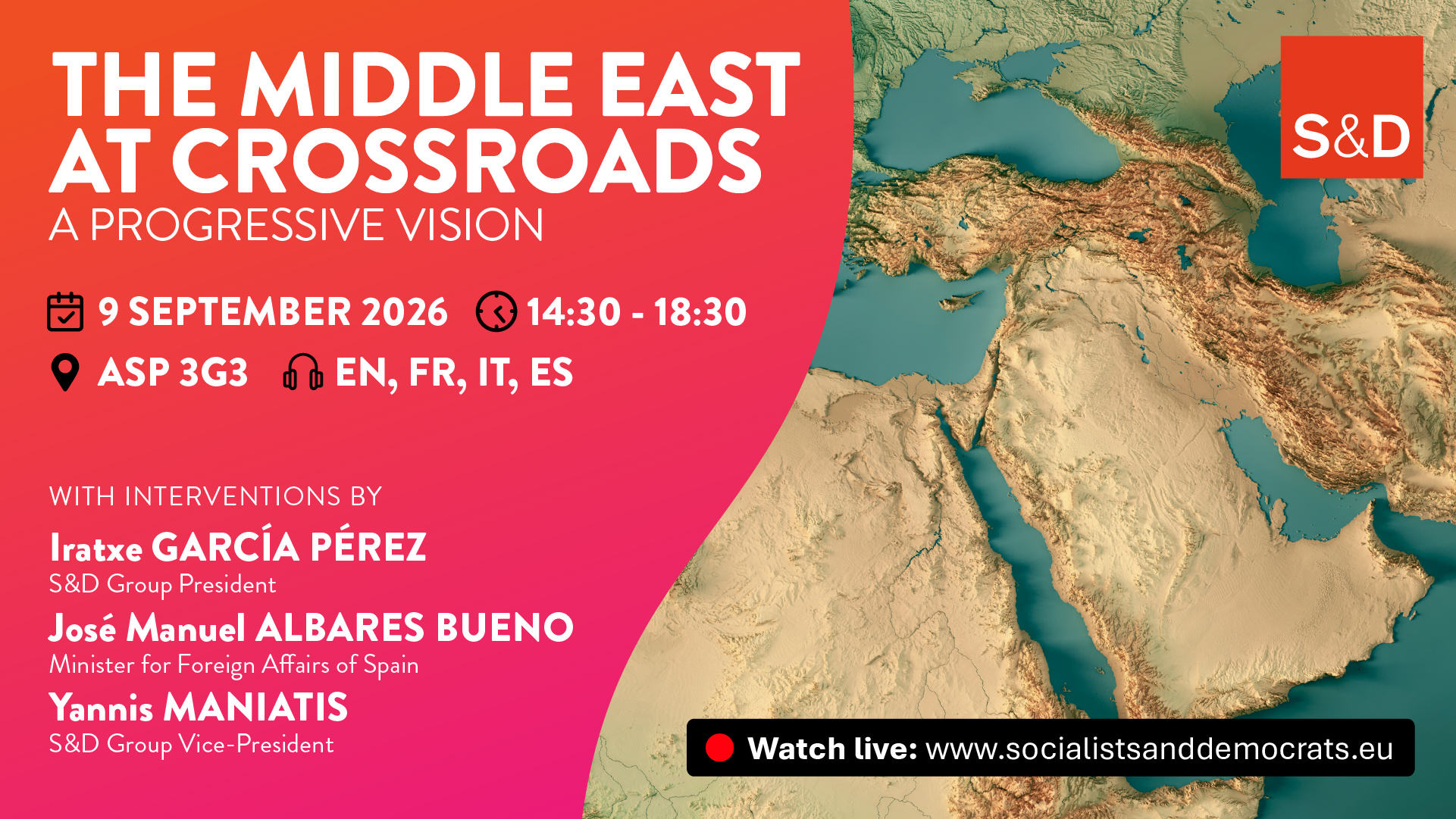
One year after the EU Commission president Ursula von der Leyen announced the suspension of the EU-Israel Association Agreement in her State of the Union address, Europe has still failed to deliver. Meanwhile, the reality on the ground has only worsened: relentless destruction and death in Gaza, accelerating annexation of the West Bank, the introduction of the death penalty for Palestinians, and extremist Israeli national security minister Ben-Gvir’s chilling calls for mass killings in Gaza and booths for public hangings of Palestinians. At the same time, the wider regional order is being reshaped. The illegal war led by US president Donald Trump and Israel against Iran is another major disruptor, in the region and beyond. It is devastating Iran, sending energy prices soaring worldwide, including in Europe, while generating windfall profits for energy giants and aligning with Trump’s fossil-fuel agenda. It has also made the Middle East more multipolar, with middle powers acting with growing autonomy and increasingly shaping regional security. The previous order, anchored in an unquestioned US security guarantee, is giving way to a more unpredictable and contested landscape. Europe, meanwhile, remains on the sidelines – issuing statements when crises erupt while others shape what comes next. This cannot continue. Europe needs a strategy. Uncertainty is no excuse for European inaction The European Commission was expected to present a comprehensive Middle East strategy in the second quarter of 2026. That deadline has passed, and the commission justified the delay by pointing to the uncertainty in the region. Yet uncertainty is precisely why Europe needs a strategy. It is not a prediction of what will happen next, but a statement of Europe’s interests, values, and red lines. For the S&D Group, those principles must be clear: international law, human rights, peace, and security, alongside the right of Israelis to security and Palestinians to self-determination. But Europe must go beyond statements and impose real consequences. Europe needs real action, not just statements First, the European Union must immediately implement a full arms embargo on Israel, levy targeted sanctions against extremist Israeli ministers, and fully suspend the EU-Israel Association Agreement due to clear breaches of its human rights clause. Second, Europe must put its political and financial weight behind Gaza’s recovery and Palestinian statehood. The EU should establish a strong, multi-year facility for Gaza’s reconstruction and early recovery, while strengthening the Palestinian Authority and supporting credible governance and reform. Third, Europe should not outsource its political agency. The EU must not participate in arrangements that risk turning peacebuilding into a process dominated by a narrow group of states while marginalising Palestinians. A so-called “Board of Peace” cannot substitute for an inclusive, legitimate, and internationally anchored political process. Fourth, Europe must defend international justice. The International Criminal Court cannot be treated as an institution whose authority applies only when politically convenient. If European governments are serious about a rules-based international order, they must protect the court and its officials. The EU should be ready to activate its blocking statute where necessary to shield European actors from extraterritorial measures designed to obstruct international justice. These are not abstract institutional questions. They determine whether Europe has any influence over the political order now emerging around it. From reacting to crises to shaping what comes next The S&D Group has spent years arguing for a more consistent European approach. We have travelled across the region, listened to civil society, engaged with political leaders, and pushed Parliament to defend a permanent ceasefire, humanitarian access, accountability, and a genuine two-state solution. The S&D Middle East Task Force has helped turn this engagement into a sustained political effort rather than a reaction to the latest headline. The EU’s credibility has been badly damaged by the perception of double standards. Rebuilding it will require bold decisions. On Wedneday and Thursday (9-10 September), the S&D Group will bring together policymakers, regional partners, academics, and civil society in the European Parliament to discuss what such a progressive strategy should look like. The message should be simple: Europe cannot wait for the Middle East to become less uncertain before deciding what it stands for. If we want to have a seat at the table, we must finally bring something to it. This stakeholder article is paid for by a third party. All opinions in this article reflect the views of the author and not of EUobserver.
Europe cannot afford to remain a spectator in the new Middle East
Full Article
Original Source
Read the full article at Euobserver →KhanList aggregates and links to publicly available news content. We do not host full articles from third-party sources. Always verify important information with original sources.