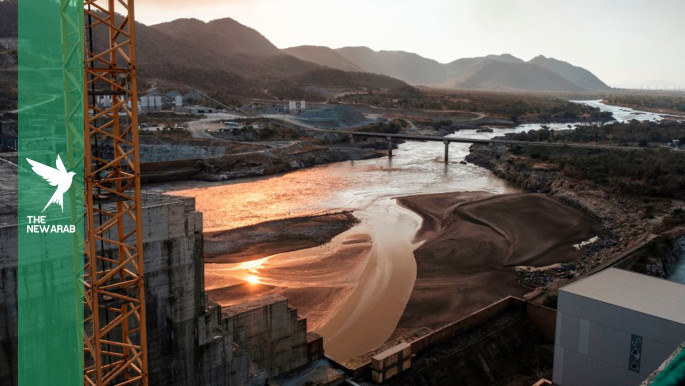
Egypt has been making the GERD issue a central point of its international diplomatic engagements, since the construction of the multibillion-dollar hydroelectric dam began in 2011. [Getty]Egypt braces for tough times, amid receding Nile River levels in Sudan and a decline in the amount of water released from the Grand Ethiopian Renaissance Dam (GERD). Egyptian water experts warn of severe repercussions from the failure of Ethiopian authorities to release sufficient amounts of water from the dam, amid delayed rainfall in the Horn of Africa. Meanwhile, Egyptian officials cite what they categorize as unilateral and uncoordinated operations of the dam which was officially inaugurated in September 2025. On 19 July, Egyptian Foreign Minister Badr Abdelatty described his country's water security as an "existential issue". He called for upholding the rules of international law that regulate the utilization of cross-border rivers. "Cairo rejects unilateral measures in the eastern Nile River basin," Abdelatty added at a meeting with US Senior Advisor for Africa, Massad Boulos, in Cairo. Egypt has stepped up its rhetoric on the Ethiopian dam for several weeks now. On 1 July, the foreign minister said his country reserved the right to defend its water interests. "Egypt will not allow, under any circumstances, any infringement on its historical Nile waters' share," he warned. Looming threat from Sudan Egyptians' current alarm over their country's water security is rooted in the declining river level in neighbouring Sudan, the country that the river crosses from Ethiopia before it reaches Egypt. Sudanese water officials and experts have referred to a drop in the river's water level as of early July. This assessment is backed by Sudanese water monitoring stations, which estimated that the amounts of water released from the GERD on a daily basis as of the beginning of this month at between 150 and 180 million cubic metres. This falls far below the amount of water released from the dam's spillways each day before, according to Sudanese water engineers. This drop in the river's water level, they say, is negatively affecting water intake stations in Khartoum, the capital of Sudan. This development focuses minds on the expected toll on Egypt where the river's water flows after Sudan gets its needs. Apart from reduced releases from the GERD, Egyptian specialists also attribute the decline in the river's level in Sudan to storage adjustments at the dam. "These storage adjustments leave fewer amounts of water for discharge from the dam," independent water expert Nour Ahmed Abdelmonem told The New Arab. He expected the same reduced discharge to have negative impacts on Egypt, particularly if fewer rains fall on Ethiopia during the current rainy season. "This will inevitably cause problems to millions of farmers across Egypt and undermine the nation's hydroelectric power plants," he added. Ethiopia has not confirmed any reduction in water discharge from the dam. This is probably why the Egyptian Ministry of Irrigation has taken a cautious approach to developments in Sudan. Minister of Irrigation Hani Suweilam has directed his ministry's agencies to keep monitoring rainfall and river inflows on a daily basis. He asked the same agencies to update hydrological and climate forecasts and adjust local operational scenarios as conditions develop in the coming period. A leading water expert had earlier described the drop in the river's level in Sudan as "very shocking". Nader Nour El Din, who is a professor of water resources at Cairo University, expected the current hydrological year to be the beginning of a series of lean years. Diplomatic tensions Egypt has been making the GERD issue a central point of its international diplomatic engagements, since the construction of the multibillion-dollar hydroelectric dam began in 2011. Deep under this intensive focus are serious concerns for the Egyptians about the dam's effects on their country's supply from the Nile, its principal source of fresh water. These concerns increaded after the failure of dam talks between the Egyptians and the Ethiopians in December 2023. Egypt seeks a contractual deal on the operation of the GERD, one that puts its needs into account, the Egyptian government says. On 19 July, the Ministry of Irrigation said the continued "unilateral" operation of the dam had caused fluctuations in water discharge rates in the absence of agreed-upon operating rules or a regular mechanism for data sharing. Excess water discharge from the dam last year caused flooding in Sudan and parts of Egypt. Presently, the Egyptians place their hopes on mediation by US President Donald Trump to succeed where efforts to resolve the dispute by several international and continental organizations, including the United Nations and the African Union, had failed in the past. Last month, the US president pledged to settle the row over the GERD, claiming that he nearly resolved it before the end of his first presidential term almost six years ago. "The Nile is getting a little emptier than it should be, and that's what we're here to talk about," Trump said during a meeting with Egyptian President Abdel Fattah al-Sisi on the margins of the Group of Seven summit in France. Trump's renewed involvement in this file came as Egyptian-Ethiopian rivalries over Horn of Africa and Red Sea influence intensified. The GERD falls at the centre of such rivalries, raising speculation about where they would end or whether they may turn nasty, analysts said. Thirst Whether the US president will succeed in brokering a settlement of the conflict remains to be seen. Ethiopia has repeatedly defended its right to utilise its water resources and operate the dam as it sees fit. Ethiopian officials maintain that the GERD is essential for powering development in their country where nearly 40% of the population lives in poverty. They insist that the dam is a sovereign project that does not cause any negative impact on downstream countries. Egypt, for its part, says it does not oppose Ethiopia's development, but only wants to ensure that this development would not come at the cost of its people's water security. Egypt also says that its annual Nile water share of 55.5 billion cubic metres has been the same over the years, despite the continual growth of its population, now over 110 million. A few days ago, Minister Suweilam said his country's per capita water consumption had dropped to less than 500 cubic metres a year, from 2,000 cubic metres a year in the 1960s. This, he added, puts Egypt under the global water poverty line. Local experts warn that Ethiopia's failure to coordinate with Egypt on the operation of the dam will make things worse. "Coordination on the operation of the dam is crucial for minimizing negative effects on downstream states, particularly during droughts and extended droughts," Abbas Sharaki, a professor of water resources and geology at Cairo University, said. "Sorry to say, Ethiopia's unilateral actions on the operation of the dam will cause crises in downstream states," he told TNA.
Egypt, Sudan brace for crisis as Ethiopia tightens GERD flows
Full Article
Original Source
Read the full article at Newarab →KhanList aggregates and links to publicly available news content. We do not host full articles from third-party sources. Always verify important information with original sources.