
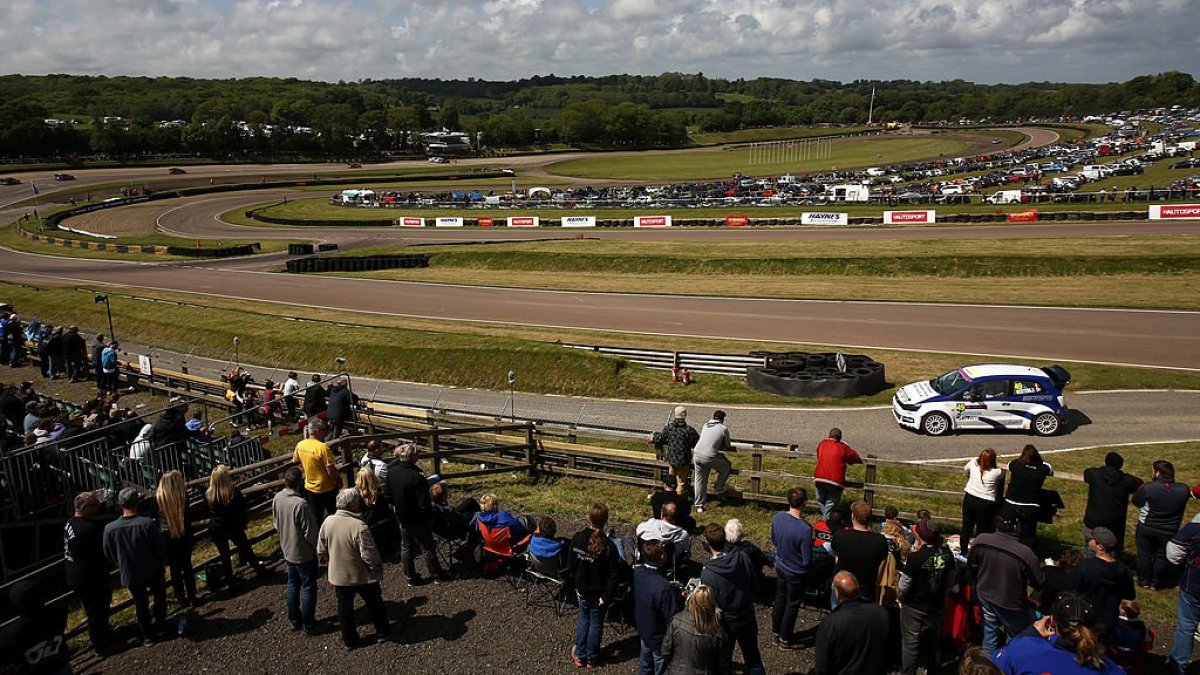
Two emergency car parks built at racetracks to handle traffic from post-Brexit Entry-Exit System (EES) border checks in Dover cost the taxpayer £1.6m – despite never being used. A temporary traffic holding site was set up next to Lydden Hill motor racing track to handle 1,200 tourist vehicles stuck in EES traffic. Another at the derelict Folkestone Race Course was earmarked to manage 1,000 cars. But both sites were stood down in August after anticipated border delays over the summer failed to emerge, despite modelling indicating potential queues of six to eight hours at Dover. French kiosks to scan car passengers’ EES biometrics are still not working a year after the EU’s controversial scheme was launched. Passengers queue at check-in to cross the Channel at the Port of Dover in Kent (Photo: Gareth Fuller/PA) ‘It’s an awful lot of taxpayer money’ Buying, converting and staffing the sites had cost £1.6m, revealed the Department for Transport (DfT) following a freedom of information request by The i Paper. But the DfT said the cost of some remedial works had been excluded from the figure as they are ongoing – meaning the total spend could be even higher. Kevin Mills, the Labour leader of Dover District Council, said: “You’ve got to have facilities, and you need to have a standback. There’s going to be a cost, but that is an awful lot of taxpayers’ money when we’ve got other services that are struggling for something that’s not been used.” However, Kent MPs and council leaders have warned of the potential for long delays if full EES checks are carried out at Dover and Folkestone’s Eurotunnel next year.Sir Roger Gale, Conservative MP for Herne Bay and Sandwich, told The i Paper: “This is a train that’s coming down the tracks, and we don’t know what it’s going to hit.” EES is a two-step process which requires non-EU nationals to set up a file and then have their fingerprints and face scanned to track if travellers have overstayed in Schengen countries. Since Brexit, British nationals can spend 90 days out of 180 in the EU. But at Dover, issues with the French border technology has meant that car passengers are still not having their biometrics taken. The 84 self-service kiosks, installed at a £40m site at the port’s Western Docks, are lying unused. French border police, the Police aux Frontières, have not yet switched on or activated the required software and kiosk technology. It is understood the glitch, which has also affected airports, is caused by biometric data not transferring to a central database system. Instead of using the Western Docks kiosks, border checks and manual EES record creations are handled directly at the Eastern Docks ferry terminal. Folkestone Racecourse, which closed in 2012, was earmarked as a site for tourists stuck in queues from Entry-Exit System checks (Photo: English Heritage/Heritage Images/Getty Images) EES has been beset by problems since it launched last year. Passengers heading to Schengen Area airports reported biometric kiosks not working and software glitches that failed to log travellers’ return to the UK. Those wrongly found to have overstayed face travel bans and potential fines. The extra time taken for passengers to log their biometrics has also led to hours-long delays at airports across the continent. Potential for traffic jams next year Gale said if biometric checks do go live next for car passengers at Dover, the UK’s busiest port, there is the potential for traffic logjams next year. The Conservative MP told The i Paper: “We got through summer, but the delays, generally, they’re quite significant at peak times… [and] once this comes in fully fledged, nobody’s really thought it through or worked it through.” Gale warned earlier this year that long delays at the port could put car passengers’ lives at risk. It is understood testing is being carried out on EES kiosks at Western Docks, but it’s unlikely the self-service booths will be ready to take car passengers’ biometrics until at least the first few months of 2027. However, it is understood the temporary car parking sites will be available if traffic data indicates they are needed. But Mills said there were concerns over whether a temporary parking facility at sites such as Lydden Hill would work as drivers could not be forced to pull over. “If I get to Lydden, and I know it’s three miles to Dover. I ain’t going into it, I’m going into Dover,” he said. ‘Decisive action to keep summer holidays on track’ The multi-agency Kent and Medway Resilience Forum (KMRF), which plans strategy for travel disruption in the county, established the traffic safety valves at Lydden Hill and Folkestone for “extreme periods of congestion”. The Government agreed with KMRF’s assessment given the risk of lengthy queues. A DfT spokesperson said the sites were an “essential part of our planning to protect the public, take traffic off Kent’s roads and reduce the impacts of queues on local residents and travellers in the event of travel disruption over the summer”. “We took decisive action to keep families’ summer holidays on track, including £10.5 million to prepare Dover, Eurotunnel and Eurostar for these new border checks,” they added. This meant “queues were kept to a minimum, and families got away fuss free”.
EES farce as £1.6m spent turning race tracks into car parks – that were never used
Full Article
Original Source
Read the full article at Inews →KhanList aggregates and links to publicly available news content. We do not host full articles from third-party sources. Always verify important information with original sources.