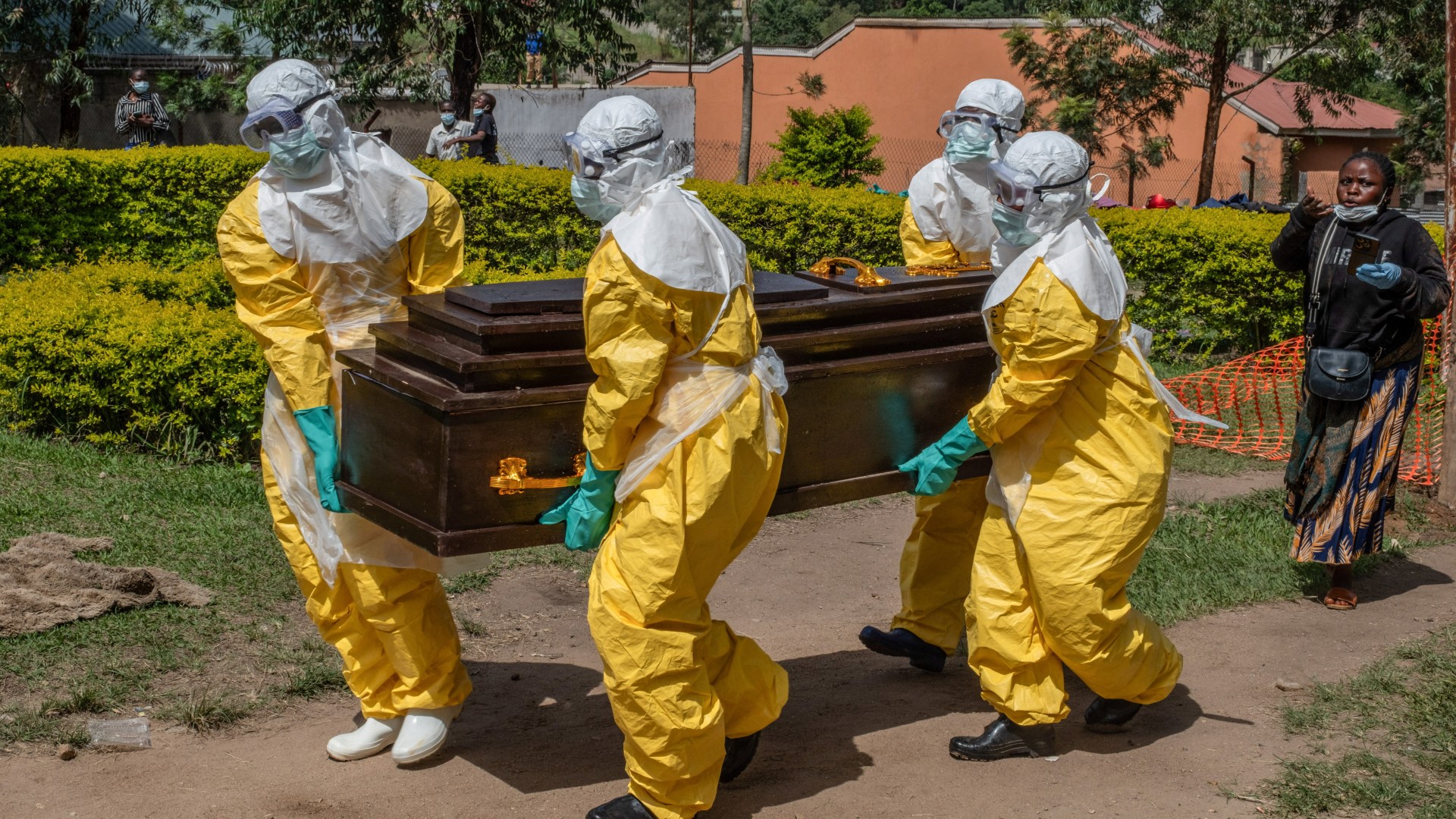
AN OUTBREAK of Ebola in the Democratic Republic of Congo is now the fastest-growing outbreak of the disease in history with almost 1,400 dead. But as the death toll has reached 1,354, around 100 health workers at an Ebola treatment centre have gone on strike, disrupting critical care for patients. More than 1,300 people have now died from an Ebola outbreak in the Democratic Republic of Congo Credit: Reuters According to Government data, the number of Ebola cases in the DRC has increased to 3,075. The outbreak has now killed people at a faster rate than any previous outbreak of Ebola, including the 2013-2016 epidemic, which saw more than 11,000 people die out of 28,000 confirmed cases. Sign up for the Health newsletter Thank you! During that outbreak, it took eight months from the confirmed case to reach 1,000 deaths. But in comparison, the current DRC outbreak has seen the death toll rise to 1,000 in almost ten weeks. What’s more, the true scale of the outbreak could be two to four times higher than official figures indicate, according to the World Health Organisation (WHO). Officials have also warned that 80 per cent of the new cases have emerged outside known chains of transmission. According to Government data, the number of Ebola cases in the DRC has increased to 3,075 Credit: Alamy This outbreak is now the fastest growing outbreak of the disease in history Credit: AFP This means that the outbreak is spreading faster than health officials can track, despite stepped-up responses in several DRC provinces. Ebola is passed on through direct contact with bodily fluids from infected animals or people. Most read in Health The virus is very contagious, so patients need to be isolated. Ebola first appears as a high fever, intense muscle and joint pain, headaches and a sore throat. This is often followed by vomiting and diarrhoea, rashes on the skin, kidney and liver failure and sometimes internal and external bleeding. The outbreak has been caused by the rare Bundibugyo virus, which has a mortality rate of 30 to 50 per cent. At the moment, it has no approved vaccine or treatment. Speaking to Sky News about the current outbreak, Jean Kaseya, director-general of the Africa Centres for Disease Control and Prevention, said: “These are people dying. “They are dying because we don’t have vaccines, we don’t have medicine, we don’t have funding.” To add to the situation, around 100 health workers at an Ebola treatment centre in eastern DRC have gone on strike over unpaid performance bonuses. This risks significantly disrupting the care of patients at the epicentre of the rapidly growing outbreak. The Elikya Ebola Treatment Centre in Bunia, Ituri province, was largely put out of action after doctors, nurses and security staff stopped work and protested outside the centre on Saturday. As the outbreak continues, around 100 health workers in the DRC have gone on strike Credit: Reuters How does Ebola spread and what are the symptoms? The virus is transmitted through direct contact with blood and body fluids and objects that have been contaminated by someone with Ebola. It also spreads through contact with sick or dead wild animals. It can take symptoms two to 21 days to appear following infection – this is known as an incubation period. Ebola first appears as a high fever, intense muscle and joint pain, headaches and a sore throat. Initial symptoms are often followed by vomiting and diarrhoea, rashes on the skin, kidney and liver failure, and sometimes internal and external bleeding. People who survive the virus can suffer from arthritis as well as vision and hearing problems. Some types of Ebola can be prevented with vaccines and treated with medicines. Source: World Health Organization Meanwhile, health workers at Bunia General Hospital – the largest medical centre in the region – went on strike last week over unpaid salaries. Some told The Associated Press that they have not been paid since they started working at the onset of the outbreak. While there is currently no approved treatment for this strain of Ebola, the first volunteer in the world received an experimental vaccine against the virus last week, according to the BBC. The vaccine was developed by scientists in just eight weeks with the 37-year-old UK man being the first of 50 volunteers to get the jab. It uses the same technology as the Oxford AstraZeneca Covid jab which was given to hundreds of millions of people during the pandemic. It comes after health experts warned last week that Ebola could be spreading from dead bodies. The transport of Ebola victims’ bodies between different areas of the DRC for funerals or burial risks the virus spreading further, the International Organisation for Migration (IOM) said. The virus remains highly contagious after death, making funeral practice a critical component of outbreak control. Comment now
Ebola outbreak killing people at fastest rate EVER – as death toll hits 1,400 and health workers strike
Full Article
Original Source
Read the full article at Thesun →KhanList aggregates and links to publicly available news content. We do not host full articles from third-party sources. Always verify important information with original sources.