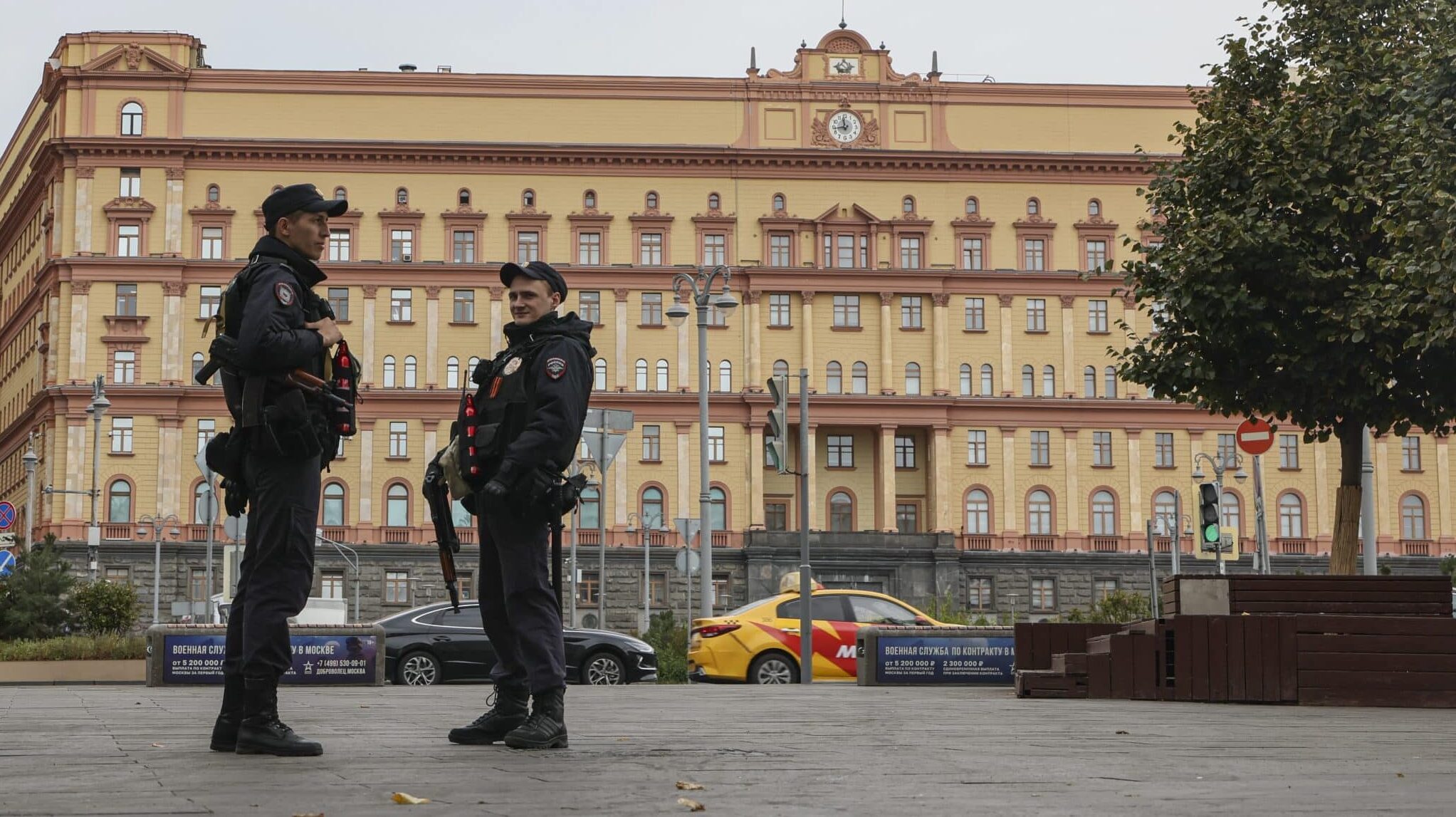
Slovakia has become a target of cyber operations linked to the Russian security services. Although the Slovak authorities confirmed, following media inquiries, that the attacks had affected targets inside the country, Robert Fico’s government did not initially informed the public about the incident. According to available information, the attacks targeted critical infrastructure, the energy sector, the defence industry and the automotive sector. In response to Russia’s malicious cyber activities, the EU imposed sanctions on nine individuals and four entities. Among those targeted is the 16th Centre of Russia’s FSB, the main intelligence service, which is linked to the Turla hacking group. Security experts have warned that Russian cyber groups have long focused on Slovakia, primarily seeking access to sensitive information from state systems. The opposition criticised the government’s lack of communication and called on PM Fico to convene the Security Council. It also urged Foreign Minister Juraj Blanar to summon the Russian ambassador and demand an explanation for Moscow’s activities. Richard Rasi, the speaker of Slovakia’s parliament and a member of one of the governing coalition parties, played down the situation, describing cyberattacks as a daily occurrence. He said such attacks did not originate solely from Russia but from around the world. The Foreign Ministry said Slovakia had backed a joint EU statement condemning Russia’s cyber activities and supported sanctions against individuals and entities involved. Both the National Security Authority and the Foreign Ministry said, however, that specific technical details of the incidents remained the responsibility of the relevant security authorities. Slovakia’s fight against corruption has deteriorated, with the country failing to make progress despite previous recommendations, the EU Commission said in its latest Rule of Law Report. The report warned that Slovakia’s ability to detect, investigate and prosecute high-level corruption had further weakened. It noted that no new cases of high-level corruption were uncovered in 2025 and that the number of prosecuted cases had declined. At the same time, public perceptions of corruption have worsened. Brussels highlighted concerns over changes to the Criminal Code adopted by Fico’s government in 2024, which reduced penalties for economic crimes and shortened limitation periods. The changes resulted in around 3,000 proceedings being discontinued. The EU Commission also referred to criticism surrounding the abolition of the National Crime Agency (NAKA) and the Special Prosecutor’s Office, which had handled major corruption investigations. According to the report, the closure of the Special Prosecutor’s Office weakened the advantages of expertise and professional relationships built by its prosecutors over 20 years. The EU Commission also raised concerns about the use of Article 363, which allows the chief prosecutor to stop criminal cases, and warned that limiting the use of cooperating witnesses could make high-level corruption investigations more difficult. Prosecutor General Maros Zilinka has also criticised the current state of anti-corruption efforts, saying the absence of newly uncovered major cases does not mean corruption has disappeared. The EU commission also raised concerns over public broadcaster STVR’s independence, access to information, pressure and legal threats against journalists, political attacks on judges, and the lack of progress on lobbying rules and public officials’ asset declarations. PM Fico criticised the report’s assessment of media freedom in Slovakia. “Apparently, we are lagging behind in protecting the media. I almost choked when I read that,” he said, claiming that journalists in Slovakia “do whatever they want” and arguing that anyone can become a journalist regardless of qualifications or responsibility. He accused the media of producing “a pile of dirt and lies” and creating a false image of Slovakia as a “black hole”.Hungary’s chief prosecutor, Balint Gabor Nagy. Photo: X / EU Agency for Criminal Justice Cooperation Hungary’s chief prosecutor resigns; ex-Austrian chancellor Kurz on MCC’s payroll Hungary’s chief prosecutor, Balint Gabor Nagy, resigned this week amid mounting pressure from the new Tisza-led government. PM Peter Magyar welcomed the decision. Nagy was appointed by the previous government of Viktor Orban in 2025 for a nine-year term and was regarded as one of its key officeholders. Nagy said he was resigning in order to preserve the dignity and independence of the national prosecutor’s office. “The prosecutor’s office must not become an instrument in conflicts between political actors, nor can it become a battlefield for short-term political interests or power struggles,” Nagy argued in his resignation letter. If accepted, his resignation will take effect on August 25. Magyar has demanded the resignation of key officeholders of the Orban administration following his landslide election victory on April 12. He identified the state president, the chief prosecutor, the president of the Supreme Court and the president of the Constitutional Court as among those who needed to step down in order to achieve genuine regime change in Hungary and dismantle the deep state behind the Orban system. Magyar originally demanded their withdrawal by the end of May, but the process is taking somewhat longer. However, this week he achieved three objectives at once via a constitutional amendment passed on July 13: he secured the departure of the president, the chief prosecutor and the president of the Constitutional Court. Removing the president of the Supreme Court in such a manner could raise rule-of-law concerns but, according to the latest constitutional amendment, he can now be voted out of office by the judges themselves. The move clears the way for potential investigations into Orban’s close business associates or even family members, as Nagy can no longer block them. It emerged this week that Austria’s former conservative chancellor, Sebastian Kurz, was on the payroll of the Mathias Corvinus Collegium (MCC), a Fidesz-aligned think tank and foundation which in 2020 received a huge endowment from the Hungarian state in the form of assets worth 1.3-1.4 billion euros. Kurz confirmed the information to the Austrian weekly Falter, but said that after Orban’s election defeat he immediately returned around 110,000 euros to the institution. After resigning from office, Kurz maintained close ties with Orban and his Fidesz party. Officially, he served as an adviser to assist the MCC’s acquisition of Austria’s private Modul University in Vienna and received 10,000 euros a month for his involvement, although there is no evidence that he carried out any such work. The MCC acquired a 90 per cent stake in Modul in 2023, while the remaining 10 per cent stayed with the Vienna Chamber of Commerce. Hungary’s new government has already announced it will dissolve the MCC and return its assets to the Hungarian state, which could lead to the bizarre situation where the Hungarian state inherits an Austrian university. Frank Furedi, the head of the MCC’s Brussels branch, which also benefited massively from taxpayer money, has announced earlier this month his institution is seeking new financing but insisted that it operates independently so cannot just be closed down by the Hungarian government. It is becoming increasingly clear that Orban was not only an ideological ally of many far-right and Eurosceptic leaders, but also provided a financial lifeline to many when they were out of office. The MCC also offered lucrative fellowships to Western politicians who praised Orban in the international media and at conferences. Kurz was a regular guest at MCC events and the Orban government firmly believed he would eventually return to government in Austria. Poland’s President Karol Nawrocki delivers a speech during the National Day of Remembrance for Poles – Victims of the Genocide Committed by the OUN and UPA in the Eastern Territories of the Second Polish Republic, in Radruz, southeastern Poland, 11 July 2026. EPA/DAREK DELMANOWICZ Polish president vetoes civil partnership bill; Poles and Ukrainians take friendship to streets Poland is already one of the EU member states furthest from marriage equality. And on July 17 it took another step backwards when President Karol Nawrocki vetoed two bills that would have granted a limited set of basic rights to same-sex couples and unmarried heterosexual partners. The proposed legislation would have allowed any two adults, regardless of sex, to sign an agreement before a notary and register it with the civil registry. The agreement would have regulated practical matters including joint property, access to medical information, inheritance and funeral arrangements. “I cannot accept a solution that would lead to the loss of the special status of marriage set out in Article 18 of the Polish constitution, which defines marriage as a union between a woman and a man,” Nawrocki said on announcing the veto. Speaking to journalists in parliament, PM Donald Tusk described the legislation as “the absolute minimum that we had all worked towards… If the president considers even this unacceptable, it is difficult to imagine any version that would win the approval of the right.” Sejm Speaker Wlodzimierz Czarzasty called the veto “scandalous”. The decision puts the president at odds with public opinion – a 2025 CBOS poll found that 62 per cent of respondents supported civil partnerships for same-sex couples. Nawrocki’s veto also leaves Poland with an increasingly contradictory legal landscape. Following a November 2025 ruling by the EU’s highest court, the ECJ, Polish authorities must recognise same-sex marriages legally concluded in another EU member state. Warsaw registered its first such foreign marriage in May 2026, although same-sex couples still cannot marry or enter a legally recognised civil partnership in Poland itself. The country remains near the bottom of ILGA-Europe’s annual Rainbow Map, which assesses the laws and policies affecting LGBTQ+ people across 49 European countries. In its latest ranking, only Bulgaria and Romania scored lower among EU member states. As political tensions between Poland and Ukraine deepen and reports of attacks on Ukrainians become more frequent, two small grassroots demonstrations sought to show that friendship between the communities remains alive. On Sunday, Poles, Ukrainians and Belarusians gathered outside the Ukrainian embassy in Warsaw for the “Good Neighbourhood” rally. They carried national flags and placards reading “Don’t let them divide us”, “Stop hatred”, “Don’t be indifferent – react”, and “We are with you, with all our hearts”. Speakers urged both communities to resist attempts to turn them against one another. “Our task is not merely to respond to hatred,” Dzmitry Halko, a Belarusian journalist and analyst who organised the rally, posted later on Facebook. “We must make kindness, courage and good neighbourliness attractive too.” Halko said the steady stream of reports about attacks on Ukrainians had convinced him that expressing outrage privately or on social media was no longer enough. Opponents of xenophobia, he argued, needed to become visible in public. “Bots do not take to the streets, but they move people,” he wrote, describing how relentless online hostility can strip hatred of its stigma until it begins to appear normal, fashionable and ultimately acceptable. He announced plans for a nationwide March for Friendship in August or September. At the same time, just over a dozen people gathered on Wroclaw’s market square to protest hatred and to urge bystanders to intervene when they witness aggression. Czech President Petr Pavel delivers a speech after appointing Miroslav Hlavac as the new Chief of the General Staff of the Czech Armed Forces during a ceremony at Prague Castle in Prague, Czech Republic, 30 June 2026. EPA/MARTIN DIVISEK Rift with Czech govt deepens as Pavel vetoes budget bill; extremism report omits SPD Czech President Petr Pavel this week vetoed a controversial amendment pushed by the government to reform public budget rules. According to the head of state, the reform would significantly alter how the state manages public money in the future and threatens the stability of public finances by giving too much leeway for the government to increase public debt. The bill now returns to the Chamber of Deputies – the lower house of parliament – where the presidential veto can be overturned by a simple majority of votes. “This law allows the government to borrow significantly more than it does today. In practice, this means the government will gain more room to finance expenditures through debt,” Pavel said. Calling the president’s veto ill-considered and irresponsible before leaving for an official trip to Serbia, PM Andrej Babis vowed to overturn it in parliament, where the three-party ruling coalition holds a comfortable majority. The dispute is only the latest development in a long-running and deepening rift between President Pavel and Babis’s government. Also this week, the government faced a backlash for asking the Constitutional Court to dismiss the president’s competency lawsuit – filed after the coalition tried to block him from attending the NATO summit in Turkey – and exclude its rapporteur from further involvement in this case. In response, Pavel warned against political attacks on the judiciary that undermine the public’s trust in judicial independence and the rule of law at large. The Interior Ministry’s annual report on extremism this year did not include the risk posed by the far-right Freedom and Direct Democracy (SPD) party – now a junior coalition partner that has been repeatedly mentioned in the document in previous years, and whose leader Tomio Okamura (now the speaker of the house) was last year indicted for inciting hatred. Opposition parties criticised the omission, while Seznam Zpravy reported that two ministry experts who took part in drafting the report are leaving their position, although they declined to give a reason. Interior Minister Lubomir Metnar, a nominee of the ruling ANO party, denied any political interference in how the report was put together and “unequivocally rejects the idea that some personnel changes at the ministry are linked to the report”. Pointing to the weakening of traditional extremist movements and anti-system attitudes, the report identifies the online radicalisation of youth and the spread of extremist content relying on AI as two of the growing and biggest security threats today. Meanwhile, a Prague court this week returned to continue hearing the SPD’s long-running lawsuit that contests the party’s inclusion in the Interior Ministry’s extremism report for the year 2022. First dismissed, the verdict was overturned at the end of last year by an appeals court, and a new ruling is now expected at the end of August.
Democracy Digest: Russian Hackers Linked to FSB Target Slovakia
Full Article
Original Source
Read the full article at Balkaninsight →KhanList aggregates and links to publicly available news content. We do not host full articles from third-party sources. Always verify important information with original sources.