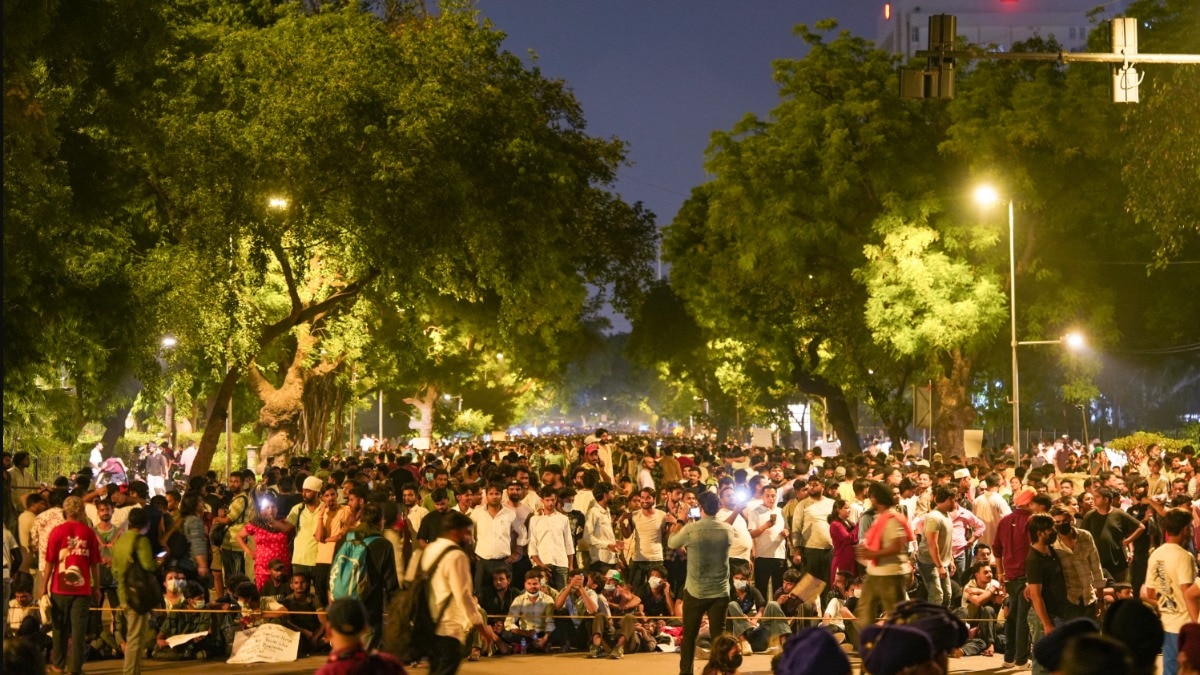
Former Punjab Education Minister Daljit Singh Cheema and former Himachal CM Jairam Thakur welcomed the proposed Public Examinations Amendment Bill, 2026. Cheema stressed that tougher penalties must be backed by decentralised exams, stronger cybersecurity, robust SOPs and systemic reforms to prevent paper leaks.A scene from Delhi's Jantar Mantar at the time of protest (Photo-PTI)Punjab's former Education Minister Daljit Singh Cheema has welcomed the proposed Public Examinations (Prevention of Unfair Means) Amendment Bill, 2026, saying stricter punishment for paper leaks and examination malpractice is necessary to deter offenders and protect the future of students.Cheema, however, said punishment alone would not be enough to ensure the integrity of public examinations. He called for robust standard operating procedures, secure technology, end-to-end accountability, regular security audits and foolproof examination protocols to prevent leaks.He also highlighted the challenges posed by India's geographical spread, linguistic diversity, uneven infrastructure and varying levels of technological access. According to Cheema, the transportation of confidential examination papers to thousands of centres makes highly centralised examinations more vulnerable to security breaches.Calling for a cooperative federalism approach, Cheema said the Union Government should establish uniform national security standards, while States should be allowed to conduct examinations for their own recruitments and institutions. He said decentralisation, backed by strong national SOPs, could reduce systemic risks, improve accountability and restore public confidence in the examination system. Dr Varinder Bhatia, former Vice-Chairman of the Punjab School Education Board and Principal of DAV College, Batala, also said the proposed legislation should go beyond punishment and focus on systemic reforms. He called for restructuring and strengthening the National Testing Agency, decentralising examinations, reducing outsourcing, increasing permanent examination staff and adopting computer-based or hybrid examination models.Bhatia also suggested multi-stage testing, stronger safeguards against paper leaks and cheating, improved cybersecurity and greater weightage to school performance. He stressed that reforms must bridge the digital divide and should not disadvantage poor, rural or technologically less-experienced students. Former Himachal Pradesh Chief Minister and Leader of Opposition Jairam Thakur also welcomed the proposed bill, saying stricter legal provisions against paper leaks and examination malpractice would strengthen transparency and accountability in public recruitment. He said decisive action was necessary to protect students' futures and restore confidence in the examination system.The Central Government is set to introduce the Public Examinations (Prevention of Unfair Means) Amendment Bill, 2026, in Parliament on Monday. The proposed legislation reportedly seeks to impose stricter penalties, including 5 to 10 years' imprisonment and a Rs 50 lakh fine for malpractice and paper leaks. Organised paper-leak crimes could attract at least seven years in prison and a Rs 10 crore fine.The bill also proposes the creation of a Special Task Force to investigate such cases, with investigations to be completed within two months. Trials and appeals are also proposed to be fast-tracked.- EndsPublished By: Zafar ZaidiPublished On: Jul 27, 2026 00:39 IST
Decentralise exams to reduce paper leak risks, says former Punjab minister
Full Article
Original Source
Read the full article at Indiatoday →KhanList aggregates and links to publicly available news content. We do not host full articles from third-party sources. Always verify important information with original sources.