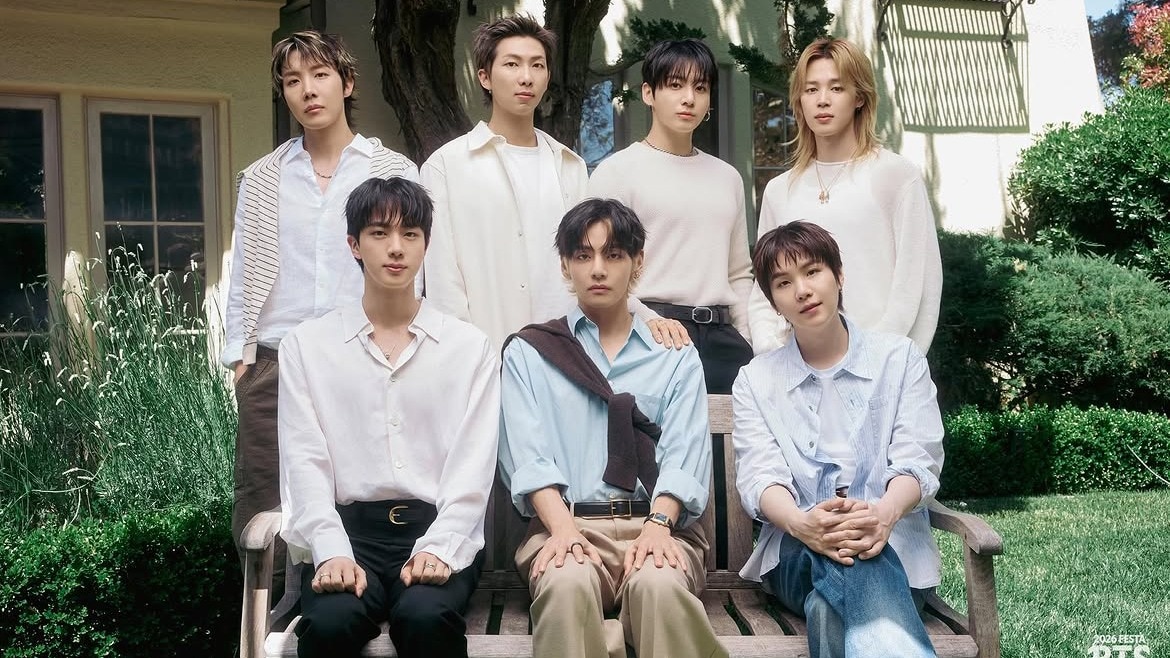
For over a decade, the question surrounding BTS was always the same: When will they win a Grammy? Perhaps we were asking the wrong question. Because after everything BTS have achieved, the more interesting one is this: What happens when the world’s biggest band decides it no longer needs to ask for a seat at the table?In a unified statement shared across all seven members’ Instagram accounts, RM, Jin, SUGA, j-hope, Jimin, V and Jung Kook wrote, “We have decided not to enter the Grammys this year. I hope music itself can be heard and loved rather than being distinguished by region or language.”Three sentences only, and it may well be the most consequential statement the group has made about the global music industry in years.The timing, of course, is impossible to ignore. The announcement came just days after the Recording Academy introduced Best Asian Pop Music Performance, a category designed to recognise music from one of the world’s most influential pop cultures. Many welcomed it as long-overdue representation. Asian artists have spent decades shaping global popular music while often remaining on the fringes of Western institutions. But BTS’ statement quietly asks a question that the industry has long avoided: when does representation begin to resemble categorisation?This isn’t an argument against the new category. It will undoubtedly create visibility for artists who deserve it. But BTS have spent the better part of 13 years dismantling the very walls that separate music by language, nationality, and geography. Their career has been built on proving that a song in Korean can make someone in Sao Paulo cry, someone in Mumbai dance and someone in Los Angeles sing along without understanding every word. To then be celebrated primarily through the lens of where that music comes from, rather than where it reaches, feels almost contrary to the very revolution they helped create.The Grammys and BTS have always shared an oddly fascinating relationship. The Recording Academy recognised the group’s cultural significance early. BTS became regular fixtures on Grammy stages, presenters, performers and some of the ceremony’s biggest social media drivers. Every appearance translated into unprecedented engagement. Millions of fans tuned in not merely to watch the awards but to watch BTS.Whether intentionally or not, the Grammys benefited enormously from BTS’ presence. The wins, however, never quite followed.One doesn’t have to believe BTS were “robbed” every year to acknowledge the imbalance. The Academy consistently embraced BTS as a cultural phenomenon while hesitating to place them alongside the biggest winners. It became one of the defining contradictions of modern pop culture: the world’s biggest band was often treated as essential to the conversation but not always central to the outcome.Yet perhaps the biggest irony is that BTS never stopped making history while waiting for that elusive gramophone.The members have never hidden what the Grammys meant to them. RM has spoken openly about wanting to win one. Jung Kook has described it as a dream. Those aspirations were never about chasing Western approval for the sake of prestige. They were about proving that Korean artists could compete on equal footing in spaces that had historically overlooked them.Even Pdogg, BTS’ longtime producer, reflected on this in a conversation with India Today. While acknowledging that the Grammys remain one of music’s most prestigious honours, he stressed that awards were never the destination. The music was. The connection with listeners was. Everything else was secondary.That philosophy feels especially significant in the ARIRANG era.If there was ever an album poised to complete BTS’ Grammy journey, it was this one. Their first full-group album after completing military service wasn’t merely a comeback—it was a cultural reset. ARIRANG shattered streaming records, dominated charts worldwide, reaffirmed BTS’ extraordinary commercial power in the United States and reminded an industry obsessed with “comebacks” that the group had never truly left. They didn’t just return; they returned bigger.For years, the music industry asked when BTS would finally “break America.” By the time that question was answered, another emerged: When will they win a Grammy?It is fascinating how the goalposts keep moving for non-Western artists. Sell out stadiums? Good. Top the Billboard charts? Better. Become one of the most-streamed acts in history? Impressive. Now win the Grammy. There always seemed to be one final checkpoint before global success could be declared complete.[INFO] Many critics of the South Korean industry support #BTS's decision! Im Jin-mo, a popular music critic assessed BTS's decision not to submit to the Grammys as "a declaration of musical independence that breaks the chains of Western-centric authority, and a restoration pic.twitter.com/B0wcLSbzRQ— BTS Charts & News (@btschartsxdaily) July 29, 2026BTS quietly dismantled that idea long before they declined to enter this year’s awards.Their influence today cannot be measured by trophies alone. It lives in the artists who no longer feel compelled to sing in English to dream globally. It lives in the way Korean music is consumed across continents without apology or translation. It lives in sold-out stadiums, billion-stream songs and a generation of listeners who no longer think of pop music through the narrow lens of East versus West.That is perhaps BTS’ greatest achievement. They didn’t simply globalise K-pop. They challenged the idea that “global” needed a Western centre.Which is why their latest statement feels less like a rejection of the Grammys and more like the completion of a journey. Awards matter. The Grammy Awards matter. Recognition matters. But perhaps what BTS have realised—and what the rest of us are only beginning to understand—is that there comes a point when validation stops flowing in one direction.For years, the question was whether BTS would win a Grammy. Today, the more interesting question is whether the Grammys can keep pace with a world that BTS helped reshape.Because the biggest thing BTS ever won wasn’t a trophy. It was the argument.- EndsPublished By: shweta keshriPublished On: Jul 30, 2026 09:13 IST
Dear Grammys, BTS' legacy never needed validation
Full Article
Original Source
Read the full article at Indiatoday →KhanList aggregates and links to publicly available news content. We do not host full articles from third-party sources. Always verify important information with original sources.