
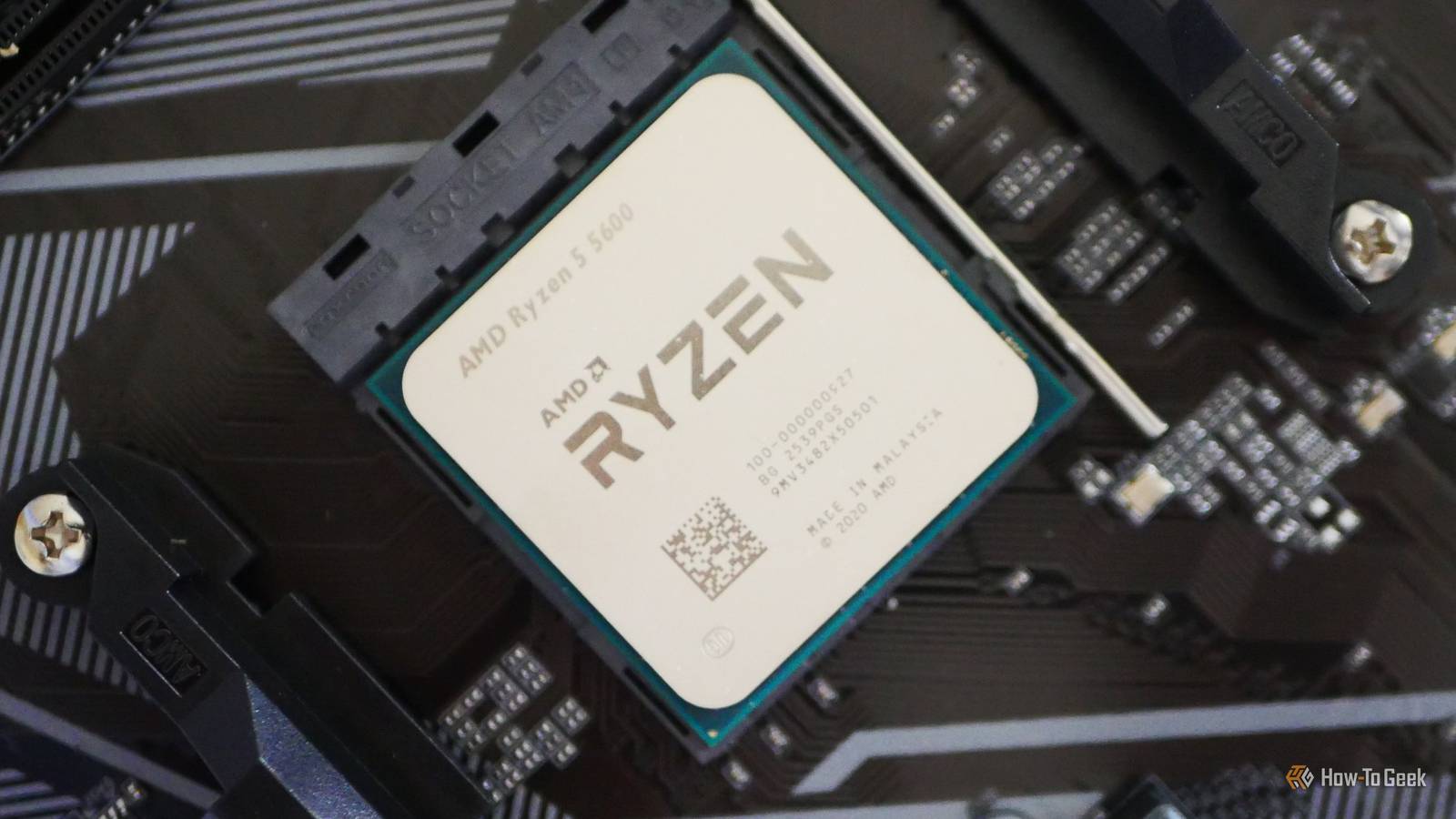
Credit: Bertel King / How-To Geek Published Aug 30, 2026, 2:30 PM EDT Ismar is a Senior Author at How-To Geek. He previously worked as a writer, editor, and general manager at a content agency before joining the team in 2023. He began his writing career in 2021 after completing a BA in English Language and Literature. Beyond How-To Geek, Ismar has contributed to Red Stag Fulfillment and Authority Hacker. He has also worked on various SEO projects to help clients improve their search visibility. Ismar has been around Windows PCs since the age of three, so friends and family naturally chose him as the resident tech support. His projects often involve tinkering, such as disassembling mechanical keyboards and gaming mice to mod his beloved gear. He also enjoys pushing hardware to the max through overclocking while staying on a reasonable budget. An avid gamer, Ismar has logged thousands of hours across various genres, including first-person shooters, RPGs, racing games, and roguelites. When he is not at his desk, he is probably exploring other people’s phones to discover their quirks and features or experimenting with the latest AI tools. In his free time, Ismar enjoys spending time with his wife, working out at the gym, playing guitar and bass, cooking gourmet meals, and traveling. Above all else, he’s a proud cat owner. Sign in to your How-To Geek account DDR5 RAM has been in short supply since the beginning of the year, and there's little sign of that changing anytime soon. As a result, first-time PC builders have been turning to older and more affordable but still relevant DDR4 platforms. The problem? DDR4 isn't exactly cheap anymore either. A budget 16GB 3200MHz kit currently costs around $120, while 32GB can set you back around $210 (for reference, I paid $93 for 32GB 6000MHz DDR5). But if current trends continue, prices of DDR4 could climb potentially even higher, taking motherboards and CPUs with it. So, if you've already decided to bite the bullet and buy DDR4, which platform and CPU should you choose? Allow me to help you make that decision. The AMD Ryzen 5 3600 is old, but it's still a surprisingly complete budget package There's still life in this ancient chip You might be surprised to see such an old CPU on this list, but 2019's most popular CPU still remains relevant today. Whether you're building a budget gaming rig, cheap office PC, or a desktop that can do it all, the AMD Ryzen 5 3600 is among the most inexpensive AM4 CPUs that still make sense. RAM and graphics card prices have gone up significantly, so if you need to keep costs as low as possible and just need something half-decent to slot into the socket, the AMD Ryzen 5 3600 makes a lot of sense. In fact, it makes more sense than a newer CPU many PC builders are flocking to—the Ryzen 5 5500. Performance is surprisingly comparable despite the 5500 being a newer chip, as the 3600 has twice the L3 cache at 32MB and supports PCIe 4.0 instead of 3.0, making it more broadly compatible with budget graphics cards that don't utilize all 16 PCIe lanes. The only problem with the Ryzen 5 3600 is availability. It's an old chip, so you can mostly find it used or on gray markets. If you can help it, try not to pay more than $80 for it. The Ryzen 7 3700X also deserves a mention, as it's ever so slightly faster, especially in multi-threaded workloads. It might be easier to find, but it also costs a bit more, so think twice before buying. The AMD Ryzen 5 5600 is the sweet spot for a budget AM4 build A tough chip to beat Credit: Ismar Hrnjicevic / How-To Geek The AMD Ryzen 5 5600 is only one number above the aforementioned Ryzen 5 5500, but unlike that chip, the 5600 isn't a cut-down version. That's why it costs almost twice as much, and people are gladly paying for it. It's a 6-core, 12-thread CPU built on Zen 3 with 32MB of L3 cache and PCIe 4.0 support. Once paired with the right B550 motherboard and 16GB, or ideally 32GB, of RAM, it makes for a formidable value-oriented combination. The Ryzen 5 5600 often sits in the shadow of its slightly more powerful and pricier brother, the Ryzen 5 5600X, but they're essentially the same chip. If you're willing to overclock the Ryzen 5 5600 through PBO, you can get comparable performance to the binned 5600X. AMD Ryzen 5 5600 The AMD Ryzen 5 5600 packs tons of gaming performance inside its six cores and is the best budget Ryzen CPU on the market. Its multithreaded performance won't impress anyone but for the price, it's more than a decent peformer. The Intel Core i5-12400F makes sense when the price is right A bargain, but only at the right price Credit: Hannah Stryker / How-To Geek It's easy for any CPU list these days to become Ryzen-heavy because of AM4's impeccable platform support, but some Intel chips can still make sense—especially if you can find a good deal on a used PC, bundle, or heavily discounted used CPU. One such CPU is the Intel Core i5-12400F, which supports both DDR4 and DDR5 memory depending on the motherboard. For a budget build, you can pair it with an affordable B660 or B760 DDR4 motherboard. Although the CPU's LGA1700 socket offers a decent upgrade path through Intel's 12th-, 13th-, and 14th-generation CPUs, I still wouldn't pick it over the Ryzen 5 5600, as AM4's upgrade path is a bit more flexible, especially for gamers because of 3D V-Cache. It makes the most sense if the CPU is noticeably cheaper. The AMD Ryzen 7 5700X gives AM4 eight cores without a huge premium Still a strong CPU for multi-threaded workloads Credit: Ismar Hrnjicevic / How-To Geek While the AMD Ryzen 5 5600's performance-per-dollar is hard to beat, the Ryzen 7 5700X can still be the better pick for some people. It has eight cores to the 5600's six, and it shares the same 4.6GHz boost clock as the 5600X. The extra cores help the 5700X with multi-threaded workloads like video transcoding, 3D rendering, and running VMs. It can also deliver more FPS in some CPU-heavy titles like Starfield. The Ryzen 7 5800X also deserves a mention, though it tends to be quite a bit more expensive. Its main advantages are a slightly higher 4.7GHz boost clock and a 105W TDP compared to the 5700X's 65W. Quiz 8 Questions · Test Your KnowledgeFrom Intel to AMD: The evolution of CPUsTrivia challengeFrom the 8086 to Ryzen — how well do you know the chips that power your PC?HistoryIntelAMDArchitecturePerformanceBegin Which Intel processor, released in 1978, is widely considered the ancestor of the modern x86 CPU architecture?AIntel 4004BIntel 8080CIntel 8086DIntel 80286Correct! The Intel 8086, launched in 1978, established the x86 instruction set architecture that almost every modern desktop and laptop CPU still uses today. Its 16-bit design was a massive leap forward and created a legacy that has lasted over four decades.Not quite — the answer is the Intel 8086. While the 4004 was Intel's first commercial microprocessor and the 8080 was influential in its own right, it was the 8086 that introduced the x86 instruction set in 1978, forming the direct foundation of modern PC processors.Continue What was the name of AMD's microarchitecture, introduced in 2017, that dramatically closed the performance gap with Intel after years of falling behind?ABulldozerBPiledriverCZenDSteamrollerCorrect! AMD's Zen architecture, which debuted with the Ryzen processor family in 2017, was a massive generational leap. It nearly doubled AMD's instructions-per-clock performance compared to the struggling Bulldozer architecture, making AMD genuinely competitive with Intel for the first time in years.Not quite — the answer is Zen. Bulldozer, Piledriver, and Steamroller were all AMD architectures that disappointed critics and fell well short of Intel's performance. It was the ground-up Zen redesign in 2017 that finally gave AMD CPUs the competitive edge they had been missing for nearly a decade.Continue Intel's 'Tick-Tock' strategy, used for many years, referred to what development pattern?AAlternating between desktop and mobile CPU releases each yearBAlternating between shrinking the manufacturing process and refining the architectureCReleasing a budget chip followed by a high-end chip every cycleDAlternating between single-core and multi-core performance optimizationsCorrect! Intel's Tick-Tock model meant that one year they would shrink the chip to a new, smaller manufacturing node (the 'Tick'), and the following year they would refine and improve the architecture on that same node (the 'Tock'). This gave Intel a predictable, efficient cadence for years — until it began to break down around 2016.Not quite — Tick-Tock referred to alternating between a manufacturing node shrink and an architectural refinement. The 'Tick' was a die shrink to a smaller process node, while the 'Tock' brought a new microarchitecture on that node. When Intel struggled to move beyond 14nm, this reliable cadence collapsed into the so-called 'Process-Architecture-Optimization' model.Continue Which AMD CPU generation was the first to use a chiplet design, combining multiple smaller dies on a single package instead of one monolithic die?ARyzen 1000 (Zen)BRyzen 2000 (Zen+)CRyzen 3000 (Zen 2)DRyzen 5000 (Zen 3)Correct! Ryzen 3000 (Zen 2), launched in 2019, was the first AMD consumer desktop lineup to use a chiplet architecture. It paired CPU core chiplets built on TSMC's 7nm process with a separate I/O die on a 12nm node, allowing AMD to improve yields, reduce costs, and scale core counts more efficiently.Not quite — it was Ryzen 3000 (Zen 2) in 2019 that introduced chiplets to AMD's consumer desktop lineup. Earlier Ryzen generations used a more traditional design. The chiplet approach, connecting CPU core dies and an I/O die via AMD's Infinity Fabric interconnect, proved so successful that AMD has continued refining it through Zen 4 and beyond.Continue Which company manufactured early AMD processors under a manufacturing agreement that AMD later had to legally fight to escape from?ATexas InstrumentsBMotorolaCIntelDIBMCorrect! In the early days, AMD actually had a cross-licensing agreement with Intel to produce x86-compatible chips. Intel later tried to terminate this arrangement, leading to a lengthy legal battle that AMD ultimately won in 1994, securing its right to independently produce x86-compatible processors — a ruling that shaped PC competition for decades.Not quite — the answer is Intel. AMD and Intel had a historic cross-licensing and second-source manufacturing agreement dating back to the early 1980s. When Intel tried to cut AMD off, AMD sued and won in 1994, cementing its legal right to build x86-compatible CPUs independently. Without that legal victory, the competitive CPU market we know today might never have existed.Continue Intel's 12th-generation Alder Lake CPUs introduced a hybrid architecture to mainstream desktop PCs. What were the two types of cores it combined?ATurbo cores and efficiency coresBPerformance cores and efficiency coresCPower cores and background coresDHyper cores and nano coresCorrect! Alder Lake, launched in late 2021, introduced a hybrid design mixing large Performance cores (P-cores) for demanding workloads with smaller Efficiency cores (E-cores) for background tasks. This approach, inspired by ARM's big.LITTLE design, required updates to Windows 11's scheduler to work optimally and signaled a major shift in how Intel thinks about CPU design.Not quite — Intel calls them Performance cores (P-cores) and Efficiency cores (E-cores). Introduced with the 12th-gen Alder Lake in 2021, this hybrid approach put high-performance cores alongside power-efficient smaller cores on the same chip. It was Intel's biggest architectural shift in years and helped it reclaim competitive ground against AMD's Zen 3 processors.Continue What was the name of Intel's ill-fated CPU architecture, released in 2010, that was primarily designed to combine a CPU and GPU on the same die for high performance?ALarrabeeBItaniumCSandy BridgeDHaswellCorrect! Larrabee was Intel's ambitious project to build a many-core processor combining CPU and GPU-like functionality. It was ultimately cancelled as a consumer product before launch after failing to compete with Nvidia and AMD's dedicated GPUs. Elements of its design did eventually live on in Intel's Xeon Phi line of high-performance computing accelerators.Not quite — the answer is Larrabee. Sandy Bridge and Haswell were both highly successful conventional CPU architectures, while Itanium was Intel's failed 64-bit enterprise chip. Larrabee was the ill-fated project aimed at disrupting the GPU market, but poor performance relative to dedicated graphics cards from Nvidia and AMD caused Intel to cancel it before it ever reached consumers.Continue As of 2024, AMD's high-end desktop Ryzen 9000 series CPUs are built on which manufacturing process node?ATSMC 5nmBTSMC 4nmCTSMC 3nmDSamsung 4nmCorrect! AMD's Ryzen 9000 series, based on the Zen 5 architecture, uses TSMC's 4nm process for the compute chiplets — though AMD and TSMC market some variants of this node under different naming conventions, the consumer Ryzen 9000 desktop CPUs are built on TSMC's 4nm class process. This continues AMD's long partnership with TSMC that began with Zen 2.Not quite — AMD's Ryzen 9000 series (Zen 5) desktop CPUs use TSMC's 4nm process node for their compute chiplets, paired with a 6nm I/O die. AMD has relied exclusively on TSMC for its leading-edge CPU fabrication since the Zen 2 generation in 2019, having exited the chip manufacturing business itself when it spun off its fabs to form GlobalFoundries back in 2009.See My Score Challenge CompleteYour Score/ 8Thanks for playing!Try Again The Intel Core i5-14600KF is the high-performance DDR4 sweet spot It's already at the point of diminishing returns Credit: Hannah Stryker / How-To Geek The Intel Core i5-14600KF came out in 2023, which makes it the most recent chip on this list. It performs essentially the same as the i5-14600K, but the "F" model lacks an integrated GPU, which considerably drives down the price. It supports both DDR4 and DDR5, and it's compatible with older LGA 1700 motherboards like the Z690 and B660 with a BIOS update, which makes it a pretty strong drop-in upgrade. The 14600KF uses a hybrid architecture with six Performance cores, eight Efficiency cores, and a total of 20 threads, which helps it outperform comparable AMD chips in some multi-threaded workloads, while the raw performance of the performance cores helps it blast through games with ease. Even with the bottleneck of DDR4, the 14600KF is a shockingly capable CPU that you can typically find for less than $250, making it a surprisingly strong value pick. And while it does support DDR5, I wouldn't take that into account if you're buying DDR4 today. By the time DDR5 prices go down, this will be an old chip anyway. The only problem with Intel's 14th-generation chips is that they run incredibly hot, so take the cost of a decent dual-tower air cooler or AIO into account if you pick this CPU. The AMD Ryzen 7 5800X3D remains the ultimate AM4 gaming upgrade Still the gaming king Credit: AMD What other CPU could I end this list with than the recently re-released AMD Ryzen 7 5800X3D? The 10-year AM4 anniversary edition just dropped at an MSRP of $349, and despite the high price for what's essentially a 4-year-old CPU, it still makes sense in the right context. If you've already got an AM4 motherboard and the BIOS supports the Ryzen 7 5800X3D, it makes for a strong drop-in upgrade with performance comparable to many newer Ryzen chips. Its 3D V-Cache gives it a meaningful edge in some CPU-bound games and esports titles, even over the Intel Core i5-14600KF. However, since it's a dead-end upgrade, I'd only recommend it if you want the best DDR4 gaming PC possible and don't mind spending extra to put off a full upgrade for another year or two. DDR4 isn't going anywhere for years to come The current state of desktop PCs isn't great, and much of it comes down to the memory shortage. DDR5 is getting increasingly expensive, while DDR4 isn't the bargain it used to be, and it's only getting worse. Still, that doesn't mean you should completely write off older platforms. AM4 and LGA1700 CPUs can still offer plenty of performance for the money, whether it's for gaming, work, or a mix of both.
DDR4 RAM is getting expensive, but these 6 CPUs are still worth buying
Full Article
Original Source
Read the full article at Howtogeek →KhanList aggregates and links to publicly available news content. We do not host full articles from third-party sources. Always verify important information with original sources.