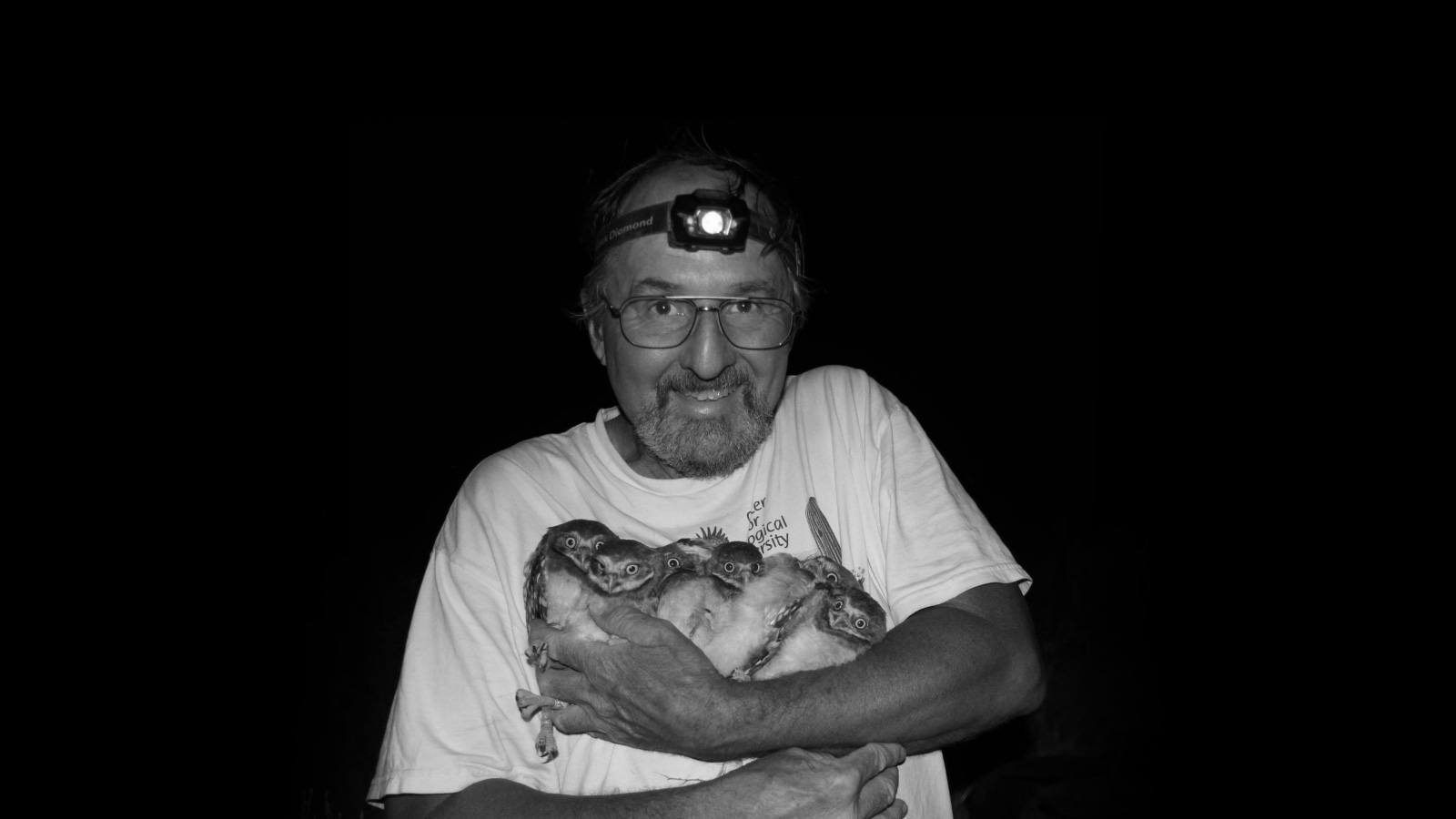
Burrowing owl numbers at Oregon’s former Umatilla Chemical Depot had fallen to only a few breeding pairs after badgers disappeared and suitable burrows became scarce.David H. Johnson and his collaborators built artificial burrows from plastic barrels and pipes, helping the population recover and creating a major long-term research site.Johnson founded the Global Owl Project, connected researchers across dozens of countries, mentored younger scientists, and studied both owl biology and their place in human cultures.After being diagnosed with Stage 4 colon cancer in 2022, he continued working through treatment. The Umatilla project now continues under other researchers, public agencies, and the Confederated Tribes of the Umatilla Indian Reservation. At the former Umatilla Chemical Depot in eastern Oregon, the weapons were gone, though their presence had shaped the land. Concrete bunkers stood among sagebrush and dry grass. Pronghorn moved through the open country. Badgers, once common there, had largely disappeared. Their absence mattered to the small owls that lived close to the ground. Burrowing owls do not usually dig their own homes. They occupy tunnels made by mammals, especially badgers and prairie dogs. At Umatilla, the decline of those animals had removed much of the owls’ shelter. By the late 2000s, only a few breeding pairs remained. David H. Johnson, who died on June 15th, aged 69, decided that the shortage of burrows could be addressed. He and his collaborators buried plastic barrels and connected them to the surface with lengths of pipe. The structures were crude substitutes for badger burrows, intended to keep the population breeding while the recovery of its habitat remained a longer-term task. The owls accepted them. Within a year, the number of breeding pairs had risen. Over the following decade, the depot became home to one of the region’s most closely studied burrowing-owl populations. Researchers banded chicks, recorded calls, tested nest designs, and tracked the birds’ movements. By 2024, they were monitoring more than 100 nesting attempts and had banded nearly 500 chicks that season. Johnson had been interested in owls since childhood. At 11, while camping alone, he heard an eastern screech owl calling outside his tent. The bird landed close enough for him to see its throat move. He later said that he had not chosen owls. They had chosen him. He studied biology and archaeology and spent much of his career in fieldwork, wildlife management, and research. In Oregon, he became the state’s first spotted-owl coordinator during the disputes over logging in the Pacific Northwest. He testified as an expert witness and saw how quickly a bird could become part of a larger argument about work, land, and government. His efforts later expanded beyond any single species or region. Through the Global Owl Project, which he founded, he connected researchers across dozens of countries. He wanted to gather what was known about every species of owl, living and extinct: their calls, genes, bones, distribution, behavior, and names. He also studied the place of owls in human culture. Some societies treated them as emblems of wisdom. Others saw them as messengers of death. He wanted to understand the birds and the meanings people attached to them. His plans were often ambitious. He advanced them by drawing other people into the work. Colleagues described a steady stream of emails and messages in which he proposed research, introduced scientists who ought to know each other, and encouraged younger researchers to attempt work they had not thought themselves ready to do. He often supplied what they needed to begin: a contact, a paper, a grant lead, or a place in the field. Volunteers called him DJ. He signed emails “Strigilogically yours,” after the scientific order to which owls belong. He made wooden owl awards for researchers and conservationists. He enjoyed telling stories about his travels. After his boat motor failed on the Rio Napo, he described the episode as a “near-life experience.” Umatilla became a place where younger biologists could learn the work directly. They handled birds, inspected nests, recorded data, and watched for small changes in behavior. The artificial burrows allowed researchers to follow successive breeding seasons and refine their methods. Some of those trained there went on to careers in owl research. In 2022, Johnson was diagnosed with Stage 4 colon cancer. He continued working through chemotherapy, advising researchers and developing a book about owls in mythology and culture. Friends said he remained occupied with unfinished projects. His work had always produced more questions than he could answer, and he kept pursuing them. By then, the Umatilla study no longer depended on him alone. Responsibility had passed to other researchers, public agencies, and the Confederated Tribes of the Umatilla Indian Reservation. Part of the former depot had been given a name translated as “Home of the Burrowing Owl.” Banner image: Dave Johnson. Photo from the Global Owl Project Credits Topics
David Johnson, the owl man of Umatilla
Full Article
Original Source
Read the full article at News →KhanList aggregates and links to publicly available news content. We do not host full articles from third-party sources. Always verify important information with original sources.