
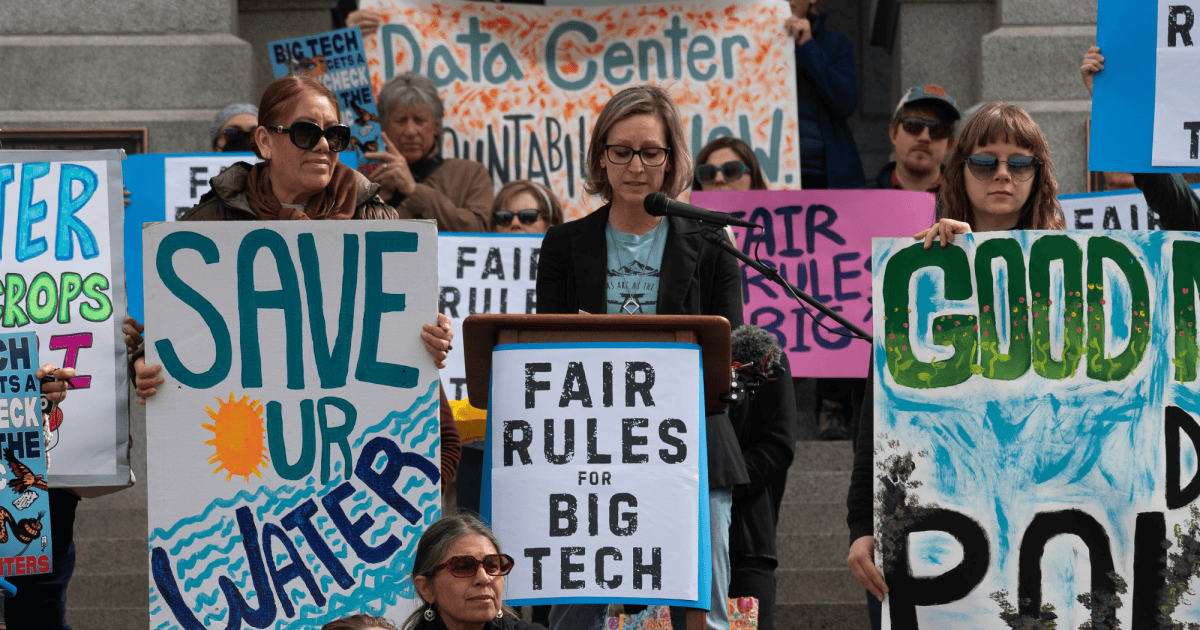
Demonstrators rally against data center proliferation at the Capitol in Denver, Colorado, in March 2026. Jesse Paul/Zuma Get your news from a source that’s not owned and controlled by oligarchs. Sign up for the free Mother Jones Daily. This story was originally published by Capital B and is reproduced here as part of the Climate Desk collaboration. If you’re a Black American (or any American, actually) worried about a data center coming to your neighborhood, the questions are immediate and seemingly boundless. Will electricity bills rise? How much water will it use? And will elected officials listen before approving it? A new nationwide election dashboard from the NAACP and the Memphis, Tennessee-based Black environmental organization Young, Gifted & Green aims to help residents bring those concerns to the ballot box. Called “Climate on Your Ballot,” the platform lets users find candidates, explore environmental issues near their homes, and request answers from people seeking their votes. The tool tracks 1,727 data centers nationwide, according to the organizations’ announcement. “The political landscape on climate is a civil rights concern as it directly impacts the health and safety of our communities.” For the groups behind the effort, the pressing issue behind the hundreds of billions of dollars being invested in data centers is the lack of Black community voices shaping these decisions before construction begins. “This has been the case for a number of years,” Abre’ Conner, director of environmental justice at the NAACP, said about industrial facilities, “but because of the recent rise of AI data centers, our communities are bearing the brunt of climate decisions without our voices being centered in the decisions.” The launch comes ahead of the November 3 midterm elections, as backlash over data centers’ power demands and environmental impacts draws opposition from both Republican and Democratic candidates. For Black voters, the debate connects climate policy to immediate concerns about electricity bills, pollution, and whether elected officials will protect their neighborhoods. In Clarksdale, Mississippi, residents challenged a rezoning decision that opened the door to a potential data center, alleging they weren’t properly notified about the land’s intended use. In Louisiana and Alabama, local politicians have signed nondisclosure agreements with Big Tech companies to hide mega data centers from the public. At the same time, it is not clear if Black communities are reaping the economic benefits through jobs related to these facilities. The concerns are reaching the ballot box. As Capital B reported this month, a seven-state survey found that 52 percent of Black voters expected data centers to increase electricity costs for everyday Americans, even after hearing about a proposed policy requiring developers to cover their electricity costs rather than pass them to consumers. “So it’s important for us to understand how our votes up and down the ballots will impact our future,” Conner said. “Voters deserve to know where candidates stand on the climate and environmental issues that affect their communities. The political landscape on climate is a civil rights concern as it directly impacts the health and safety of our communities.” To use the dashboard, visit the NAACP’s Climate on Your Ballot resource page, enter your address, and select “See my ballot.” From there, you can review candidates’ environmental responses and select “Ask to answer” beside those who haven’t responded. A missing response is not proof of a candidate’s position, but it gives voters an opening to demand one. Residents can also explore nearby data centers and policies affecting their development. What the data center boom means for Black communities Walterboro, South Carolina — Residents won a settlement blocking data centers across much of an ecologically sensitive area after fighting a proposed campus that threatened to surround homes and disrupt waterways. But a gas-fired power plant proposed partly to serve data centers is still moving forward in a majority-Black community in the county, bringing additional pollution risks. Clarksdale, Mississippi — Black residents sued over a rezoning decision that opened the door to a potential data center, alleging they weren’t properly notified about the land’s intended use. City leaders tout potential jobs and tax revenue, while residents question whether the development would strain water and electricity systems without delivering lasting benefits. Richland Parish, Louisiana — Regulators allowed Meta to keep detailed job and electricity-use projections confidential as it builds what is expected to become the nation’s largest data center. Black residents face displacement pressures and uncertainty about who will get the jobs, while the state has approved billions of dollars in new fossil fuel infrastructure to support the project. Memphis, Tennessee — The NAACP sued xAI, alleging it operated 27 gas turbines in neighboring Southaven, Mississippi, without required air permits to power its Colossus 2 data center. The lawsuit says the turbines expose nearby communities to smog-forming pollution and cancer-linked chemicals in an area already burdened by poor air quality. Alabama and Georgia — Rising electricity costs are forcing some Black residents to choose between keeping the lights on and paying for medicine, groceries, or housing. Data center growth is adding pressure as utilities expand power generation and grid infrastructure, passing costs to households already vulnerable to debt and shutoffs. Nationwide — Proposed Environmental Protection Agency rule changes could eliminate federal public-notice and comment requirements for certain air-pollution permits and allow developers to begin construction before permits are approved. Residents could lose a critical opportunity to learn about projects, question pollution risks, and demand protections before construction begins.
Data Center Headed Your Way? This Tool Lets You See Where the Candidates Stand.
Full Article
Original Source
Read the full article at Motherjones →KhanList aggregates and links to publicly available news content. We do not host full articles from third-party sources. Always verify important information with original sources.