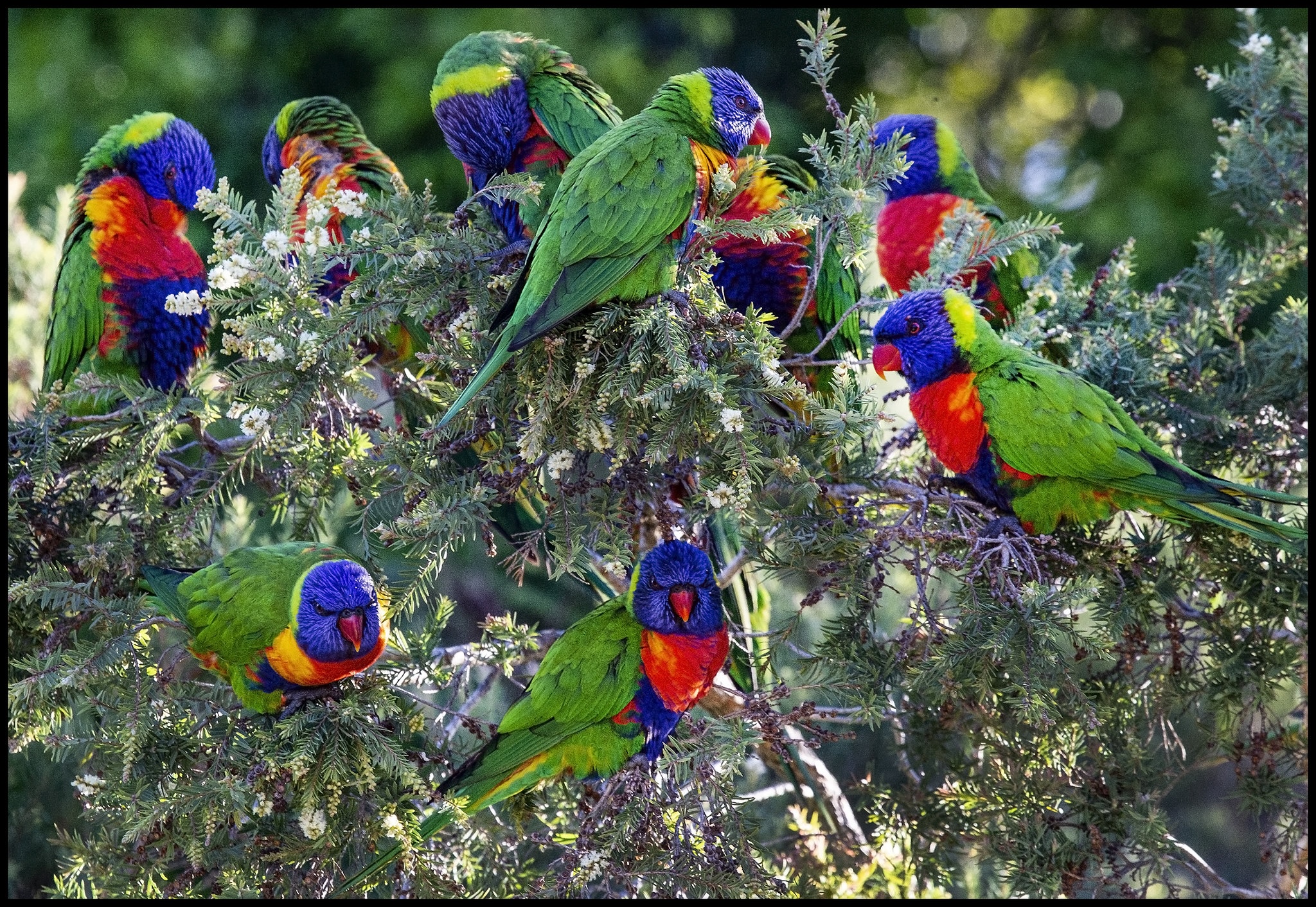
Habitat loss, climate change, hunting and the pet trade are well-known drivers of bird declines. A new study suggests the colors of the birds themselves may also influence their extinction risk: Birds with colorful plumage seem to be more threatened than those with dull colors. Researchers Montague Neate-Clegg and Natalia Ocampo-Peñuela were on a bird watching trip in Vietnam when they realized that some of the colorful birds they spotted were both highly threatened and prized for the pet trade, Neate-Clegg, an assistant professor at the University of California Davis told Mongabay in a video call. “So, we got talking about how more colorful birds might be at higher risk of extinction.” To test their idea, the researchers analyzed the conservation status for some 4,334 passerine bird species using data from the International Union for the Conservation of Nature (IUCN) Red List. Passerine birds make up more than half of all known bird species and include perching and songbirds such as canaries, finches, sparrows and bulbuls. The researchers then compared extinction risks for these species with colorfulness, or the number of distinct colors on each bird. They also looked at geographic threat patterns and controlled for other factors including body size, diet, ability to disperse and dependency on forest. The study found that colorful birds are indeed more threatened than dull birds, even after accounting for body size and other traits. In Southeast Asia, where brightly colored birds are heavily targeted for the pet trade, the pattern was especially clear. “If you go to a market, you’ll see all those birds that are supposed to be in the forest, they’re all in cages,” Ocampo-Peñuela, with the University of California Santa Cruz, told Mongabay in a video call. The researchers say they expected colorful, heavily traded birds to face a higher extinction risk. However, they were surprised to find that colorful birds are more threatened than drab species, even if they are not commonly part of the pet trade. “This is a bit of a head scratcher for us,” Neate-Clegg said. While they don’t have an explanation for this trend just yet, they do have some ideas. “More colorful birds might be more sensitive to warming temperatures due to how the color in their feathers affect thermal regulation,” Neate-Clegg said. Researchers may also be biased toward studying colorful birds that are more interesting to people than drab-looking birds, which means scientists have a “more accurate assessment of the extinction risk,” Neate-Clegg said. Binbin Li, an associate professor at Duke Kunshan University in China who not involved with the study, told Mongabay in an email, she sees the study’s findings “as a clear invitation for future research to explore whether climate change, habitat transformation, or shifting biotic interactions (like predation or competition) are also contributing” to a greater extinction risk for colorful birds. Banner image: Rainbow lorikeets at rest. Image courtesy of John via Flickr (CC BY-SA 2.0) Credits Topics
Colorful birds are at greater risk of extinction than drab birds, study finds
Full Article
Original Source
Read the full article at News →KhanList aggregates and links to publicly available news content. We do not host full articles from third-party sources. Always verify important information with original sources.