
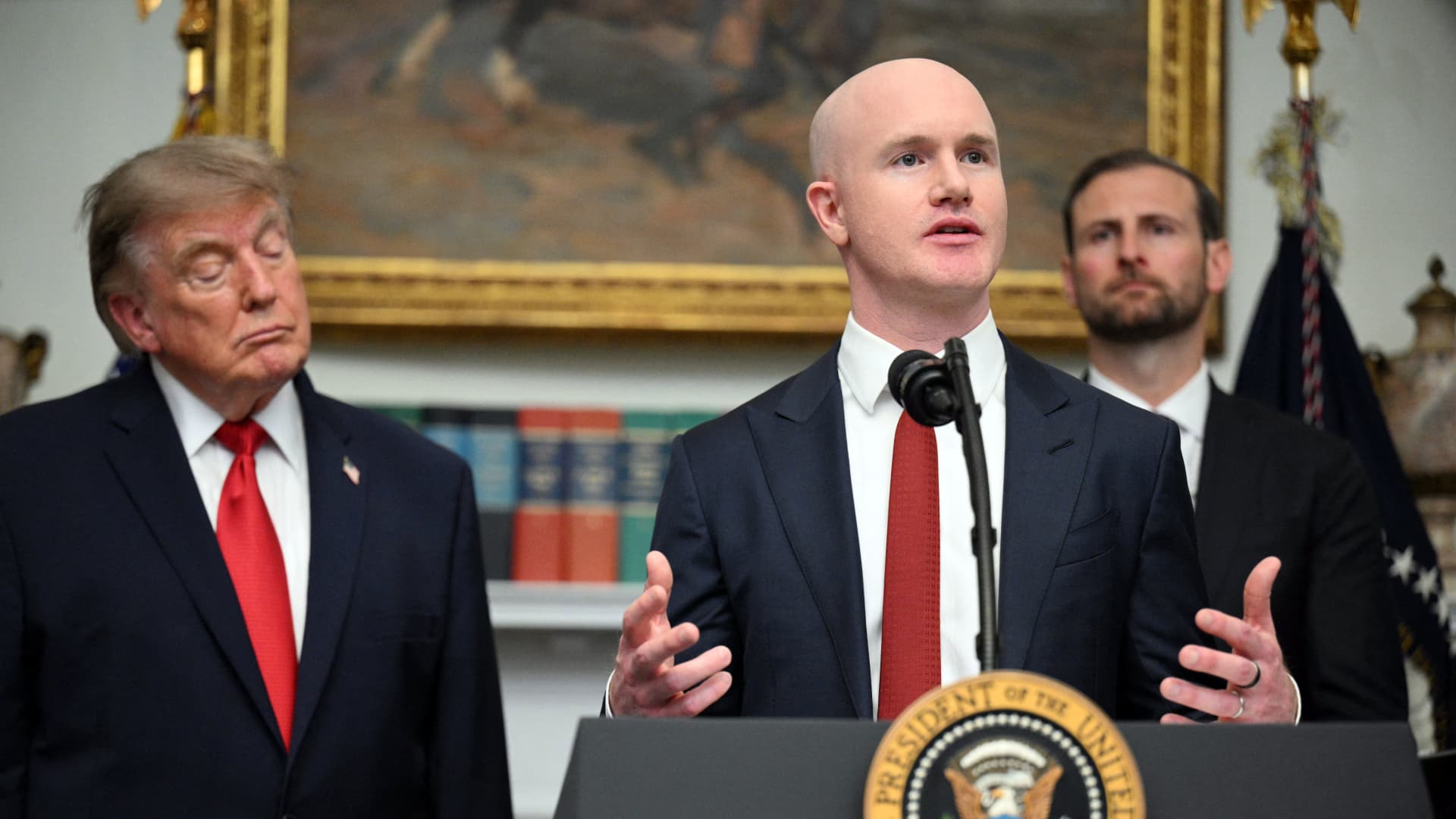
Brian Armstrong, CEO of the cryptocurrency platform Coinbase, speaks next to US President Donald Trump during a meeting with cryptocurrency executives in the Roosevelt Room of the White House in Washington, DC, on August 19, 2026. (Photo by Jim WATSON / AFP via Getty Images)Jim Watson | Afp | Getty ImagesThe Clarity Act, which seeks to establish a U.S. federal framework for digital assets, is likely to pass given broad support from crypto firms, law-enforcement groups and several banks, Coinbase CEO Brian Armstrong said. The legislation was ready to be supported by the Senate, Coinbase CEO Brian Armstrong told CNBC's "Squawk Box Asia" on Thursday, saying people he has spoken with are on board with the legislation. While Armstrong was upbeat about the prospects of the legislation getting the Senate's approval, he said even if that doesn't happen, the sector will get greater regulatory clarity. "Frankly, if it doesn't pass, it's also going to be a good outcome because the SEC and the CFTC have said that they're ready to publish rulemaking, and we're going to get regulatory clarity one way or another on the 15th or the day or two after," he said.Coinbase has been a vocal supporter of the Clarity Act, which aims to define oversight of digital assets between the Securities and Exchange Commission and the Commodity Futures Trading Commission, that's set for a Senate vote on Sept. 15.Securing 60 votes has emerged as a key challenge, with ethics provisions among the issues under negotiation."The way to get 60 votes is with good ethics legislation as well as rounding out some of the things that are still outstanding," Democratic Senator Ruben Gallego of Arizona said at the Wyoming Blockchain Symposium last month.Armstrong said the details of the ethics provisions were still being worked out and negotiated, but appeared "very close to a solution" ahead of the vote. He described the potential passage of the Clarity Act as a "regulatory checkbox" that could help unlock institutional capital and pave the way for products such as tokenized equities in the U.S. "It'd be a big milestone."The Clarity Act, introduced in May 2025 to establish clearer rules for the U.S. crypto industry, passed the House last July.Beyond crypto tradingCoinbase has been diversifying its business beyond crypto spot trading, which Armstrong said has "basically been down for the last year."About half of Coinbase's revenue comes from trading, Armstrong said. The company has expanded its trading business into areas including stocks, commodities and foreign exchange, while its non-trading revenue includes stablecoin and institutional custody.Coinbase reported second-quarter results in July, with revenue falling to $1.2 billion from $1.5 billion a year earlier. The company posted a net loss of $359.5 million, compared with a profit of $1.43 billion in the year-ago period. Coinbase missed Wall Street's expectations for both revenue and earnings for a third straight quarter. Coinbase has also been expanding overseas, establishing presence in the United Arab Emirates and Singapore, which Armstrong described as its Asia hub.Establishing those hubs had been important during periods when the U.S. regulatory environment was less permissive, he said, adding that Coinbase also looks to expand in markets where governments are more receptive to crypto."We basically just try to grow when we have windows and we try to bide our time in the areas where we're sensing hostility," Armstrong said.Coinbase shares have fallen nearly 23% so far this year. Armstrong attributed some of the pressure on the company's financials to crypto spot trading being down for the last year.
Coinbase CEO sees U.S. crypto regulation advancing regardless of Clarity Act vote
Full Article
Original Source
Read the full article at Cnbc →KhanList aggregates and links to publicly available news content. We do not host full articles from third-party sources. Always verify important information with original sources.