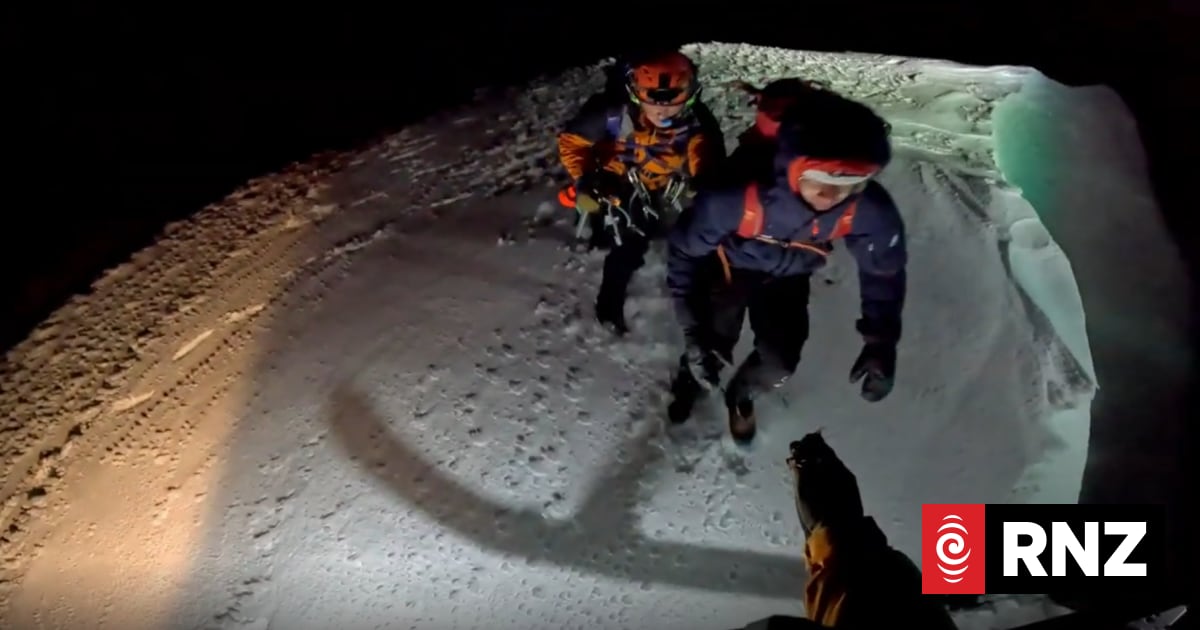
A climber who survived a big fall down a steep, icy face on Mount Aspiring should buy a Lotto ticket, his rescuers say.Emergency services launched a highly technical, high-altitude rescue on Tuesday night after the man's climbing companion hiked three hours to call for help, presuming his friend was dead.The pair had summited Aspiring's south face and were descending via a steep snow and ice ridge known as The Ramp on Bonar Glacier.Helicopters Otago chief executive Graeme Gale said climber fell just after dark at about 7pm."The message that I got was that he had fallen approximately 200 metres and his companion felt it was unsurvivable," he said.The fallen climber had all of the pair's gear, including their locator beacon, Gale said.With no way to signal for help, the second climber spent about three hours trekking back towards the summit in freezing conditions, searching for cellphone coverage.Once the call for help came through, Gale said Wakatipu Alpine Cliff Rescue teams met Helicopters Otago crews in Queenstown to co-ordinate a response."We had some pretty sketchy co-ordinates of where it was, taken from the cellphone by the police. Police did a great job co-ordinating it and then we started pulling our guys together," he said.With the climbers at nearly 10,000 metres, wind building and poor weather pushing in from the west, the helicopter had to be stripped and made as light as possible.Gale said crews used night vision goggles to track down the climber who had called for help."We could land on the edge of the ice shelf and pick him up and so we were able to hover load - with one skid on the edge - and got him in," he said.The crew then decided to investigate a light source they had spotted "a couple of thousand feet below"."They thought it was possibly other climbers on the mountain but it turned out to be this guy's companion and he was actually on his feet, although he'd had injuries," he said."Once again, we didn't need to winch, which was great. We were able to put a skid down, just hoverload again, and one of the alpine [cliff rescue team] guys got out and escorted him back into the helicopter."Once the call for help came through, Wakatipu Alpine Cliff Rescue teams met Helicopters Otago crews in Queenstown to co-ordinate a response.Supplied / ScreenshotGale was not sure the climber would have survived the night in frigid conditions if rescuers had not reached him.He said the rescue was "the best of the best outcome" crews could have hoped for."It could have been catastrophic for him," Gale said."He was standing on a high shelf, on a slope on the mountain itself, so pretty lucky that he had gone into a crevasse and pretty lucky he hadn't had other injuries that would have been life-threatening. He was in remarkably good shape for the fall that he'd had. I reckon he should go and buy a lottery ticket for Saturday night."Second rescue from The Ramp in a monthWakatipu Alpine Cliff Rescue Team co-ordinator Russ Tilsley said it followed another even more technical rescue on 30 June on the same section of Mount Aspiring.That rescue also took place late at night and involved two climbers who had ascended the south face, he said."These guys had basically been out too long and I think they were very tired. They abseiled down into an area where they got stuck in and they couldn't get out," he said."They were frostbitten, tired and had run out of food."While winter was typically a quiet time for the rescue team, there seemed to be more and more people undertaking winter climbing missions, Tilsley said.Summitting Mount Aspiring from the nearest walk-in Department of Conservation hut, French Ridge Hut, was a "big thing to do in a day", he said."To go up, climb and come back again is probably a 24-hour mission."Earlier Sergeant Darren Cranfield from Wānaka Police described Tuesday's rescue as a timely reminder of the risks of alpine areas."Conditions in the mountains can change rapidly and even experienced climbers can find themselves in dangerous situations," he said."We encourage anyone heading into alpine areas to thoroughly prepare, carry appropriate communication equipment and emergency supplies and ensure they have a plan in place should the unexpected occur."
Climber who survived 200m fall on Mount Aspiring should buy Lotto ticket, rescuers say
Full Article
Original Source
Read the full article at Rnz →KhanList aggregates and links to publicly available news content. We do not host full articles from third-party sources. Always verify important information with original sources.