When Winnie Fu looks at her young son, she regularly thinks about his future."I look at how the world is destabilising around us, I think we need to do everything we can to try and make the world a better place for the next generation," she said.So it came as a shock when she recently found out her super fund, AustralianSuper, was now the biggest shareholder in Whitehaven Coal. Ms Fu is now considering switching super funds, even if it means receiving less money in the long run."If we do not have a stable society, if we do not have a livable climate, if we have social unrest because there is mass immigration from climate change … we cannot have a good life just because we have more money," she said."A super fund being something that is supposed to help provide for us in the future, I think it is crucial that they look beyond just monetary return."Ms Fu is among many Australians who want to see a greater share of the country's $4.5 trillion in retirement savings invested in renewable energy — but turning that ambition into reality could be more difficult than it seems.Winnie Fu wants her super fund to invest more in clean energy rather than mining. (Supplied: Winnie Fu)Super fund investment in clean energyEnvironmental advocacy group Marketforces analysed the direct investments made by Australia's 30 largest superannuation funds since January 2020. It found $99 billion had been invested in 514 renewable energy projects, with the country's top 30 funds contributing $771 million, or 0.8 per cent.The analysis found that Canadian pension funds have contributed more to Australian renewable energy projects, at $1.2 billion.Last year, the group also revealed that Australia's top super funds invested more than three times as much in companies with global fossil fuel expansion plans than backing clean energy companies.The CEO of the Association of Superannuation Funds of Australia Mary Delahunty said 29 out of the 30 major super funds had "exposure" to renewable energy assets."Super funds will invest either directly or indirectly and the majority is held indirectly," she said."Funds are always looking for good opportunities to produce appropriate risk-adjusted returns for members and renewable assets have proven to be some of the really good performing assets in the portfolio so far."AustralianSuper said it remains committed to reaching net zero emissions by 2050 within its investment portfolio and one of the reasons it invested in Whitehaven is due to the company's metallurgical coal production, which is a key component of steel production.There are examples of super funds investing in renewable energy, such as Rest Super, which owns the largest wind farm in Western Australia, the Collgar Wind Farm.But in recent years, funds have flagged a desire to invest more in clean energy, while emphasising that investments must be made in the best financial interests of members."When we ask Australians what they want from their super funds, they're very clear they want their super funds to make every dollar that they have work as hard as they possibly can," Ms Delahunty said."Many Australians understand that can also come in the form of nation-building activities because not only does it give monetary return, but it can also give the double dividend of a social return."Barriers to investmentSuper funds invest in projects that achieve a minimum return to justify the risk and meet regulatory benchmarks, such as the superannuation performance test.The federal government is currently reviewing the annual test, which was introduced five years ago to protect Australia's retirement savings and hold trustees to account for underperformance.It sets benchmarks that superannuation products are required to meet, but failing to do so has significant consequences. Funds must notify members of sub-par returns, and if they fail the test two years in a row, they cannot accept new members.The federal government is reviewing the superannuation performance test, which could unlock more renewable energy investment. (ABC South East SA: Eugene Boisvert)Since it was introduced in 2021, the test has successfully removed underperforming funds, and none have failed over the past couple of years. But there are now growing calls for it to evolve to support investment in emerging asset classes, such as renewable energy projects.The director of the Sustainable Finance Hub at the University of Melbourne, Simon O'Connor, said under the current performance test, super fund returns were examined against their peers over the short to medium term."This is fundamentally inconsistent with what we're trying to achieve as we transition Australia's economy, where we need to invest in assets that are going to change our economy over decades," he said."Yet we're currently assessing the performance of super funds over their returns over short time frame periods and importantly against benchmarks that are looking backwards to the way our economy is structured in the past and today."Mr O'Connor said super funds were more likely to invest in traditional infrastructure projects due to familiarity."Toll roads, airports, utilities, water infrastructure, these are things super funds have invested in for a long time; they are very well understood, very clearly regulated," he said."Renewable energy infrastructure is a younger infrastructure asset and importantly, the policy environment around renewables continues to change."As a result, it becomes riskier or is seen to be riskier by many super funds and really needs a different approach."Jim Chalmers says performance testing of super funds plays a vital role. (ABC News: Ian Cutmore)Performance test reviewTreasurer Jim Chalmers said the performance test was here to stay and any reforms would not water it down."If we can unlock more investment that will help Australians in areas like energy and housing, at the same time as members get the best returns, of course we'll consider that," he said.Mr O'Connor said if done right, changes to the performance test could unlock more investment into renewable energy, but that it would not be a silver bullet."It's not going to change the flow of capital dramatically overnight into renewables, but it removes one of the big impediments and indeed one of the big excuses from some funds for not investing any more in Australia's future economy," he said.He added that policy differences between state and federal governments would make super funds hesitant before deploying capital into the clean energy sector."We need to get that certainty to underpin the policy environment that supports renewable energy, transmission infrastructure, electric vehicle uptake," Mr O'Connor said."That'll go a long way in terms of reassuring superannuation fund investors that they can safely deploy capital in these markets and generate returns."Growing calls for super funds to play a greater role in the energy transition come as investment in large-scale renewable energy projects faces headwinds.According to the Clean Energy Investor Group's annual survey, 77 per cent of investors say Australia's investment environment has worsened over the past year.Less than 10 per cent believe Australia is on track to achieve its 82 per cent renewable electricity target by 2030."We have high construction costs, particularly for wind; we have long planning processes that take a lot of time and money to work through, we have delays in transmission," CEIG CEO Richie Merzian said."On top of all that, the federal government is now introducing a new capital gains tax on international investors as well, who make up the lion's share of investors right now."Marketforces' analysis suggests Australia's top 30 superannuation funds have invested 4 per cent of the renewable capacity needed to meet the country's 2030 climate goal.Richie Merzian wants to see more capital flowing towards renewable energy projects. (ABC News: David Fanner)Mr Merzian said tapping into the country's $4.5 trillion pension pool could make a "huge difference" and would give Australians "direct ownership" in the clean energy transition."We're seeing this sort of disconnect where there's this growing level of concern around where we place our clean energy assets and around the transmission we need to build," he said."This is to make sure that we have continuous, cheap electricity in Australia, which has been essential for then building other sectors of our economy; having Australians play a great role in that would help."It also provides an additional source of capital, we want to keep the cost of capital low, to do that we want a lot of capital flowing in Australia."But he added that Australia should not shy away from the fact that most of the renewable energy investment comes from overseas."It will probably continue to come from overseas for quite a while and having a fair and level pegging between Australian super and global super is important," Mr Merzian said."Because global investment, including global super, will come in and play a key role in de-risking, in providing that capability of getting those projects off the ground."
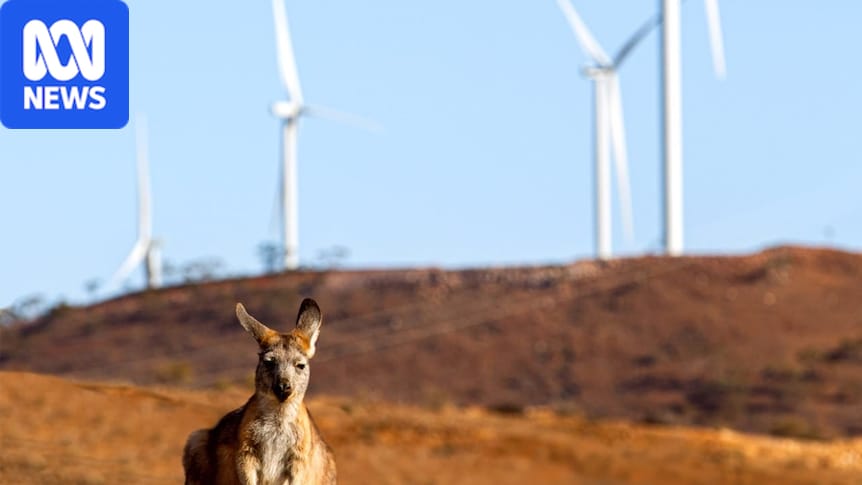
Clean energy investment is facing headwinds. Could superannuation help?
Full Article
Original Source
Read the full article at Abc →KhanList aggregates and links to publicly available news content. We do not host full articles from third-party sources. Always verify important information with original sources.