
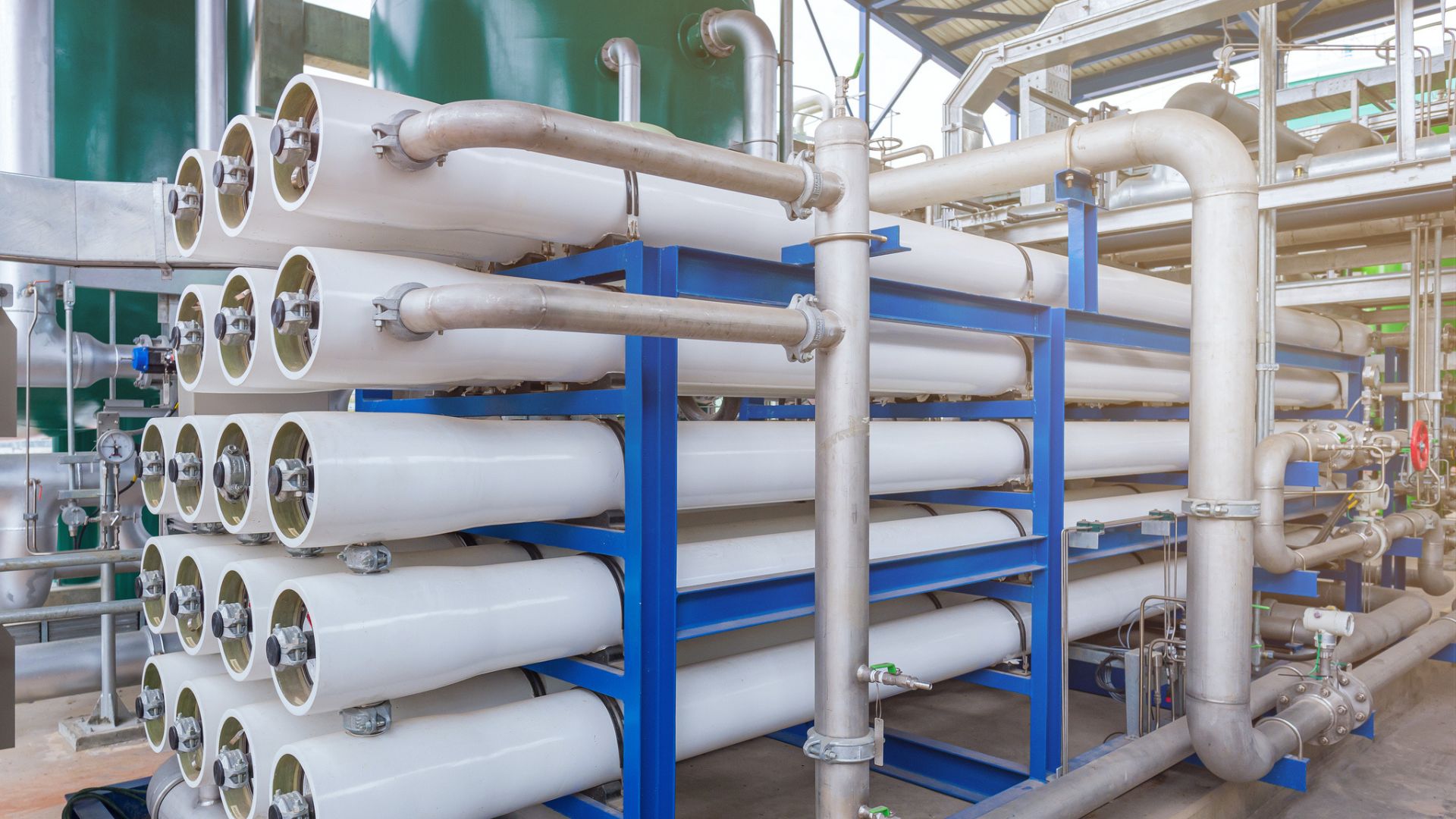
A large-scale desalination facility in the Caofeidian industrial zone of Tangshan, Hebei province (China), has entered trial production. Designed through a collaboration between Tangshan Sanyou Group and academic experts, the plant operates on a circular model that reclaims valuable chemical raw materials from toxic waste brine at a fraction of standard energy costs. The facility reportedly cuts power demands by 60 percent and turns millions of tonnes of waste brine from desalination runoff into chemical salt. Ultimately, this innovation transforms hazardous desalination waste into a profitable manufacturing resource, offering a long-term cure for marine pollution in Bohai Bay. Closed-loop innovation Desalination facilities extract pure water from seawater using technologies like reverse osmosis, which separates the water molecules from the rest of the ocean water. Since a major portion of the liquid is removed, the remaining solution retains all the original dissolved salts, heavy minerals, and cleaning chemicals in a much smaller volume. This dense, hyper-saline discharge forms the toxic waste stream known as brine, carrying a concentration high enough to damage marine environments if dumped directly back into the ocean. The South China Morning Post (SCMP) reported that the plant treats waste brine using a three-to-one conversion ratio. Rather than pumping toxic discharge into fragile ecosystems, the plant operates on a strict circular model. For every three tonnes (3.3 U.S. tons) of raw waste brine processed, it yields two tonnes (2.2 U.S. tons) of fresh water and one tonne (1.1 U.S. tons) of hyper-concentrated brine with a salinity of 120 grams per liter. This refined solution travels through a 50-kilometer (31 miles) pipeline to a nearby chemical plant, where it serves as raw material to produce soda ash for glass, metallurgy, paper, textiles, and food manufacturing. Zhao Lin, head of R&D at Tangshan Sanyou Group, noted that the project is the “largest” and most energy-efficient of its kind worldwide. Speaking to Science and Technology Daily, Zhao explained that the plant uses 60 percent less electricity than standard desalination methods for generate 10,000 yuan (US$1,490) in economic value. Specialized membrane components Achieving this also required tackling challenges such as limescale. Normally, concentrating brine to extreme levels causes minerals like calcium, magnesium, and sulfate to precipitate violently. These minerals block pipes and crush fragile filtration equipment, like limescale in a hot kettle. Researchers also faced the complex economic and technical task of keeping the salt contained inside the brine throughout the process. To overcome this, researchers at Tangshan Sanyou Group designed a four-stage process using specialized membrane components that selectively filter out calcium and magnesium while preserving pure sodium chloride. The project involves financial and environmental benefits. Conventional techniques rely on extreme pressure to push water through highly saline membranes, driving up power costs and damaging machinery. Tangshan Sanyou avoids using force through a multi-stage approach, resulting in operational savings. Once the project reaches its third phase, the plant will process nearly 100 million tonnes (110 million U.S. tons) of concentrated seawater annually. That single facility could permanently relieve Bohai Bay of one of its heaviest industrial burdens.Global initiatives currently operate mostly at pilot or research levels, making the Tangshan facility uniquely advanced due to its massive scale, direct connection to heavy soda ash manufacturing, and power cuts. Saudi Arabia, as the world’s leading producer of desalinated water, invests through NEOM and the Saline Water Conversion Corporation (SWCC) in Zero Liquid Discharge (ZLD) and brine-mining infrastructure. The projects focus on extracting high-purity sodium chloride, magnesium, and lithium from concentrated discharge to supply domestic chemical sectors.Get the latest in engineering, tech, space & science - delivered daily to your inbox.Mrigakshi is a science journalist who enjoys writing about space exploration, biology, and technological innovations. Her work has been featured in well-known publications including Nature India, Supercluster, The Weather Channel and Astronomy magazine. If you have pitches in mind, please do not hesitate to email her.
China’s new desalination plant cuts energy use by 60%, turns waste into useful salt
Full Article
Original Source
Read the full article at Interestingengineering →KhanList aggregates and links to publicly available news content. We do not host full articles from third-party sources. Always verify important information with original sources.