
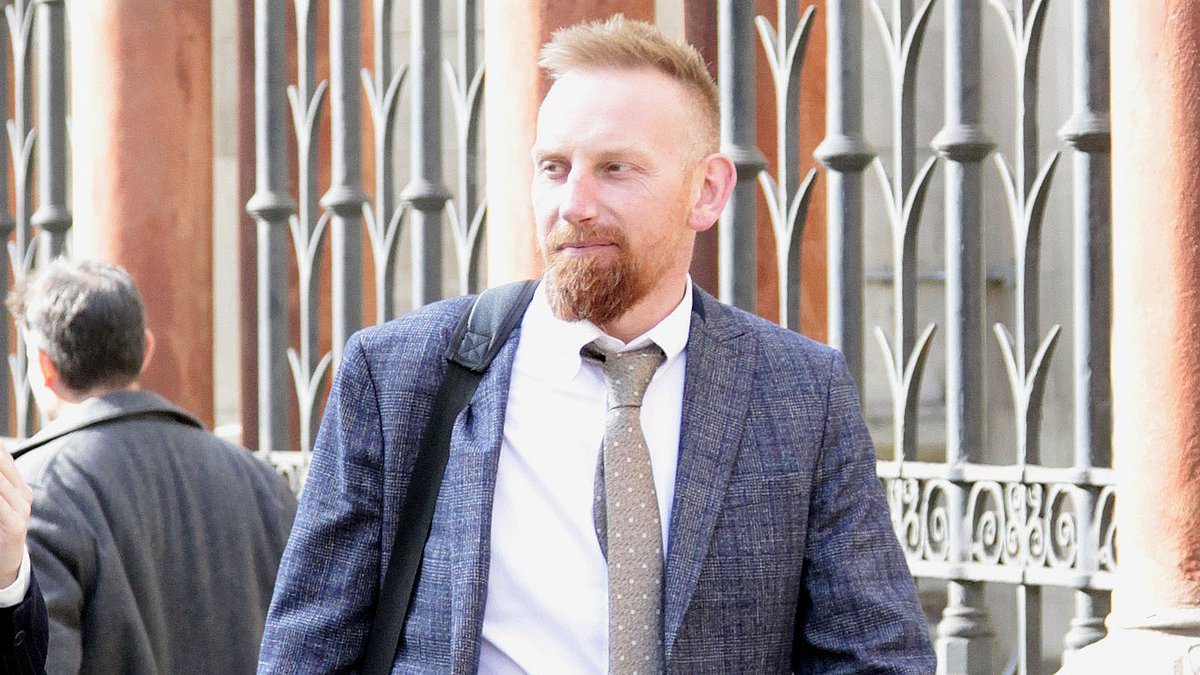
A celebrity dog whisperer who was forced to shut down his exclusive kennels to make way for the HS2 railway line has won a £5million payout from the government. Matthew Wiggins moved his business to a farm near Stone in Staffordshire in 2012, before transforming the 3.4 acre site into a high-end training centre with 44 kennels. The company, WKD Trained Dogs Ltd, supplied highly trained dogs from eastern Europe to high-net-worth individuals and celebrities, including Game of Thrones actress Indira Varma.But Mr Wiggins's farm was earmarked for demolition by the Department for Transport in 2019 because it stood in the path of the planned £100billion HS2 railway line. The business leader then took the government to court, demanding more than £8million in damages. Mr Wiggins claimed that even prior to the farm's compulsory purchase in 2023, his company had been damaged by years of uncertainty due to the looming eviction.In his evidence, he said that staff became demoralised while he unsuccessfully searched for a new premises, which harmed productivity and profits. Following the trial at the Upper Tribunal in London, a judge has now ruled the company is due £4.9million in compensation. Matthew Wiggins (pictured outside court) moved his business to a farm near Stone in Staffordshire in 2012, before transforming the site into a high-end training centre Mr Wiggins claimed that even prior to the farm's compulsory purchase in 2023, his company had been damaged by years of uncertainty due to the looming eviction Picture shows Piper the cocker spaniel belonging to actress Indira VarmaTribunal deputy president Martin Rodger KC, said that if Mr Wiggins had not been 'distracted' by the HS2 threat during the Covid pandemic, he and his team would have been able to maintain his company's performance. Mr Wiggins founded WKD Trained Dogs in 2010 with the vision of finding and training the best quality dogs for onward sale.The 41-year-old's skill lies in the 'entirely unique' ability to select dogs with the right temperament to be trained up and sold, the court heard. Mr Wiggins's barrister Isabella Tafur described his business as 'niche, if not unique'.'Trained dogs were not puppies and would generally be sourced and sold at an age of between 10 to 24 months,' she said.'It supplied dogs to professionals, high-net-worth individuals, schools, organisations, and families with specific requirements,' said his barrister. Mr Wiggins added outside the court that one of his celebrity clients was actress Indira Varma, who played Ellaria Sand in Game of Thrones.The court heard that Mr Wiggins was thrown into upheaval when the Department for Transport first suggested Brookhouse Farm, where his company was based, could be sacrificed for the HS2 line. In 2023, the farm was subject to a compulsory purchase. This ended the business as Mr Wiggins had been unable to find a suitable alternative premises.Part of the dispute centred on 'shadow losses' the company suffered between 2019 and 2023 in the build up to its actual closure.Mr Wiggins said the looming acquisition 'adversely affected staff morale, performance and retention'.He also claimed that the blight hanging over his business affected his 'mindset and focus' and 'meant he was unable to travel to his favoured supplier [of dogs] in eastern Europe for fear of missing out on potential relocation properties'. Mr Wiggins's farm (pictured) was earmarked for demolition by the Department for Transport in 2019 because it stood in the path of the planned £100billion HS2 railway line Mr Wiggins said the looming acquisition 'adversely affected staff morale, performance and retention'Previously, dogs were assessed in a familiar environment to them in Hungary, but when he began importing Irish dogs, they were only checked over after a lengthy journey and in unfamiliar surroundings in the UK.Mr Wiggins claimed that had resulted in a decline in the training success rate – with failed dogs sent back to Ireland, which subsequently affected company profits.The Department for Transport's barrister, Mark Westmoreland-Smith KC, accepted that 'the rate of trained dogs to failed dogs' tailed off during the 'shadow' period, but suggested that other factors including the impact of Covid were at play.Giving judgment on the case, the judge said the change in source of the dogs, due to Mr Wiggins needing to stay in the UK and hunt for a new base, was a 'credible contributor' to the reduction in the training success rate.In his evidence, Mr Wiggins told the tribunal that the prospect of compulsory purchase had been at the top of his thoughts in late 2020 and that the uncertainty distracted him from managing his business effectively.His 'lack of focus' led to 'unrest' among staff, who feared redundancy and 'lost the sense of long term responsibility' for the dogs they trained.'Mr Wiggins' recollection is corroborated by contemporaneous material,' the judge said.'In communications with HS2 during 2022, Mr Wiggins noted that team members who had not yet been made redundant were "finding things difficult" and "coming in to work on a daily basis and watching what was a thriving operation reducing to nothing."'Despite the absence of such evidence, and the lack of precision in much of Mr Wiggins' own evidence on these points, we accept that the scheme had an adverse impact on staff morale and on Mr Wiggins' own performance and that these are plausible explanations for the decline in the trained dog rate.'He continued: 'We are satisfied that the change in the source of the claimant's dogs was attributable to the scheme and that it contributed directly to the decline in performance.'Had Mr Wiggins not been distracted by the threat of acquisition we think he and his team would have found ways of adapting to the pandemic sufficiently to maintain their performance.'We are satisfied that Mr Wiggins' assessment is correct and that the main reasons for the downturn were the impact of the changes in sourcing and the decline in his own and his staff's morale.'He awarded about £1.3million for the 'shadow losses' and another £2.7million for the 'extinguishment' of the business, with further sums for other losses and costs related to the tribunal reference.In a court order signed off at the end of last month, the judge calculated the total due to be £4,907,348, but with about £3million already paid to be offset against that.
Celebrity dog whisperer wins £5million payout after being forced to shut down his kennels to clear the path for HS2
Full Article
Original Source
Read the full article at Dailymail →KhanList aggregates and links to publicly available news content. We do not host full articles from third-party sources. Always verify important information with original sources.