
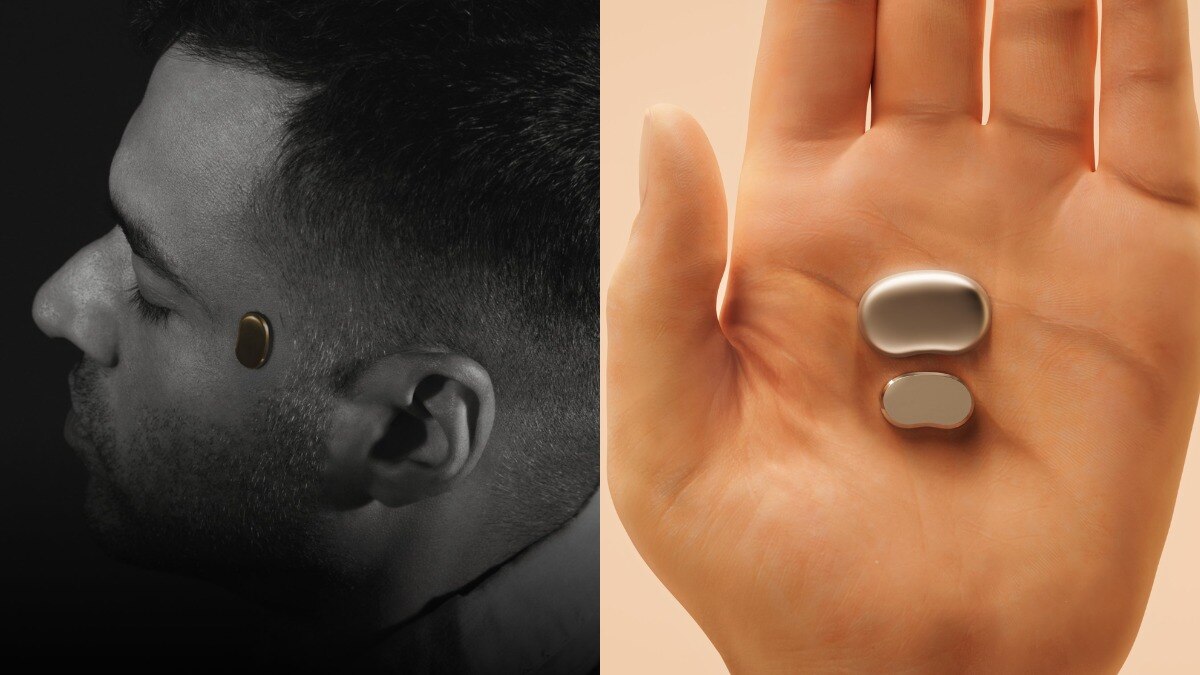
Deepinder Goyal has defended Temple against doctors questioning its scientific basis. Doctors say its brain-flow and Entropy claims still require independent validation.Goyal says Temple is designed to non-invasively track cerebral blood flow and other neurological signals.Zomato founder Deepinder Goyal has a message for doctors questioning his much-talked-about Temple wearable: it is not a scam, and he has put $20 million of his own money into building it.But as the device opens up for public orders at Rs 85,000, the bigger question remains unanswered: can it actually measure what it claims to measure?Goyal has now gone on the offensive against critics, particularly doctors who have questioned the science behind Temple. In a post on X addressed to “concerned Indian doctors”, he said the project had cost $30 million (over Rs 280 crore) to develop, of which $20 million (around Rs 188 crore) came from his personal funds. He also argued that the company was not attempting to make a quick buck, pointing to its 14-day, no-questions-asked return policy.“If the product doesn't work, it fails out of the gate and the company dies before recovering a tenth of its R&D,” he wrote. Goyal maintained that Temple's claims would be independently verifiable once people began using the device. He said pre-prints, which precede peer-reviewed scientific publications, were coming and that independent studies would follow.“We hold ourselves to a higher standard; pre-prints are a step prior to peer-reviewed publications, and they are coming up,” he said. But his defence has done little to settle the scientific debate. Doctors who spoke to India Today say the central problem is not how much money has gone into developing Temple or whether it is an impressive piece of hardware. It is whether the technology has been independently validated to measure the physiological parameters it claims to track.WHAT TEMPLE PROMISESTemple is a small, forehead-worn wearable developed under Goyal's health-tech venture. Unlike conventional smartwatches that track heart rate, sleep and physical activity, it claims to monitor changes in blood flow and oxygenation in the brain.Its proprietary BrainFlow metric is intended to provide insights into cerebral circulation, while another measure, called Entropy, is presented as a real-time score of how hard the body is working to sustain itself.The Entropy score ranges from 1 to 250 and is influenced by factors such as sleep, exercise, stress, food, caffeine and meditation. Goyal has described it as a measure of the body's real-time energy expenditure and suggested that it could offer insights into fitness, recovery and longevity.The device is also linked to his Gravity Ageing Hypothesis, which proposes that gravity and years of remaining upright may affect blood circulation to the brain and contribute to ageing.The commercial rollout is now underway. Pre-orders opened in India on November 1, with the device priced at Rs 85,000. Each unit is made to order, with delivery expected within about three months. Temple is positioned as a wellness and research product, not a medical diagnostic device.However, the medical community's reservations go beyond the absence of a conventional medical-device label.THE BIOMARKER QUESTIONIn June, when Goyal first announced the discovery of Entropy as a new biomarker, Hyderabad-based senior neurologist Dr Sudhir Kumar had told India Today that the idea was intriguing but the evidence available did not establish its scientific validity.“The idea of developing a novel physiological metric from signals recorded over the temple region is certainly intriguing, and advances in wearable technology have the potential to improve our understanding of human physiology. However, extraordinary claims require extraordinary evidence,” he had said.His concern was that a correlation between Temple's readings and a laboratory measurement of energy expenditure did not automatically establish that Entropy was a reliable biomarker.A device registering changes during exercise is one thing; demonstrating that those changes accurately measure metabolism, biological ageing or longevity is quite another.Dr Kumar had pointed out that the biological basis of the proposed metric, the methodology used to calculate it and independent validation studies were not publicly available.“The key questions are not whether the signal changes with exercise, stress, or meditation, but whether it reliably measures what it claims to measure, whether it adds information beyond existing metrics, and whether acting on it improves health outcomes,” he had said.Neurologist Dr Rahul Chawla had also questioned the lack of scientific information when he spoke to India Today earlier.“Nothing can be said based on this post – he has not revealed any methodology, what they are testing..just giving a fancy name..(We) need research and more details to comment,” he had said.The concerns are particularly relevant because Entropy is being presented as a new physiological marker, rather than simply another fitness score. Without knowing how the number is generated, what biological process it represents and how consistently it performs across individuals, doctors cannot establish what it actually tells a user about their health.THE BRAIN BLOOD-FLOW DEBATEThe more fundamental question concerns Temple's headline promise: measuring blood flow to the brain. Dr Navin Gnanasekaran, head of clinical services for radiology and interventional radiology at Apollo Hospitals, Chennai, who has authored India’s first book on longevity, has raised concerns about the underlying anatomy and technology.Temple uses optical sensors, based on photoplethysmography (PPG), placed over the superficial temporal artery in the forehead region. But this artery is a branch of the external carotid artery, which supplies blood to the scalp and face. The brain's internal tissue receives its blood supply primarily through the internal carotid and vertebral arteries.Dr Gnanasekaran argued that measuring changes in blood flow through superficial vessels cannot, by itself, establish what is happening inside the brain.During exercise, for instance, blood flow to the skin and scalp increases as the body tries to dissipate heat. This can produce changes in the optical signal picked up by a forehead sensor. But those changes do not necessarily reflect corresponding changes in cerebral circulation.His central objection is that a device detecting changes in superficial blood flow cannot automatically claim to be measuring blood flow within the brain.“An accurate heart-rate monitor is not a brain-flow tracker,” he argues.He also questions the company's reliance on studies showing correlations between Temple readings and clinical transcranial Doppler measurements. According to his assessment, some of the reported correlations emerge during large, controlled physiological changes, such as standing up rapidly or exercising intensely. When blood flow changes across different parts of the body in response to the same activity, a correlation does not establish that the wearable is directly measuring cerebral blood flow.There are also questions about the quality and scope of the available research, including the mathematical adjustments used to align readings and the exclusion of women from one study because hair interfered with reference equipment.GRAVITY AND LONGEVITYDoctors are also wary of the broader ageing theory associated with Temple.The Gravity Ageing Hypothesis suggests that prolonged exposure to gravity while standing upright could gradually affect blood supply to the brain.The implication is that changing body position, including through inversion, could potentially counter this effect.Dr Gnanasekaran pointed out that the brain has a sophisticated mechanism called cerebral autoregulation, which helps maintain relatively stable blood flow despite changes in posture and blood pressure.He also cautioned against extrapolating from the hypothesis to recommending inversion practices, particularly for older people who may have hypertension, glaucoma or underlying cerebrovascular conditions. Inversion can raise pressure inside the eyes and skull, making it potentially risky for some individuals.To be fair, Temple may have genuine utility as a wearable – its forehead placement could offer advantages in tracking heart rate during intense exercise, when wrist-based devices sometimes struggle with movement-related interference, experts say, but also stress that is different from establishing its ability to measure cerebral blood flow, calculate a new biomarker or provide meaningful insights into biological ageing.Goyal has said that science will stand up to scrutiny and that more independent research will emerge as the product reaches users.But doctors are asking for the evidence that should underpin those claims: transparent methodology, rigorous clinical validation, peer-reviewed research and independent replication.- Ends
Can Deepinder Goyal's Rs 85,000 Temple wearable prove its science?
Full Article
Original Source
Read the full article at Indiatoday →KhanList aggregates and links to publicly available news content. We do not host full articles from third-party sources. Always verify important information with original sources.