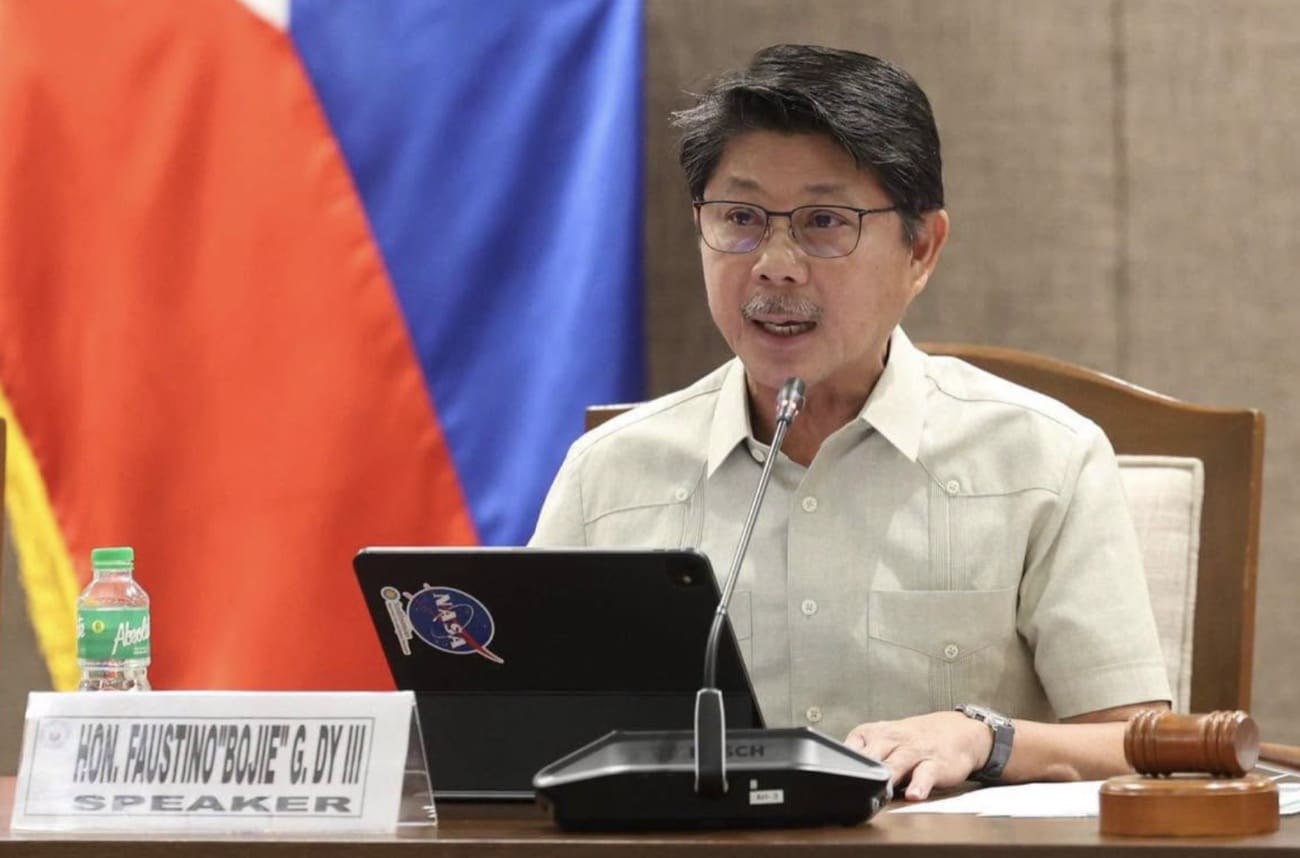
House Speaker Faustino `Bojie’ Dy III. Photo from Bojie Dy Facebook page. MANILA, Philippines — House of Representatives Speaker Faustino “Bojie” Dy III has expressed confidence that several more priority bills of President Ferdinand Marcos Jr.’s administration may be approved before the year ends, as there are bills in the “advanced stage” of the legislative process. Dy in a video statement on Friday said that for example, the proposed Cybersecurity Act is already awaiting second reading approval, while eight measures are awaiting action from either the House committee on appropriations or the committee on ways and means. With proposals tagged as priority by the Legislative Executive Development Advisory Council (Ledac) moving forward, Dy said their request is for the Senate to help them push for the approval and eventual enactment of these bills. Article continues after this advertisement READ: Dy eyes passage of additional Ledac priority bills before yearend “Many of the remaining priority bills are in the advanced stage of our legislative process. For example, the Cybersecurity Act is set for approval on second reading, while there are eight bills awaiting action from the committee on appropriations or committee on ways and means,” Dy said. “That’s why we are asking our counterparts in the Senate to help us push for the enactment of several other bills before the year ends. Like what we said earlier, work continues. We will continue giving priority to proposals that will directly help Filipinos and we will ensure that the discussions will be thorough and timely,” he added. According to Dy, the coordination between Congress and the executive branch, particularly the Presidential Legislative Liaison Office, is also important in advancing bills needed by the country. “Of course, the help from the executive branch is important, especially the Presidential Legislative Liaison Office or PLLO, including the other agencies of government,” Dy said. Article continues after this advertisement “Their immediate feedback and submission of executive versions of the proposed laws are a big help in speeding up the process of enacting bills and in ensuring that the government has a single direction. Our goal is to pass bills that will be of help and will be felt by each Filipino,” he added. Previously, the House reported that it has approved 26 of the 52 Ledac priority measures, including the proposal to reset the first elections in the Bangsamoro Autonomous Region in Muslim Mindanao (BARMM), the proposed amendments to the Electric Power Industry Reform Act of 2001, the bill institutionalizing the Assistance to Individuals in Crisis Situations, and the proposed Anti-Political Dynasty Act. Article continues after this advertisement “We have gone a long way. In our first regular session of the 20th Congress, Congress was able to approve 26 sa 52 Ledac priority measures. This includes 15 out of 21 priority bills that we targeted for passage before the end of June 2026,” Dy said. “IThis only shows that the House is serious in pushing for the legislative agenda of the administration. But work continues. We will not rest because we need to finish more of our duties, and the House is determined to pass all the remaining Ledac priority measures,” he added. The second regular session of the 20th Congress is scheduled to start on Monday, July 27. After the morning session, Congress will convene a joint session to hear Marcos’ speech for his fifth State of the Nation Address. READ: Inflation, jobs, corruption, WPS: Questions hanging over Sona 2026 While several bills are said to be nearing approval, there are concerns that progress has been slower than expected as only one of the Ledac bills has been enacted into law. In a July 19 analysis, Inquirer data scientist and University of the Philippines associate professor Dr. Alicor Panao said that only one of the 52 Ledac bills has been enacted — Republic Act No. 12317, or the BARMM election reset. Panao said that the lone law among the Ledac priority bills was even contested, as many view the postponement of BARMM elections will cause “delays could slow the region’s transition toward a fully elected parliamentary government.” Thirty-one bills remain pending at the committee stage in either the House of Representatives or the Senate, Panao said, noting that several long-standing reform proposals “have yet to secure final congressional approval.” Your subscription could not be saved. Please try again. Your subscription has been successful. “The numbers reveal the challenge of converting legislative priorities into policy outcomes,” he said. “The limited number of enacted measures suggests a widening gap between the administration’s policy commitments and its legislative accomplishments.” /mr
Bojie Dy: Priority bills in ‘advanced stage’ of legislative process
Full Article
Original Source
Read the full article at Newsinfo →KhanList aggregates and links to publicly available news content. We do not host full articles from third-party sources. Always verify important information with original sources.