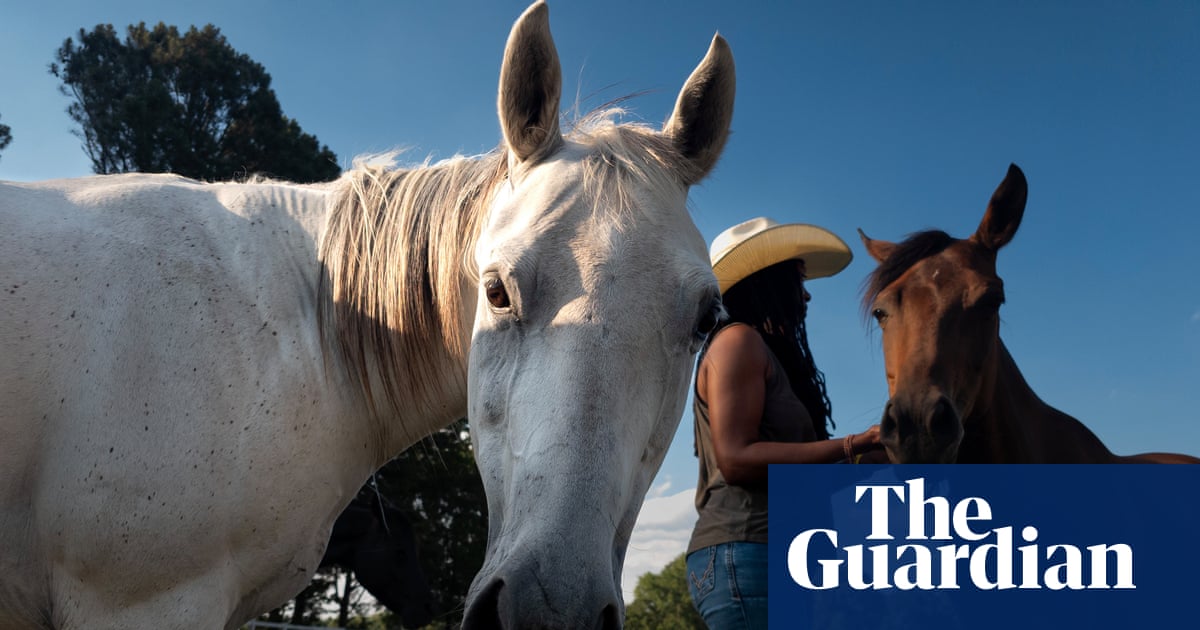
Donal Gooch is not pleased about the trash on his arena floor.“Shit, it’s pitiful,” he says.Donal leans back against the stage of the Gooch Sports Arena, the centerpiece of a family-held 12-acre plot in Eagle Rock, North Carolina, an unincorporated community at the fringes of the growing research triangle region. Also on the land are a house where Donal’s daughter, Caitlin, and three of her children live; a weathered barn; and a quarter-horse racetrack known as Eagle Rock Downs.But Donal only has eyes for the hundreds of empty Modelo cans, crushed plates and cracked cups strewn about the grounds, the detritus from the arena’s twice-a-month raucous concerts with touring bands from Mexico.“This is terrible,” Donal says, pondering the cleanup. “It means we didn’t make enough money.”If Donal’s not happy about paltry day-after-the-concert trash, it means the Gooch arena only sold 1,500 to 2,000 tickets. Trash as far as the eye can see could mean over 5,500 tickets sold, each typically starting north of $70. Bands come from Michoacán, Sinaloa, Chihuahua and other corners of Mexico. Jaripeos, or bull-riding festivals, sometimes appear on the schedule, as do carros tumbados (low-riders). Donal boasts that nearby gas stations sometimes sell out of fuel and food, hotels get more bookings and “everybody makes money off me” when ticket sales peak.Turning a dollar is front of mind for Donal, 69, who was raised on this land when eastern Wake county was tobacco country. Today, subdivisions are the dominant cash crop. Eagle Rock, 15 miles from Raleigh, is on the edges of one of the nation’s fastest-growing metropolitan areas, in its third fastest-growing state. The dual economic and population growth is concentrated around North Carolina’s health, finance and tech cores, turning its rural outskirts into suburbs. Much of the land surrounding the Gooch Arena, formerly woods and farms, has turned into warehouses, gas stations, medical centers and an under-construction subdivision.Donal Gooch leans against the stage at the events arena he founded in Eagle Rock, North Carolina. Photograph: Dare CoulterCaitlin, 33, came of age during this growth. She lived in a distinctly Black, rural and southern world, riding horseback over neighboring farms and woods, much of it owned by distant relatives. Donal and Caitlin refuse to turn their plot, acquired by the family in 1944, into cul-de-sacs. Caitlin focuses on passing down the horse-loving culture that formed her, virtually to her substantial online following, in-person to children through school visits and summer camps. Donal harnesses the recent boom in North Carolina’s Latino population, numbering 76,000 in 1990 and more than 1.1 million in 2020, to fill out the concert crowds. The land remains in family hands, but it’s becoming a cultural landmark for the Hispanic community, as it has long been for Eagle Rock’s historic Black one.Like father, like daughter?Caitlin squats in small dunes of sawdust, pulls out a pocket knife and slits the netting off of a hay bale. She finds peace under the barn roof and rode her first horse when she was three. The Gooch land has hosted their annual trail ride for decades, long before the rural horseback gatherings became Instagram-ready events. Now the family’s most visible member, Caitlin cut her teeth “as her father’s shadow” on the trail riding circuit every weekend as a child. She goes to fewer rides now, uneasy about commodifying the culture that raised her.Instead, she’s coaching the next generation on how to be participants, not spectators. She hosts a summer camp teaching the basics of equestrian care. Year-round, she guides children how to read with the assistance of her miniature horse, Man Man, for her non-profit Saddle Up and Read. She’s appeared on Good Morning America, in CNN, the Washington Post and Vogue, and accumulated tens of thousands of followers across social media.None of this has brought her financial security. When the farm floods or the Saddle Up and Read truck breaks down, Caitlin often crowdfunds to cover the damage. She still landscapes on the side and used to drive for Uber until gas prices negated the profits. She runs a local 4-H club, with children lugging buckets of water to the horse stalls. She’s in her element with “children who are willing to learn, with children who have never had the opportunity”.Donal revived the family’s dormant horse traditions during his Eagle Rock adolescence. He co-founded a saddle club in college at NC A&T and started hosting private parties on the weekends. Nightlife morphed into “street dancing” for clubs across the state and in DC (Donal’s specialties: two-step, popping, hustling). Donal picked up an all-American 1980s cocaine problem, dancing away under the club lights where “you do a couple lines, your ass zooted, and you are at your best. You think you are, anyway.”He held horse races at Eagle Rock Downs, trail rides in the nearby woods and hosted the after-parties that served as a gathering point for a Black, horse-centric subculture. Beside the barn is a boxy grey affair that Donal calls the “boom-boom room”. It’s a relic from when times were simpler, crowds smaller, and Donal took drunken guests to a horse trailer to “lock your ass in until you sobered up”.During a 1996 rehab stint, Donal had a clear-as-day vision that he wanted to use his land for “cowboy entertainment”. In the following years working construction, Donal saw newcomers outworking the old heads, making “everything go from black people, white people, to Spanish”. He also knew that this growing community had a love for cowboy culture. Donal wondered if that shared love signaled opportunity.An unlikely partnershipIn 2003, Donal met Cuco, a Mexican concert promoter. Cuco, who declined to share his last name – “just Cuco”, he said, spelling it out – moved to North Carolina from Mexico when he was 13. He started playing keyboard and accordion in local churches, then took his skills on tour for a dozen years. Donal said that he had some land where Cuco could throw big concerts. Cuco told his partner: “I don’t think he’s got shit.”Cuco saw the land, then brought the cowboy entertainment. This started with coleadero, where vaqueros try to yank bulls down by their tails, a key event in charrerías, a Mexican analog to rodeo. This led to concerts under the pounding Carolina sun, then to Donal building the arena to beat the heat. Cumbia, mariachi, norteño and banda music pull in the crowds.A performer dances on stage and tosses beer to the crowd during a concert at Gooch Sports ArenaCuco’s 38-year-old nephew and co-worker, Daniel Ponce, views the events as a “de-stressor” for the community to “blow steam from the 45-, 60-hour week that they just had”.About Donal, Ponce said: “He might be African American, but I think everybody that comes in this place just sees him as another Mexican.”Business had been booming for promoters such as Cuco and Ponce. But in 2025, Immigration and Customs Enforcement (ICE) arrests in North Carolina doubled. A Bloomberg report found that business in sections of North Carolina’s largest city remained depressed half a year after ICE’s Charlotte’s Web operation. Standing on sprinklings of hay in the Gooch barn, Ponce said he recently canceled a concert in South Carolina due to ICE. “We’re not gonna penalize somebody or force somebody to come out when they’re afraid.”Since 2025, touring Mexican bands also have had trouble securing visas, and others have had their visas yanked. The bands still touring stateside upped their rates, with a corresponding bump in Gooch arena ticket prices. It costs between $180,000 and $300,000 to put on a Gooch arena concert, according to Donal and Cuco. Security can run over $25,000 per show.“I’m not only talking about ICE, immigration and the raids,” Ponce said. “I’m also talking about the economy, the cost of gas, the war that we’re facing overseas, all that’s impacting the economy.”It’s still a lucrative business: Ponce, who grew up with a promoter father, is on the road over 45 weekends of the year. Some of the Gooch arena dollars stay with local families as well.Handlers around the chute prepare a bull for the next bull ride at a rodeo event under the arena. Photograph: Dare CoulterJuliet Rodriguez, 26, is one of 12 members of her family who staff Donal’s concerts. On other days, members of the Rodriguez family tend horses and work on Gooch’s carousel of side projects. On the nights before concerts, three generations of the family sit far below the high arena roof around a table loaded with takeout. Green and yellow flags from October’s San Judas de Tadeo festival hang year-round. Friends make a half-day’s drive from Georgia for every show.“Many places we go, we always hear: ‘Did you go to Gooch Sports Arena?’” Rodriguez says. Donal sometimes attends national meetups of Mexican concert promoters, most recently in Las Vegas. As one of a few Black people in the room, he’s easily recognizable and his success has made him popular; promoters jockey for his attention, trying to undercut each other and land bookings at his arena.Trails paved under asphaltDonal notes that when raids pick up across North Carolina, construction slows at nearby Wendell Falls, a decade-old, 1,100-acre subdivision born from a partnership between Japanese and Canadian real-estate conglomerates.Its north end, bumping into the family land, broke ground in 2022. Half-built houses with exposed lumber innards and debris boxes of construction scraps are a three-minute walk from Caitlin’s back steps. Newcomers who move to Wendell during the winter are sometimes surprised to hear concerts from the outdoor arena in the warmer months.Growth doesn’t just bring new neighbors. It brings new rules. The Gooch arena and the farm are bound by Wendell’s extraterritorial jurisdiction, which gives the town muscle outside its borders. Wendell decreed the arena would be permitted amplified sound on Saturdays between 1pm and 11.30pm and off-duty law enforcement hired for all events.Wendell, North Carolina. Photograph: Dare Coulter“They can tell us what to do,” Donal says. “We don’t have no jurisdiction, we don’t have no vote, no nothing in the city of Wendell.”Caitlin learned about the subdivision’s construction when Donal told her it was time to move her horses off her distant cousins’ land. She didn’t know about the zoning and permitting meetings, which would have been the time to advocate for a buffer between the farm and the development. Curious transplants walk on to the farm to gawk at the horses.Caitlin now shows up to town halls across eastern Wake county and encourages her online following to do the same. The newly inaugurated Saddle Up and Read fun day featured free books, face painting and counseling services. Where Donal dreams of dollars, Caitlin is cooking up ways to bring people together around education, “not just having a good time”.“Something, somebody, has to pull people in,” Caitlin says.Opportunity and communityDonal’s side of the family, the Goodsons, has held these acres since 1944, when three siblings bought 68 acres from a white family. Other relatives bought bordering land as the years went on. Donal’s wife’s family, the Halls, has owned nearby land for as long as anybody can remember and as far back as the register of deeds can track. The two families’ land kissed before Caitlin’s parents did. Caitlin used to ride horses down a pasture trail from one side of her family to the other. Caitlin and community elders said that the extra communal space gave free rein of the woods, and helped create a tight-knit Black space away from a harsher outside world.A different trail between the Goodson and Hall land still exists. Gone is the dense southern forest, thick quilts of green stitched with golden light. Now, Caitlin drives a hulking black SUV out of her driveway and over the original path, which splits between back porches and empty lots and freshly asphalted roads.Caitlin’s cousin on the Hall side, Annette Holman, 68, fondly recalls childhood summers spent in Eagle Rock. Holman has a share in a small copse of woods, owned by the Hall family as collective heirs’ property. It’s now landlocked by development, with no legal entrance or exit point. The Hall family plans to sell.It’s not an uncommon plan. Ron Goodson, in town in Georgia for a Eagle Rock Christian church reunion, owns 25 acres across the street from Caitlin’s house, giving him a direct say in Eagle Rock’s future. Developers want to plop 200 townhomes on the plot.“If I could get, you know, five and a half million for my property, I would think about it seriously,” Goodson says. “But, if say, a hundred thousand dollars was on the table to not ever develop it, I would take it just like that.”At risk of being lost is the value system that shaped Goodson. He remembers a childhood growing tobacco, soybeans, corn and wheat, back when the seasonal workers were from over the border in South Carolina.“You got to have a lot of faith that you put those seeds in the ground and you spend all that money on fertilizer and all that, and that God is going to bring you rain at the right time,” Goodson says. “You got to be a gambler as a farmer, you got to be a person of faith.”Donal is a gambler and a capitalist, always willing to try out ideas. “You can’t retire. You’ll die,” he says. He intends to transform an old aluminum-sided Baskin-Robbins ice-cream trailer into a bar. He wants to air-condition the boom-boom room as the summers grow hotter. He’s full speed ahead with his demolition crew business. He’s planning to start a wedding venue on his land down the road. And he wants to revive Eagle Rock Downs, the quarter-horse track where it all began, in full force.Donal burns at the full tilt of an American entrepreneur. Two hundred and fifty years after the Declaration of Independence’s signing, Donal and Cuco bank on a vision of life, liberty and livelihood. Donal and Cuco might have originally broken bread to make money together, but the downstream effects of profit-driven relationships can still create community.The Gooch family’s arena hosts horse and rodeo-like events and 4-H activities for kids in addition to concerts. It’s capitalized on a shared love of cowboy culture among rural Black residents and people of Mexican descent. Photograph: Dare CoulterJust ask Harrison Todd, 37, who grew up alongside Caitlin as one of the “young guns” on the trail-riding circuit. At Donal’s urging, Todd and his father took watermelon-selling profits to buy wild mustangs from a Bureau of Land Management auction. Todd never looked back. He now owns eight acres one county east and works as a firefighter to keep the bills paid. Like Caitlin, he takes his horses to events across the state.“Every time I go out, I always hear someone say, ‘I’ve never seen a Black cowboy,’ or I’ve never touched a horse,’” Todd says.Todd stands by the side of his horse trailer, COUNTRY tattooed on his left biceps, BOY on his right. Todd’s shirt, yellow with the sleeves cut-off, says “Drug Free Teens: Get High on a Horse,” a leftover from one of Donal’s ventures.The tenants boarding horses in the stalls by the Gooch arena are all Mexican. Todd appreciates the new multicultural horse culture, created by growth of Hispanic communities alongside Black ones.“It’s getting to the point now where we all do things together,” Todd says, pointing at his son and his son’s friend, who is Mexican. “They like brothers.” Writer Cy Neff and photographer Dare Coulter both know the Gooch family personally. This story was supported by and co-published with the America’s 250th Project at the American Academy of Arts & Sciences. This story was co-published and supported by the journalism non-profit the Economic Hardship Reporting Project
Black lands, Mexican bands: how a southern rural family built a Latino cultural hub
Full Article
Original Source
Read the full article at Theguardian →KhanList aggregates and links to publicly available news content. We do not host full articles from third-party sources. Always verify important information with original sources.