
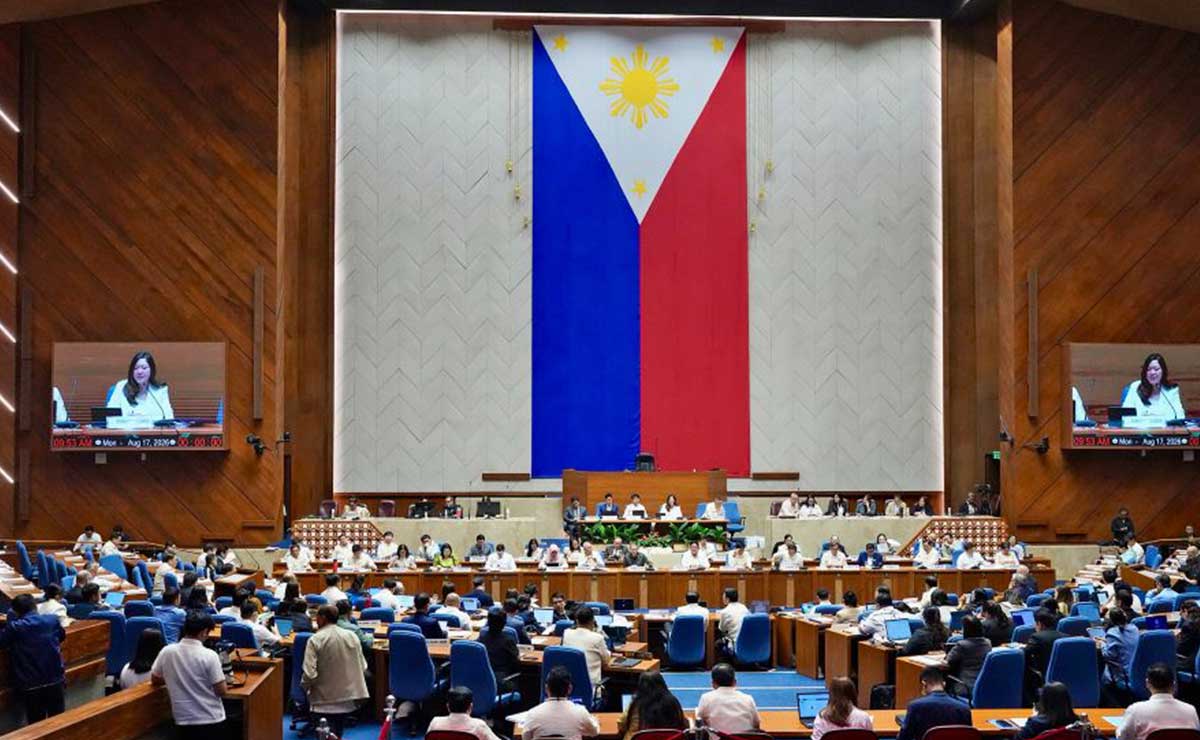
The House of Representatives. — HOUSE OF REPRESENTATIVES PHOTO MANILA, Philippines – The House of Representatives on Monday approved on second reading a bill modernizing the Philippines’ decades-old anti-espionage laws by broadening their scope and applying penalties in times of peace. In a voice vote, lawmakers approved House Bill No. 9642, which expands espionage to cover the unauthorized sharing of any “classified matter” that could harm the country by giving an advantage to foreign or domestic actors. Accessing any sketch, layout, blueprint or multimedia representation of “critical infrastructure” and national defense assets without authorization would also be considered spying, unless obtained through open sources or “other lawful means,” it added. Article continues after this advertisement Violators face life imprisonment without parole and fines of up to P20 million under the measure. The bill’s second-reading approval marks the culmination of a consolidated effort launched in 2024 to amend the country’s 84-year-old anti-espionage laws. Defense Secretary Gilberto Teodoro Jr. then pushed for anti-espionage reform after the arrest of a former town mayor accused of spying for China. READ: De Lima bats for passage of Anti-Espionage Act The Revised Penal Code defines spying as unauthorized entry into military facilities to obtain confidential information and sharing it with representatives of a “foreign power.” A 1941 Commonwealth statute defines espionage as intelligence-gathering aimed at helping enemy forces in wartime. The measure also penalizes those who aid or abet spies, including harboring and helping them escape, with accomplices facing up to 12 years in prison and fines of as much as P20 million. If the offender is a government official, the maximum fine rises to P25 million. Article continues after this advertisement Proposing and conspiring to commit espionage is also punishable by imprisonment of up to 12 years and fines of as much as P10 million under the bill. The bill allows authorities to “secretly wiretap” suspected spies and intercept their messages upon a written order by the Court of Appeals, which also has the authority to let the Anti-Money Laundering Council examine bank accounts tied to espionage. /mcm Your subscription could not be saved. Please try again. Your subscription has been successful.
Bill modernizing anti-spying law gets House OK on 2nd reading
Full Article
Original Source
Read the full article at Newsinfo →KhanList aggregates and links to publicly available news content. We do not host full articles from third-party sources. Always verify important information with original sources.