
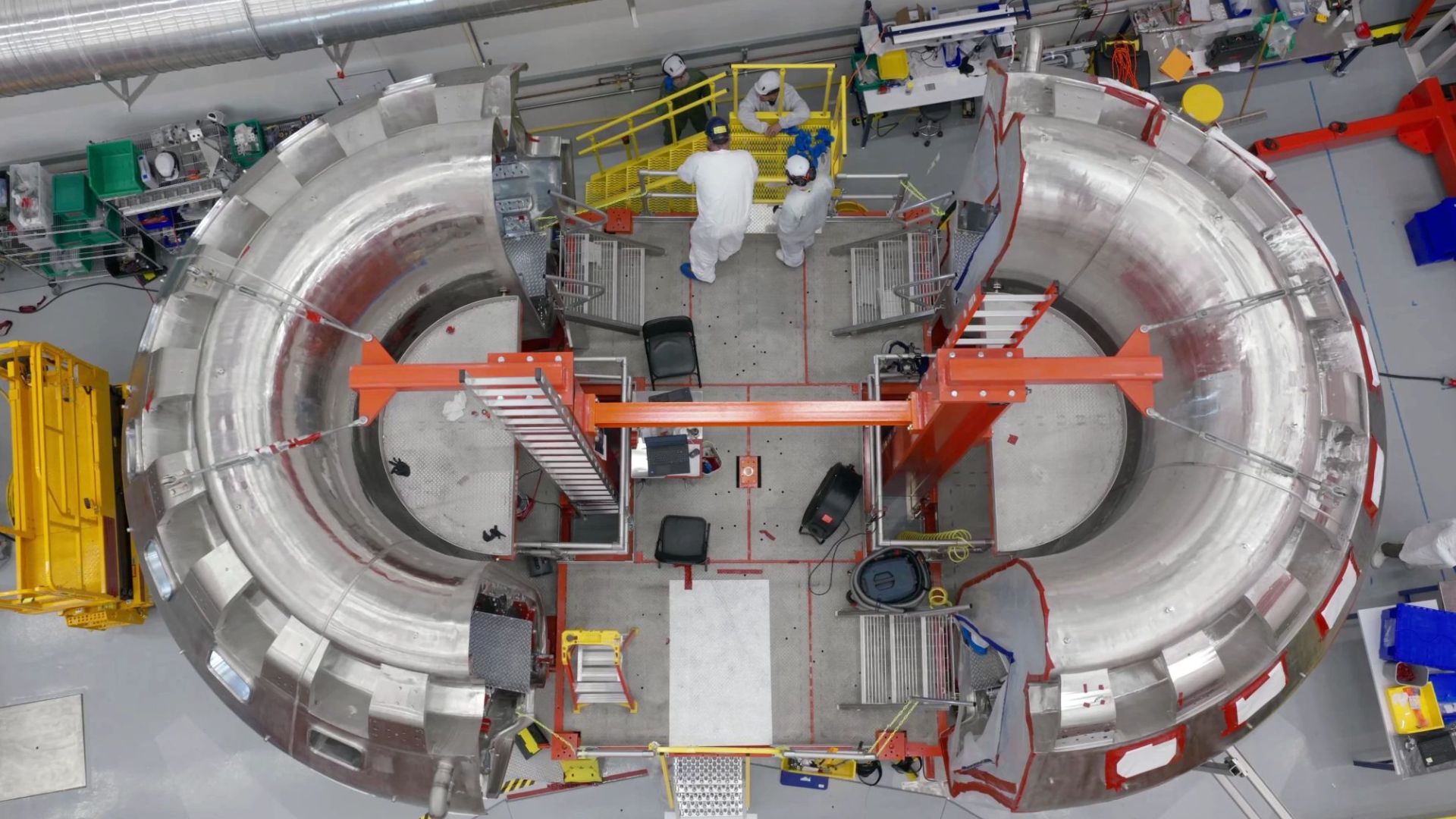
Bill Gates-backed US nuclear fusion firm Commonwealth Fusion Systems has secured an investment from South Korea’s Hyundai Motor Group to help build its commercial power stations. The funding was completed as part of a recent $1 billion capital raise, which will allow both organisations to explore engineering partnerships for commercial fusion power stations known as ARC. “Fusion energy has the potential to play an important role in addressing growing global energy demand while supporting a more sustainable future,” said Hokeun Chung, Executive Vice President of Hyundai Motor Group. The core technology behind the project relies on a machine known as a tokamak. This nuclear fusion device is a donut-shaped chamber, which uses powerful magnetic fields to confine superheated plasma. To make nuclear fusion viable, CFS relies on high-temperature superconducting (HTS) magnets. These advanced superconducting magnets create significantly stronger magnetic fields while remaining relatively compact. This magnetic strength enables the reactor to keep the high-energy plasma stable inside a much smaller vessel. This magnet design was first developed for SPARC, a net-energy demonstration tokamak currently undergoing assembly at the company’s facility in Devens, Massachusetts. The ARC commercial plant will directly scale up this high-temperature superconducting architecture. Physical validity of hardware approach The physical validity of this hardware approach received formal scientific confirmation in June 2026. Following a peer-reviewed research study, CFS verified the core plasma physics assumptions governing the ARC design. According to the validated models, the ARC plant will produce approximately 1.1 gigawatts (GW) of fusion power to generate 400 megawatts (MW) of net electricity for the grid. “CFS is focused on completing the assembly of its SPARC fusion demonstration machine in Devens, Massachusetts, and also continues to move forward with development of the world’s first grid-scale ARC fusion power plant at the company’s Fall Line Fusion Power Station in Chesterfield County, Virginia,” noted the US fusion firm. Preparing for operational power delivery To prepare for operational power delivery, CFS submitted an interconnection application to PJM Interconnection, the operator running the largest wholesale electricity market in the United States. It marks the first time a fusion developer has filed formal paperwork to link directly into the regional high-voltage grid. Commercial framework agreements for the Virginia facility are already in place ahead of its scheduled startup in the early 2030s. Regional utility Dominion Energy is collaborating on site development, while corporate investors Google and Italian energy supplier Eni have signed long-term power purchase agreements to buy more than half of the plant’s total electrical generation. “As we prepare to put fusion energy on the grid in the early 2030s, we see partnerships with leading industrial and energy companies like Hyundai as an important component to helping us scale our ARC power plant business,” added Bob Mumgaard, CEO and Co-founder of CFS. “CFS has demonstrated strong technical progress toward commercial fusion energy, and we look forward to exploring opportunities to contribute our industrial, engineering and infrastructure expertise as the industry advances,” concluded Chung. Get the latest in engineering, tech, space & science - delivered daily to your inbox.An active and versatile journalist and news editor. He has covered regular and breaking news for several leading publications and news media, including The Hindu, Economic Times, Tomorrow Makers, and many more. Aman holds expertise in politics, travel, and tech news, especially in AI, advanced algorithms, and blockchain, with a strong curiosity about all things that fall under science and tech.
Bill Gates-backed nuclear fusion firm gets Hyundai Motor backing in $1 billion raise
Full Article
Original Source
Read the full article at Interestingengineering →KhanList aggregates and links to publicly available news content. We do not host full articles from third-party sources. Always verify important information with original sources.