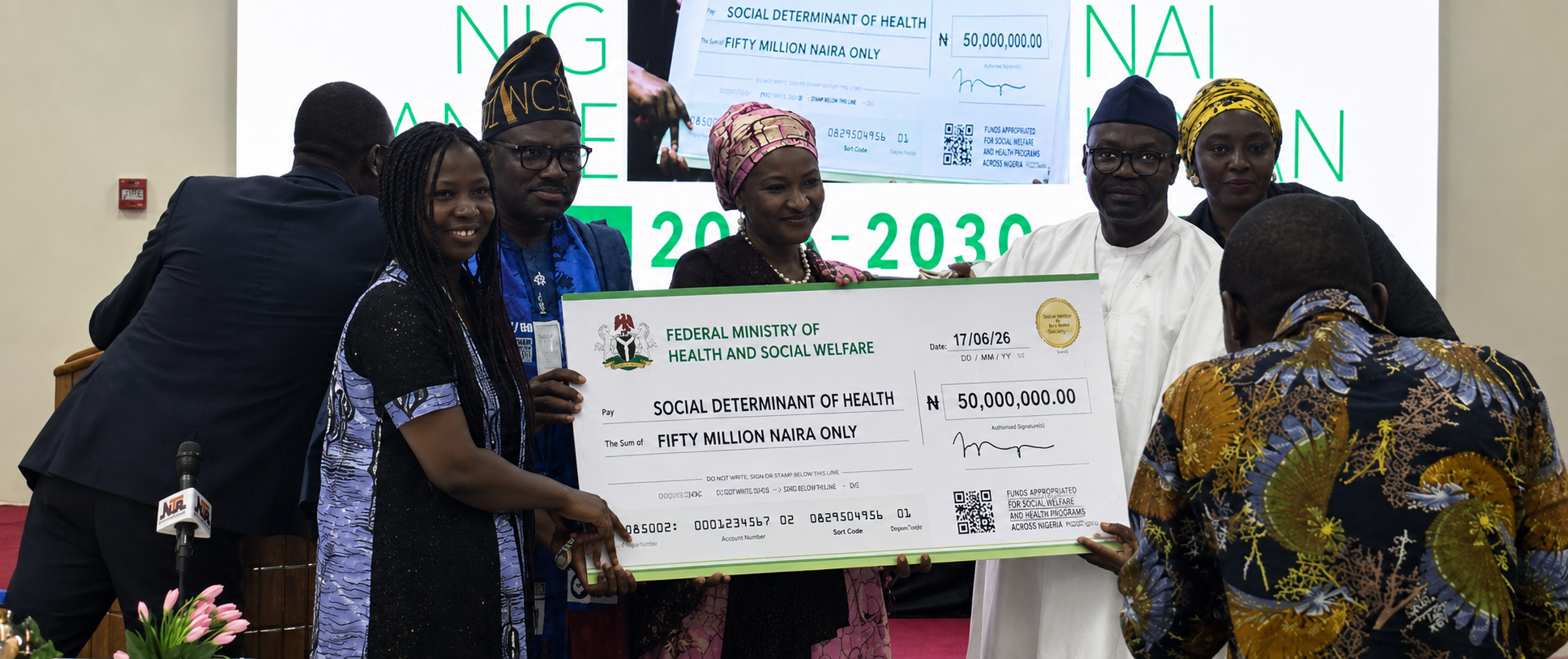
Dr. Olufunmilayo Oduniyi When people hear the word cancer, they immediately think of hospitals, chemotherapy, surgery, radiotherapy and medicines. These are undoubtedly essential components of cancer care, but they tell only part of the story. For thousands of Nigerians diagnosed with cancer every year, the greatest barriers to survival often lie far beyond the hospital walls. How does a patient travel hundreds of kilometres for radiotherapy without money for transportation? Where does a caregiver sleep during weeks of treatment away from home? How does a family provide nutritious meals after exhausting their savings on surgery and chemotherapy? What happens when a patient abandons treatment because accommodation, food and transport have become unaffordable? These questions lie at the heart of what public health experts describe as the Social Determinants of Health (SDOH), the social, economic and environmental conditions that influence whether people can access healthcare, complete treatment and ultimately survive. For cancer patients, these determinants are not secondary issues; they are often the difference between hope and despair, treatment completion and abandonment, survival and premature death. Recognising this reality, the National Cancer Control Plan (NCCP) Technical Working Group launched Nigeria’s Social Determinants of Health Initiative, a pioneering effort to ensure that cancer care extends beyond clinical treatment to include the practical support patients need throughout their journey. That vision moved from policy to action on June 17, 2026, when the Honourable Minister of State for Health and Social Welfare, Dr. Iziaq Adekunle Salako, officially flagged off the initiative in Abuja and demonstrated government commitment with a N50 million donation to support its implementation. More importantly, the initiative immediately began translating compassion into action, with 228 carefully selected cancer patients and survivors approved to receive N100,000 each, amounting to N22.8 million in direct assistance. Behind those figures lies a process built on transparency, accountability and equity. Applications were subjected to rigorous verification and quality review to ensure that support reached genuinely deserving beneficiaries across Nigeria’s six geopolitical zones and the Federal Capital Territory. In an environment where public trust is essential, the integrity of the selection process has become one of the initiative’s defining strengths. The momentum has not stopped in Abuja. Following the national launch, the South-East geopolitical zone recently commenced regional implementation, bringing together stakeholders from Abia, Anambra, Ebonyi, Enugu and Imo States to localise the initiative and address the unique realities confronting cancer patients in the region. Similar launches are now being planned across the remaining geopolitical zones, reflecting a growing national movement towards more equitable and patient-centred cancer care. For many patients in the South-East and other parts of Nigeria, travelling long distances to treatment centres in Enugu, Abuja, Lagos or Ibadan often means leaving families behind, paying for accommodation, losing income and enduring months of emotional and financial uncertainty. These realities explain why many patients interrupt treatment—not because they lack the will to survive, but because the burden becomes unbearable. As Professor Folakemi Odedina, Global Chair of the NCCP Technical Working Group, rightly observed, “Cancer control cannot succeed if we focus only on treatment. We must address the social realities that determine whether patients can access care, complete treatment and live productive lives.” That philosophy has become the foundation upon which the SDOH Initiative is being built. Already, survivor testimonies are affirming the importance of this approach. Many recount that the most difficult aspect of their cancer journey was not the chemotherapy itself but the hidden costs – transportation, accommodation, feeding, loss of income, caregiving responsibilities and emotional distress. One beneficiary aptly described the initiative as “humanising cancer care” because it recognises that patients are people first, not merely diagnoses. The initiative also seeks to create something Nigeria has never had before – a coordinated national cancer support ecosystem linking patients, caregivers, healthcare providers, survivor organisations, civil society groups, philanthropists, development partners and the private sector. Rather than isolated acts of charity, it aims to build sustainable pathways through which support can be mobilised, coordinated and delivered with dignity. This is why the SDOH Initiative deserves national attention. It represents a shift from treating disease to supporting people. It acknowledges that health outcomes are shaped not only by what happens in the consulting room, but also by whether patients can afford to reach the hospital, feed themselves during treatment, care for their families and maintain hope throughout one of life’s most difficult journeys. Encouragingly, plans are already underway for a high-level national fundraising and partnership dinner that will bring together government, corporate organisations, development partners, philanthropic foundations and distinguished Nigerians to expand the initiative’s reach. Such partnerships will be essential if support is to move beyond hundreds of beneficiaries to thousands of Nigerians living with cancer. Government cannot do this alone. Neither can healthcare professionals nor survivor organisations. Sustainable cancer support requires collaboration across every sector of society. The media must continue to tell these stories. Corporate Nigeria must embrace cancer support as part of its social investment agenda. Development partners and philanthropists must see patient support as an investment in human dignity. Communities, faith-based organisations and individuals must also play their part. The Ministerial Flag-Off was not the destination; it was the beginning of a national commitment to compassionate, equitable and people-centred cancer care. Because in the end, cancer treatment may save lives, but it is often support beyond treatment that enables patients to complete the journey. *Dr. Olufunmilayo Oduniyi is Chair, Social Determinants of Health Initiative, National Cancer Control Plan (NCCP) Technical Working Group
Beyond Treatment: Why Social Determinants of Health Matter in Cancer Care
Full Article
Original Source
Read the full article at Thisdaylive →KhanList aggregates and links to publicly available news content. We do not host full articles from third-party sources. Always verify important information with original sources.