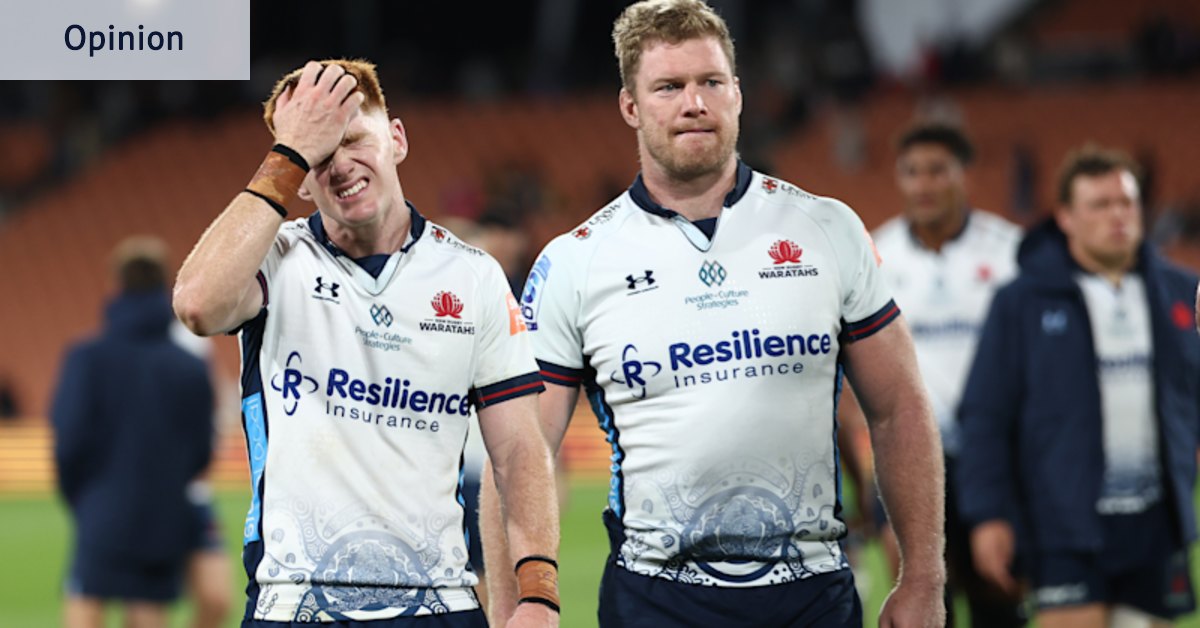
OpinionRugby columnistAugust 1, 2026 — 9:33amThe last time the Waratahs were a rugby team with a crystal-clear sense of who they were was May 2014, far from the bright lights of Sydney.In New Plymouth, New Zealand, the Waratahs turned up and physically dominated the Dave Rennie-coached Chiefs.Israel Folau Getty ImagesThey were too big, too strong, and filled with too many power athletes for the Chiefs to handle. They won the match 33-17.There and then, the Waratahs knew what they were about, and the rest of the competition got the message as well – they weren’t soft touches coming out of the Eastern Suburbs.Twelve years later, does anyone have a clue what the Waratahs stand for? Can you describe Waratahs rugby in a sentence?Everyone knows what Brumbies rugby is. The Reds have a much more identifiable style after the Les Kiss years, and the Force are developing their own thing in Perth under Simon Cron: fighters, technically well-drilled, with a bit of a chip on their shoulder.The Waratahs should have a rugby brand, given that NSW is an absolute goldmine for collision-sport athletes.There should be a constant stream of big men and superior athletes feeding into the Waratahs system. Everyone should know before the season starts that the Waratahs have the best raw materials to work with.That doesn’t guarantee success every year, but it should mean that if all the tactical and cultural bases are covered off by good coaching, the Waratahs will be a consistently competitive side.They should be the Australian team that everyone loves to hate because of the volume and quality of players coming through. Instead, they’ve become the Australian team everyone loves to play.The 2026 season was another forgettable campaign for the Waratahs.Getty ImagesThe failed answer to this problem has been to sack the coach, with Dan McKellar the latest out the door.As a result, the Waratahs have developed a saviour complex. It’s always the new coach who is going to save them.But every time a new coach comes in, he brings new ideas, new thoughts on which players they need, and what style of rugby they will play.They’ve got it upside down. Those things should already be embedded in the organisation’s walls. The new coach should know exactly what he is stepping into the moment he starts, and that he is just a relatively small part of a bigger picture that started long before he was hired and will continue long after he leaves.Dan McKellar’s time in charge of the Waratahs didn’t yield great success.Getty ImagesThat has not been happening at the Waratahs. Where is the consistency of approach between, say, a Daryl Gibson and a McKellar? They are chalk and cheese.And to emphasise the failure of the Waratahs as an organisation, they punted Rob Penney, and he then went on to win a Super Rugby title with the Crusaders. He was the same coach in Christchurch that he was in Sydney.Calls to reinstate Michael Cheika, therefore, are surely rooted in the idea that Cheika is synonymous with the last time the Waratahs had a playing style that was theirs alone – lots of size, lots of natural talent and some smart guys pulling the tactical strings.I have no idea if a Cheika return would work. It is hard for the same coach to make the magic happen twice.But if it is not him, there will be enough men with enough knowledge and passion within the NSW rugby community to understand the 2014-era Waratahs blueprint and have a clear idea of how to bring it back.That could include 2014 Waratahs alumni Stephen Hoiles, now a young coach himself, but in all likelihood there will be plenty of parties whose blood runs blue who have roles to play.This masthead reported last week that Rugby Australia was considering Joe Schmidt as an option, but he is not the right fit.In fact, the coach hunt isn’t even the Waratahs’ main problem – it’s the lack of continuity over the past decade.When you look at the Waratahs, with all the natural playing resources they enjoy in NSW, the first thought is: “All the gear, and no idea.”The second is: “What a damn shame.”They really stood for something in that short Cheika era. The 2014 title and the crowds that followed were simply a consequence of understanding who they were.Paul Cully is a rugby columnist for The Sydney Morning Herald.Connect via X or email.From our partners
Before they find a new coach, the Waratahs need to find an identity
Full Article
Original Source
Read the full article at Smh →KhanList aggregates and links to publicly available news content. We do not host full articles from third-party sources. Always verify important information with original sources.