
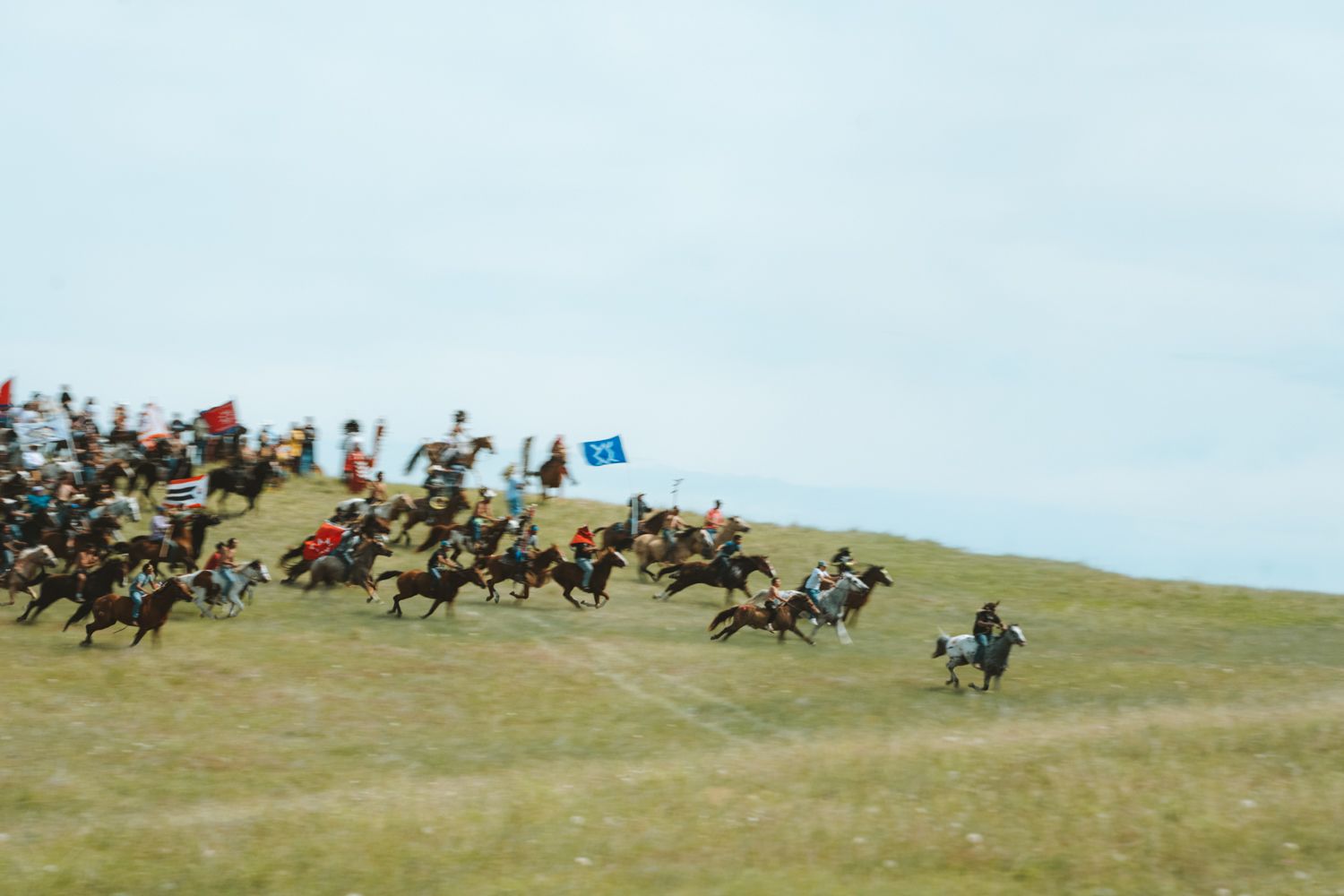
Travel across Montana and uncover the fossils, geology, and cultural traditions that shaped it Riders participate in the reenactment of the Battle of the Greasy Grass, commonly know as the Battle of the Little Bighorn. Montana Department of Commerce, VisitMT In the far reaches of eastern Montana sits the state's largest state park: 11,500 acres of badlands that were once teeming with prehistoric life. Here amid Makoshika State Park's natural bridges, soaring hoodoos, and sandstone caprocks, dinosaurs like Triceratops and Tyrannosaurus rex roamed. Evidence of their time here exists in the park's sedimentary rock layers, excavated skeletal remains and tiny jawbones, as well as fossilized fragments of ancient reptiles and fish. This rugged landscape is just one of Montana's many links to the past and to a larger story that has shaped Big Sky Country for ages. Long before becoming a U.S. state in 1889, Montana has been keeping history. The land's rich heritage spans millennia, from fossils dating to the Cretaceous Period to Native American cultural traditions that stretch back more than 10,000 years. A massive inland sea once covered much of what is now central and eastern Montana, creating thick layers of sediment ideal for preserving prehistoric life. Back then, tentacled ammonites and large marine reptiles like long-necked plesiosaurs navigated its warm, shallow waters, while Late Cretaceous dinosaurs such as the duck-billed Edmontosaurus wandered along muddy coastal plains. Much later, the region experienced glacial activity. In eastern and central Montana, the massive continental Laurentide Ice Sheet flattened the landscape, permanently rearranging rivers and leaving behind vast fields of rock and debris. Indigenous oral histories and archaeological sites show that early human hunters and gatherers navigated these post-glacial landscapes using the rich ecosystem and abundant bison populations across the plains. Remnants of their stories still exist in paleontological and cultural sites throughout Montana's central and eastern regions. In essence, a visit to Montana is like stepping far back in time. Here are five ways that you can experience the paleontology, geology, and culture that formed the foundation of the forty-first state: 1. Montana Dinosaur Trail When American geologist Ferdinand Vandeveer Hayden found isolated dinosaur teeth along Montana’s upper Missouri River in 1854, the discovery became the first identified dinosaur remains in North America. Today, Montana is one of the best places in the world for discovering dinosaur fossils, thanks to its unique Late Cretaceous geological formations. These soft shales, mudstones, and loosely cemented sandstones have preserved everything from sauropod bones to microscopic marine plankton. Fossils are carefully cleaned and studied at the Carter County Museum in Ekalaka, a key stop on Montana's Dinosaur Trail. Montana Department of Commerce, VisitMT From left to right: Stew Cook and Dr. Nathan Carroll, with the Carter County Museum, uncover fossil fragments in eastern Montana. Montana Department of Commerce, VisitMT The statewide Montana Dinosaur Trail consists of 15 stops across Montana, with most of them concentrated in the eastern and north-central parts of the state. Each location offers a unique glimpse into the world of these prehistoric giants, with everything from rare specimens of flying reptiles to “Leonardo,” a mummified plant-eating Brachylophosaurus that still has over 90 percent of its body covered in fossilized skin and tissue. A replica of this world-famous Montana find is on display at the Great Plains Dinosaur Museum in Malta, one of a few trail stops that also offer interactive public dig programs. Another popular trail spot is Makoshika State Park in Glendive. This expansive badlands park sits directly within the fossil-rich Late Cretaceous Hell Creek Formation, a famous rock layer in North America filled with fossils from the very end of the age of dinosaurs. Hiking trails wind through weathered rock layers hiding possible fossil fragments, while the park’s visitor center houses the remarkably complete skull of a small, young Triceratops, unearthed in the park in 1991. Ekalaka’s Carter County Museum, in the state’s southeast corner, holds world-class specimens—including a fully mounted Anatosaurus skeleton and a rare juvenile T. rex skull—pulled straight from the surrounding land. 2. Pictograph Cave State Park Southeast of Billings, this 23-acre historical and archaeological park is home to more than 100 pictographs (rock paintings) created by various Native American groups. The oldest artworks date back more than 2,000 years and depict wildlife and spiritual symbols, while more recent images show warriors and riders on horseback. A short walk along the park's interpretive loop trail leads to a complex of three sandstone caves: Pictograph, Middle, and Ghost caves. Pictograph Cave is the largest and deepest, and it's where most of the paintings are found. The park itself is extremely important to Northern Plains archaeology, with more than 30,000 ancient artifacts, including stone tools, pottery, and trade beads, unearthed here over the years. A fraction of them are displayed in the park's visitor center. 3. First Peoples Buffalo Jump State Park Hikers follow a trail along the sandstone cliff at First Peoples Buffalo Jump State Park. Montana Department of Commerce, VisitMT Located in central Montana just outside of Ulm, this National Historic Landmark features one of the largest pishkuns (a Blackfeet word for "buffalo jumps") on the continent. Great Plains Indians used these sites to drive bison herds over cliffs to obtain meat and materials for food, clothing, and shelter. At least 14 Native American tribes, including the Shoshone, Cree, Blackfeet, and Assiniboine, used the mile-long sandstone cliff for their survival. Today, visitors can hike to its top to see where the buffalo once stampeded, view the remnants of more than 250 stone piles used to funnel the bison toward the cliff, and take in sweeping views of the prairie grasslands. Keep an eye out for petroglyphs and pictographs visible along the cliff faces as you go. Over at the park's visitor center, exhibits detailing the history of the jump and the importance of the bison to regional tribes are on full display. There's also a storytelling circle, as well as archaeological remains from the site, including pottery fragments and flint tools. 4. Medicine Rocks State Park Local Native American tribes have long considered the unique sandstone pillars, caves, and wind-carved hoodoos of Ekalaka's Medicine Rocks State Park sacred. Some Indigenous peoples would undertake vision quests among the otherworldly formations, while others came here to gather medicinal plants such as prickly pear and alum root, which grew in its porous sandstone soil, for healing. Trails offer easy access to the park's natural formations, many of which tower 60 to 80 feet above the flat prairie. Wind, rain, and temperature extremes eroded this soft rock into Swiss cheese-like patterns, forming tunnels, arches, and flat tops that seem almost surreal. Look for petroglyphs and pictographs left by Plains tribes such as the Sioux and Cheyenne, who carved these images into the weathered sandstone. 5. Pompeys Pillar National MonumentOn July 25, 1806, American explorer William Clark carved his name into a 120-foot sandstone butte on his way back from the Pacific. It's the only remaining physical signature on a natural landmark left behind in the wild by the Lewis and Clark Expedition. However, well before Clark's arrival, Indigenous groups made good use of the area, hunting bison, processing game, trading goods, and adding their own petroglyphs and pictographs to the rock's soft sandstone face. Over the years, Pompeys Pillar has become something of a historical journal, with everything from ancient images of animals and symbols to the initials of trappers and railroad workers. Together, these visual records span more than 11,000 years. Along with the butte itself, the monument features an interpretive center that highlights Native people’s culture, flora, fauna, and the story of the Corps of Discovery expedition. The Wonders of Time Well before Montana became a U.S. state, its landscape was recording history. From dinosaur trails to Great Plains Native American culture, there are countless layers of the past to see, explore, and experience. Visit Montana and unearth its many wonders for yourself!
Before State Lines: Here Are Five Ways Montana Has Been Keeping Time for Ages
Full Article
Original Source
Read the full article at Smithsonianmag →KhanList aggregates and links to publicly available news content. We do not host full articles from third-party sources. Always verify important information with original sources.