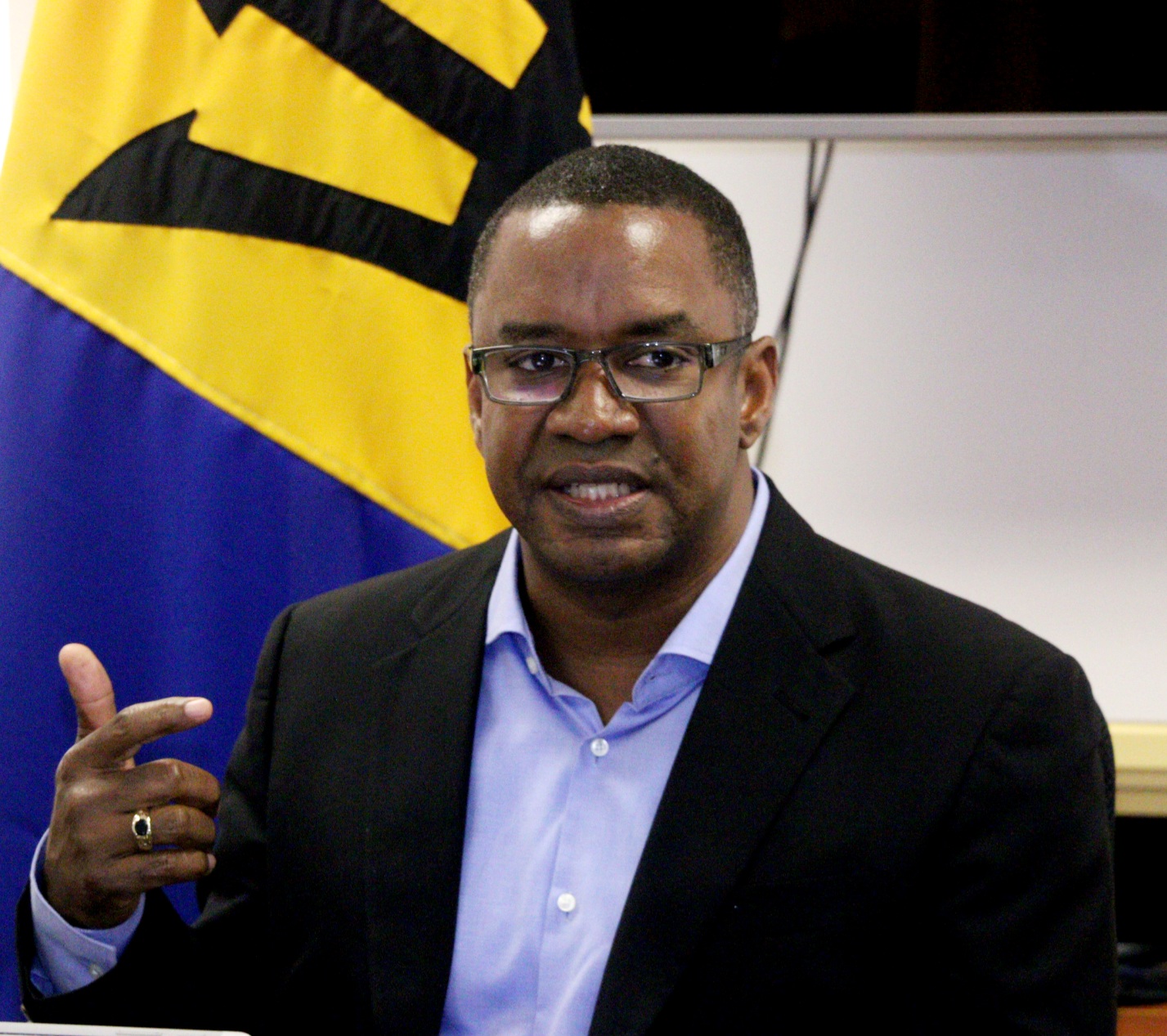
Attorney General Wilfred Abrahams (File Photo) Barbados will enter its next Caribbean Financial Action Task Force (CFATF) evaluation round in less than a year, the Attorney General Wilfred Abrahams revealed on Tuesday, warning that the country must strengthen its regulatory framework to maintain compliance with international standards. As he backed a new bill to identify the people who own all companies registered in Barbados, Abrahams told the House of Assembly that it was a critical part of Barbados’ efforts to meet the requirements of the international anti-money-laundering and counter terrorism financing framework. Barbados had completed its fourth-round mutual evaluation with CFATF and had come off enhanced scrutiny lists, but the next evaluation would focus on how effectively the country uses the systems it has put in place, Abrahams said. “We had to show we set up a proper regulatory framework. We had to show that we had a proper legislative framework. We had to show that we were doing all the things to create the infrastructure to combat terrorism, combat money laundering, combat trafficking in persons,” he said. “We did that successfully. There are some of those rules that have changed. There’s some additional structures that we have to do in order to become compliant for the fifth round.” Abrahams said the upcoming evaluation would not only examine whether legislation exists, but whether authorities are effectively applying it. You Might Be Interested In “The fifth round is about how effectively you have used them. You pass because you put the laws there. But how many investigations have you actually done? How many convictions have you managed to secure? How many asset forfeitures have you been successful with?” The attorney general said the ability to identify the ultimate beneficiary of companies was essential to tracing illicit funds and holding criminals accountable. “If we are unable to actually see who the real brains are behind a business, we can’t get this to be able to trace where the funds are eventually going. You need to know who the ultimate beneficiary of that business actually is.” The legislation seeks to create a central register containing information on the individuals who ultimately own or control companies operating in Barbados. Abrahams stressed that the bill was not about making private company information available to everyone. “It is not about sharing the information with everybody,” he said. “But if I have a concern and I report it to the competent authority in Barbados, that competent authority must be able to continue to carry out those investigations. We’re not living in a world by ourselves anymore. Terrorism does not affect one country and not another one.” He explained that companies were created as separate legal entities to protect individuals from personal liability, but the modern business environment required greater transparency. While there was still a need to protect the privacy of legitimate businesses, authorities could not be prevented from determining who was ultimately benefiting from corporate structures, he added. “There’s still a reason and a need to protect the separate legal identity and to protect those who are behind most corporate enterprises.” “While that may be so in the normal course of things, it cannot be a case that the state or regulatory bodies hit a veil or hit a roadblock in trying to determine who is the ultimate person,” Abrahams added. The attorney general also highlighted the role of beneficial ownership information in preventing corruption and manipulation of public processes. He gave the example of a government tender; he said one individual could potentially control several companies and create the appearance of competition while benefiting from all bids. “If we do not know who the ultimate beneficiary is, then our processes can be corrupted at every single stage,” he said. The bill would require companies to update information annually, including details on directors, shareholders and ultimate beneficiaries. These requirements were a necessary step to ensure companies remain compliant. “Once a year, I have to send in who my directors are, who the shareholders are, who is the ultimate person who benefits from the business.” Abrahams, who noted that Barbados currently chairs CFATF, said maintaining compliance was now part of his responsibility. “It is my duty to keep us compliant, and this is a necessary and critical cog in that view, and in our ability, sir, to regulate our business sector in Barbados.” He maintained that the legislation would help protect Barbadians by allowing the government to verify who companies are doing business with and to avoid exposing the country to international risks. (LG)
Barbados faces next financial crime test – AG
Full Article
Original Source
Read the full article at Barbadostoday →KhanList aggregates and links to publicly available news content. We do not host full articles from third-party sources. Always verify important information with original sources.