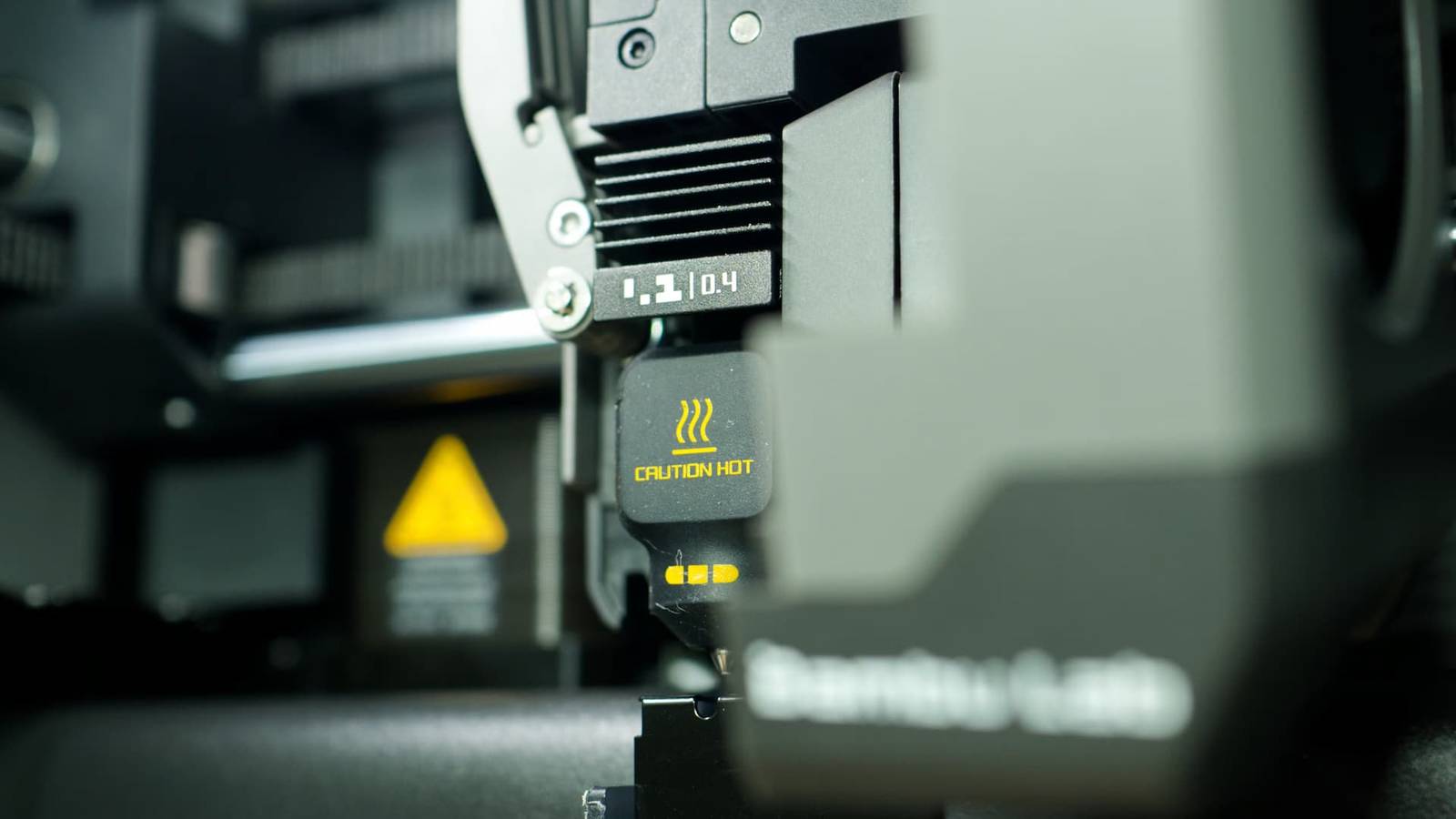
Credit: Tim Brookes / How-To Geek Published Jul 25, 2026, 7:00 AM EDT Tim has been covering technology for almost 20 years, in that time spanning a broad range of topics from security to product reviews. He is especially focused on the Apple ecosystem, productivity, and consumer advice. Over the years Tim has written thousands of articles, reviews, and round-ups in addition to producing video content and original photography. A graduate of journalism, he found his footing as a freelancer with a laptop and loves how he is able to work from practically anywhere. Now a Senior Editor for iPhone, Mac, and Smart Home at How-To Geek, Tim still loves to write. He can also be found crafting round-ups and productivity posts for the Zapier blog. Earlier in his career Tim spent nearly a decade as a writer and eventually Apple section editor for MakeUseOf. Tim currently lives in Brisbane, Australia. Outside of work he loves to hike and work out, play video games, and spend quality time with his wonderful partner and two cats Inka and Roger. The market is stacked with compelling options for anyone considering a 3D printer, but three brands usually float to the top: Bambu Lab, Creality, and Prusa. These aren’t the be-all and end-all of the 3D printing world, but they earned their status for a reason. Here’s a quick breakdown of what each gets right (and some of the things they get wrong, too). Bambu Lab The “plug and print” market-leader It feels like everyone and their dog has bought a Bambu Lab 3D printer in the last couple of years, and that’s not a million miles away from the truth. Bambu Lab is the current market leader, having earned its position for bringing 3D printing to the masses for those who favor simplicity and ease of use over tinkering and endless upgrades. You can be up and running with a Bambu Lab printer within about 30 minutes of opening the box. The company was one of the first to embrace quality-of-life improvements like automatic bed-leveling, and the printer takes care of all calibrations for you. This approach has since become the industry standard, so it’s not just Bambu Lab printers that offer this. With a commanding position in the 3D printing market, Bambu Lab squeezes on price and offers a lot of printer for your money. The X2D, a long-awaited update to the company’s breakthrough X1 and X1C models, arrived in early 2026 only months after the launch of mid-range darling the P2S. At only $100 more than Bambu Lab’s mid-range option, the X2D offered meaningful upgrades like a dual-nozzle system, heated chamber, and improved belts for better print quality. Since then, the A2L (a follow-up to the A1 and A1 mini) has launched as a budget open “bed slinger” printer that offers a larger build volume on a budget. You get a lot of bang for your buck with a Bambu Lab printer, and this extends to the ecosystem too. Bambu Lab’s slicer and mobile apps “just work,” and the company’s MakerWorld model repository is now the most popular in the world. The company has a few controversies under its belt, notably for its locked-down approach to cloud connectivity and for being over-zealous with legal threats against small open-source developers. For raw ease of use and those who don’t mind the Apple-like approach to ecosystem management, Bambu Lab is hard to beat. Bambu Lab P2S Build Volume 256x256x256mm Printing Speed 600mm/s The Bambu Labs P2S 3D printer is ready to go out of the box and can have you printing within 15 minutes. It features up to 20-color printing with the AMS unit, has an upgraded built-in camera for remote monitoring and time lapses, and has an enclosed body for printing even high-temperature filament. Bambu Lab AMS 2 Pro A multi-material system for Bambu Lab printers with active air vent 65°C filament drying, air-tight filament storage, a brushless servo feeding motor, Bambu's signature RFID filament sync, and compatibility with up to up 24-color/material printing by connecting more AMS 2 Pro units. Creality Exceptional value and 3D printing pedigree Creality is responsible for catapulting the Ender 3 printer to dizzy heights as the budget printer of choice during the late 2010s. It made a real splash on the scene as a printer that brought 3D printing to anyone who had $200 to spend on the hobby and a desire to learn and tinker. Though the world has moved on, Creality still sells updated versions of the Ender 3. The latest iteration at the time of writing is the Ender 3 V4 Combo, a $369 package that includes the company’s CFS multi-material system. Creality’s main focus these days is its flagship CoreXY enclosed printers, notably the K2, K2 Pro and larger K2 Plus printers. The takeaway here is value, with Creality offering a more budget-friendly entry point into the 3D printing world. The company has more budget options than the competition, while its flagship printers are cheaper. If you want a large single-nozzle printer, you can pay around $1,000 for the K2 Plus on its own or $1,200 for a Bambu Lab H2S. A basic enclosed K2 will set you back around $370, while similar models like the P2S from Bambu start at $549. Creality frequently runs deep discounts (it can feel like the company’s printers are always on sale). I can’t speak for the experience of living with a Creality printer, but the general gist of reviewers and users online suggests the overall experience is less polished. Prusa Quality and open-source spirit at a premium price point Prusa is a 3D printer brand that produces immediately recognizable black and orange printers. The company manufactures these in the EU and US, while its closest rivals outsource to China and beyond. Until the release of the Core ONE, the company open-sourced every printer design so that anyone could make one from scratch with the right parts and skill. This open-source spirit is alive and well, even if the era of Prusa open-sourcing its flagships is dead. Prusa releases upgrade kits for its printers so that you can convert older models into newer ones for a reasonable (but still fairly high) price. The likelihood of Prusa “pulling a Bambu Lab” and suddenly locking down its cloud infrastructure or squashing open-source forks is very slim, since this behavior would betray the brand image it has built. The company has developed a fierce following as a result, with particular focus on long-term support, repairability, and upgrades. Prusa is also recognized for manufacturing its own high-quality filament (known as Prusament) and maintains its own slicer in the form of Prusa Slicer. Most Prusa printers can be purchased as kits that you can assemble yourself, which is a way of saving money and learning more about how your 3D printer works. Unfortunately, Prusa printers are more expensive than competitors like Bambu Lab and significantly more expensive than budget brands like Creality. The CORE One+ starts at $1,300, which doesn’t include a camera module or multi-material system. The Bambu Lab X2D, which has a similar build volume and shares features like a heated chamber, starts at $649. You don’t pick a Prusa printer to save money. You pick one because you appreciate the company’s ethos, the long-term implications of ownership, and the freedom that comes with them. Prusa CORE One+ Available in a kit or preassembled, the CORE One+ is a fully enclosed CoreXY 3D printer with active temperature control designed for top print quality and speed. Easy to set up and made to last, this rugged machine is perfect for beginners and professionals alike. Prusa MK4S 3D Printer Build Volume 250 x 210 x 220 mm Printing Speed 170mm/s The Prusa MK4S 3D Printer is one of the most well-known and well-loved 3D printers on the market. As one of the main companies behind the open source initiative of 3D printing, the Prusa MK4S still supports open-source software and firmware when other companies are building their own closed-source alternatives. As the 2025 iteration of the classic Prusa 3D printer, you'll get all the modern amenities including fast and reliable printing, easy setup, and Prusa's proven reliability. There are many more printer brands out there, including big names like Elegoo and SnapMaker. Whatever you decide, just be aware that there’s no perfect 3D printer—just the “right” 3D printer for you.
Bambu Lab vs. Creality vs. Prusa: Where each brand actually wins
Full Article
Original Source
Read the full article at Howtogeek →KhanList aggregates and links to publicly available news content. We do not host full articles from third-party sources. Always verify important information with original sources.