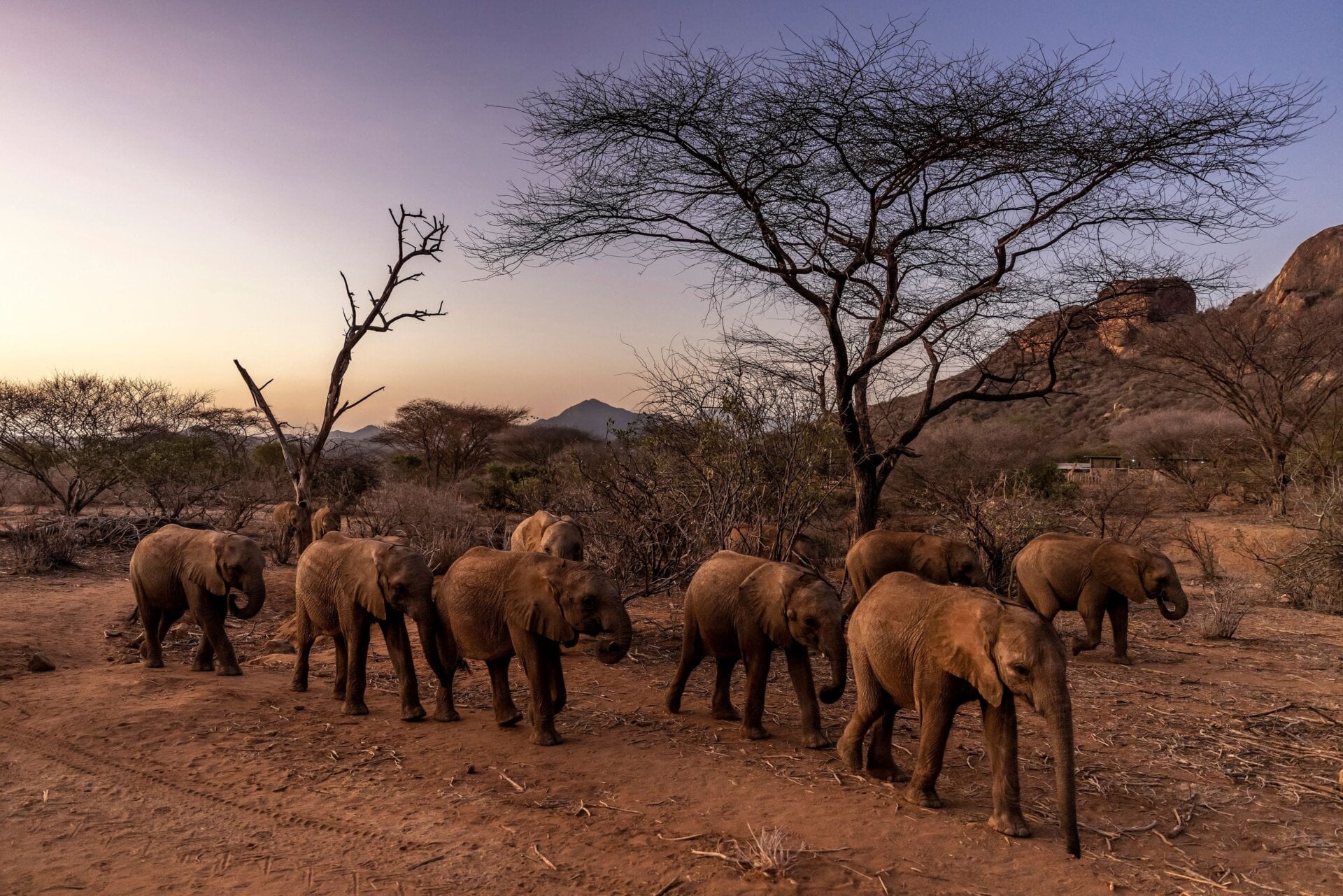
Fifteen elephants were found dead outside Amboseli National Park in southern Kenya, with some of the animals showing signs of partial paralysis that was likely caused by poisoning. The Kenya Wildlife Service (KWS) found traces of cyanide in early samples collected from the elephants’ carcasses, which suggests they may have been poisoned by eating tomatoes that had been sprayed with pesticide from nearby farms, The Guardian reported. The devastating incident raises concern over expanding farmland near national parks just as conservation efforts by Kenyan authorities were starting to pay off. Tragedy at Amboseli The recent deaths occurred in the Kimana Sanctuary and Kuku Group Ranch areas around Amboseli National Park. Ten of the elephants showed signs of partial paralysis before dying within two days, according to KWS. The remaining five carcasses were found decomposed or scavenged, making it difficult to identify the cause of death. The majority of the elephants were females and their calves, with only one male elephant in the group. Their deaths occurred over a month between 24 June and 24 July. Authorities collected samples from the elephants and ran preliminary tests at the lab, which showed traces of cyanide. The chemical compound was likely used as a pesticide at a farm in Kimana town, a leading producer of tomatoes. A 2024 report by the Route to Food Initiative documented the use of cyanide as an active ingredient in insecticide at Kimana’s farms. Elephant herds tend to wander onto nearby farmland in search of food and water, thereby increasing their risk of ingesting potentially toxic substances. The recent incident highlights increasing farmland around Kenya’s national parks, which threatens the surrounding natural habitat for the animals. “The reported cyanide poisoning by the KWS must be urgently and thoroughly investigated, and those responsible must be held fully accountable under the law,” Ben Wandago, International Fund for Animal Welfare East Africa director, said in a statement. “This tragedy also underscores the urgent need for the strict control and responsible handling of highly toxic substances to prevent them from entering the natural environment.” Recovering population Amboseli National Park, located at the base of the northern slope of Mt. Kilimanjaro, is best known for its large elephant herds. There are over 2,000 elephants roaming the park thanks to a recent baby boom in 2025 that saw more than 200 new births, according to Born Free. Kenyan officials say the recent incident marks the first time in decades that elephant mortalities on this scale have been recorded after they were able to successfully crack down on poaching, the BBC reported. Kenya’s elephant population has strongly recovered from 16,000 in 1989 to 36,000 as of 2024, largely driven by anti-poaching programs and conservation efforts. Still, expanding human settlements pose a threat to wildlife in the region, and the recent tragedy is a stark example.
Authorities Investigating Mysterious Deaths of 15 Elephants at Kenyan National Park
Full Article
Original Source
Read the full article at Gizmodo →KhanList aggregates and links to publicly available news content. We do not host full articles from third-party sources. Always verify important information with original sources.