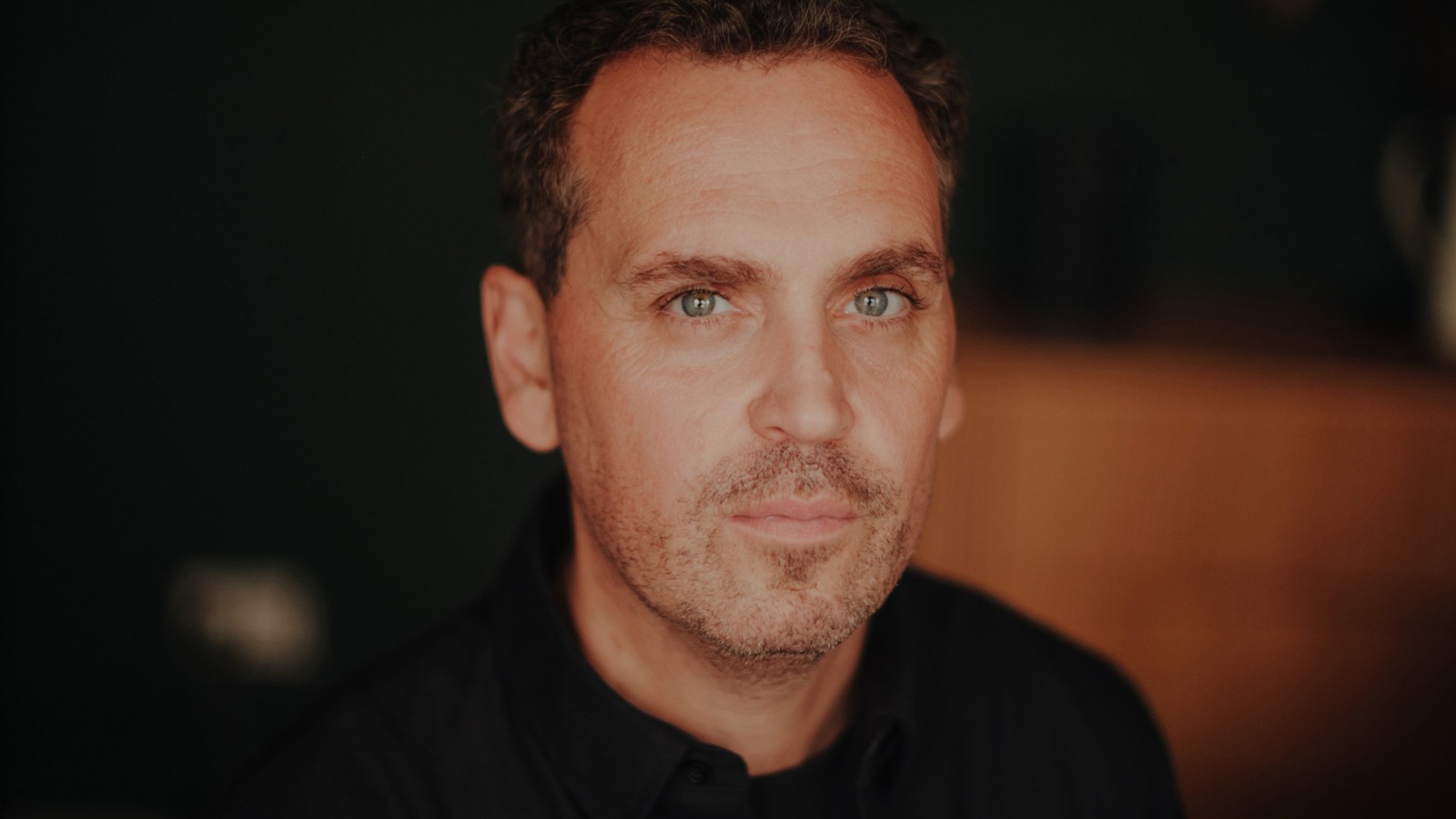
Lost in Another World, released under his full name James Ellis Ford, was partially recorded in a London hospital while the songwriter underwent treatment for leukemia When acclaimed producer James Ford, who’s overseen every Arctic Monkeys album since 2007’s Favourite Worst Nightmare, found himself undergoing cancer treatment in a London hospital last year, he says it was only natural that his mind would eventually drift back to music. “I’d been in hospital feeling awful and the first moment that my energy came back a bit I realized I was in survival mode and I didn’t really have any creative thoughts, which was terrifying in a way,” he recalls. “I’m so used to making music every day and it’s a real part of my self-worth and identity. All these things are wrapped up, and I regulate my mental health with music. So when my energy came back for the first time, it was the first thing I wanted to do.” It was at this point that Ford’s wife Sereen stepped in, bringing a simple recording set-up and an IKEA table to St. Bart’s Hospital, which allowed him to record while being kept in isolation to protect his immune system during treatment for acute myeloid leukemia. Now, the remarkable results of this process — written and recorded in just two weeks last year – emerge in Ford’s new album Lost in Another World, due Aug. 14. Released under his full name, James Ellis Ford, it’s a remarkable record which, despite being recorded in the darkest of circumstances, feels like a call to embrace life in all its knotty glory. You can read our whole Q&A with Ford below. You’ve announced a number of live shows for this album. Artists can find it daunting to present new material at the best of times, but I wondered if it’s even harder when this is a deeply personal reflection on what you’ve gone through over the last 18 months?It’s a mixed blessing, to be honest with you. I’m proud of the album and I’m glad it’s getting out there, but it very much reminds me of one of the darker periods of my life. If I’m entirely honest, I’ve been doing a bunch of press and obviously relearning the songs and doing a few little rehearsals, and it’s not the nicest feeling. I’m talking about being ill a lot and it just takes me back there, it puts me back in that moment. It was [made] quickly and in that situation, so it’s akin to looking at a photograph of it. It’s fine, but I don’t think it’s something I want to dwell on for too long. Editor’s picks So this is a record that, quite understandably, you want to move on from quite quickly?I suppose I always have a little bit of an odd relationship with records once they’re finished. I’m never that keen on listening back to something I’ve made recently because there’s always an uncomfortable feeling of, “I could have done that better” or, “I could have made a different decision here or there.” It’s only really after a few years that I can look back on it and be like, “Oh that was cool,” and, “Maybe that one could have been better.” But of course the subject matter and the circumstances of this particular record are especially personal and I think in a way that has been healthy for me. I’ve been pretty open about the whole thing. I haven’t been trying to hide the fact that I was ill and so I have been talking about it a lot. I think that is a way for me to process it and to understand it, because it’s such a weird, surreal thing to go through. This is a strange thing to say, but I’m not fully out of it either – there’s a chance it could relapse. I could probably be the person who’s like, “Everything is cool” and move on, but in a way I think keeping one foot away from it is probably healthy in case it does come back. It would be awful if it does return, but the fact I’m still present in that moment is maybe a good thing. You made large parts of the record while undergoing treatment at St. Bartholomew’s Hospital. Did that unconventional recording experience provide any lasting lessons about how you might approach music in the future?I learnt two big things from it. We’re speaking while I’m sat in a nice studio with loads of equipment, and you don’t really need any equipment in the modern age, which was sort of liberating. I’m quite focused on equipment and a certain process, so to suddenly have a totally different process forced upon me and then still be able to make a record was an eye-opener. It was liberating not to think about any of this stuff, wires and plugging shit in – it was purely a microphone and some chords and some simple sounds. In that way, I almost found it the easiest recording situation I’ve ever been in. Related Content You add to that the isolation I had to undergo for my immune system, and it became this enforced perfect storm, and I obviously had a lot of thoughts to write about. It fell out of me in the easiest way it ever has, and I hope that’s opened a door into a new way of writing. The other big thing I learned was that in that moment I just didn’t have any filter at all. I wasn’t trying to second guess and I wasn’t even really trying to make it for anyone else, other than to cheer myself up and maybe to send to my dad and a few friends, to stimulate a conversation and wave a flag that I was still alive. Having that lack of filter was amazing, to a point where I don’t think I could write something like that now. Some of the lyrics make me wince a lot because they’re on the nose and they’re pretty direct. That analytical and rational part of your brain often stops you from doing that, but this was another lesson to just fucking get over yourself! What did the medical team first think when they came in and saw you noodling around with music?I’ve got a really good relationship with my consultant actually, he’s this lovely Dutch guy. In initial conversations, I was talking about being involved in music and he loves vinyl, so we had this music chat going on. The staff, honestly, were a bit bemused, but also broadly encouraging because it might be something they haven’t seen on a ward, but it’s also a good sign if you can fucking get out of bed. The nurses were great too. Sometimes I’d have the headphones on, singing something, and they’d quietly creep in to take blood. They were lovely. I wanted to ask about “Did You Ever Want to Go to Your Own Funeral?” There’s a song title that doesn’t beat around the bush…Yeah, it’s a heavy sounding title because the word funeral is pretty heavy, but there’s a lightness in the lyric that I’d originally intended. It’s a wonderful thing, because I was overwhelmed by the messages of love and support, not just from people that I know and love, but also people from my past that I barely knew. I was trying to express my gratitude for having that opportunity, to feel that in a way that I don’t think many people ever do in their lives unless something like this happens. This whole process has been some of the darkest and some of the brightest moments of my whole life. How much has this illness changed your life, both creatively and personally?It’s definitely been a reset. For want of a stronger word than “reset,” the only thing I liken it to is a heavy psychedelic experience. You come out the next day, figuratively, and there’s almost this sense of adrenaline from surviving. But there’s also an overwhelming clarity that comes from witnessing how fragile your own health is and having a few near misses. It brings into focus what’s important in your life – the people, the projects and how you want to spend your time. The clarity you get from that is incredibly important. It’s ebbing away slightly as I get back into the nitty gritty of daily life, but it’s something I’m really trying to hold onto. It broadly told me that I’m on the right path. Trending Stories I didn’t have any revelations of changing my career, moving out of London, getting a divorce or whatever. I feel like I’m broadly happy with my life choices, but it’s just made me more selective about what I do. I’m trying to reset my work/life balance a little bit, because part of me does wonder if I was just pushing myself too hard for too long and burning the candle at both ends. I’ve had a great time, but I’m trying to find a little more balance in my life. It’s a lesson that’s hard to learn in any other way. Being faced with your own mortality changes your whole mindset in a way that, though it might seem obvious to say it, is profound. This story was originally published by “Rolling Stone UK.“
Arctic Monkeys Producer James Ford Battled Cancer to Emerge with a Life-Affirming Solo Album
Full Article
Original Source
Read the full article at Rollingstone →KhanList aggregates and links to publicly available news content. We do not host full articles from third-party sources. Always verify important information with original sources.