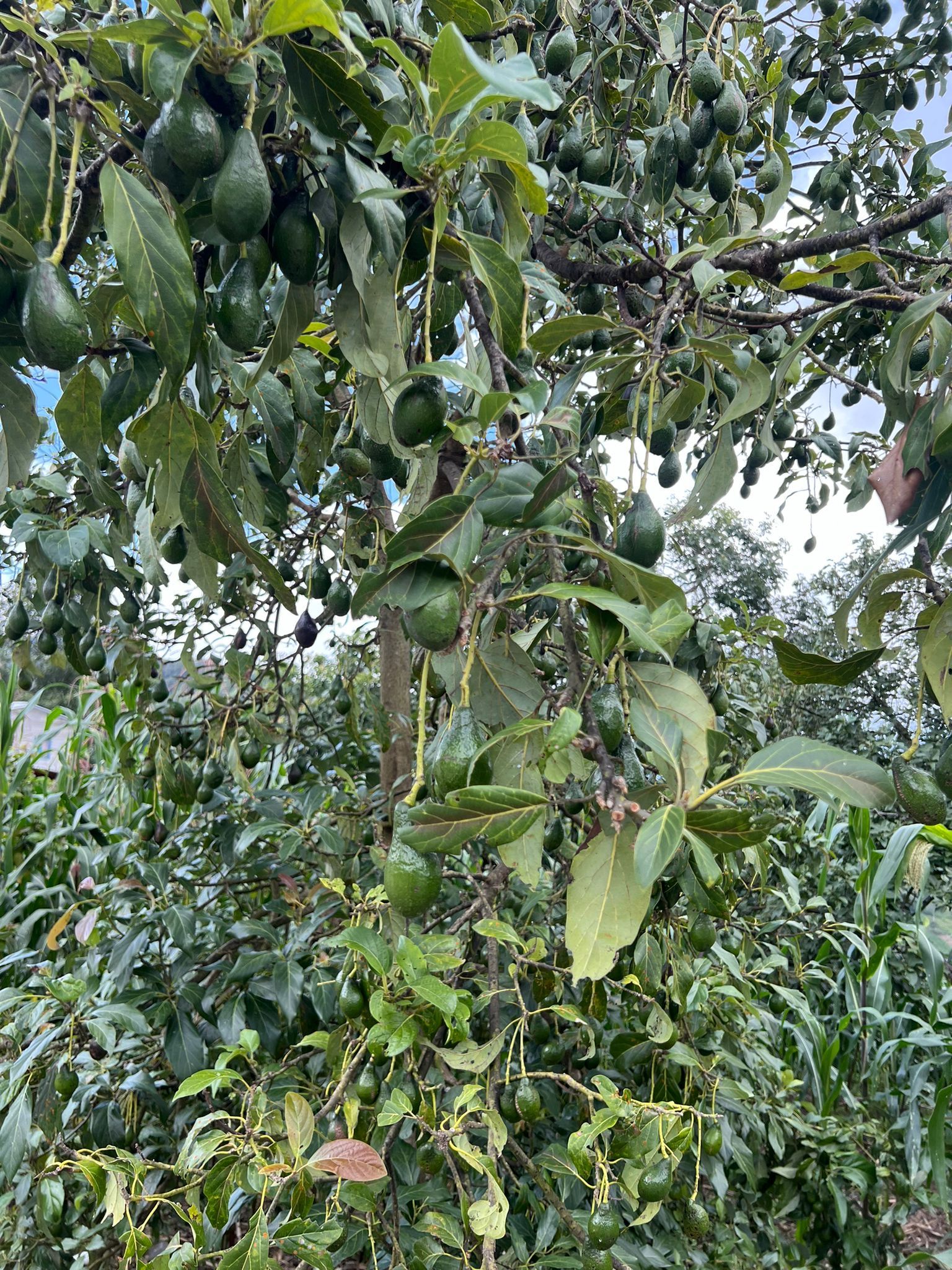
People brought large avocado seeds from South America to Central America, kicking off a burst of diversity for the fruit Fruit grows on a native avocado tree in southern Mexico Kevin Wann The buttery avocado is the fruit of a warmth-loving tree now grown all over the world. Yet the familiarity of the fruit and its delicious culinary applications obscures the fact that there isn’t just one form of avocado. An array of avocados with slightly different characteristics are found throughout Central and South America, the commercial varieties growing alongside more ancient forms that have been kept and cultivated for thousands of years. And it’s by looking at the history of these diverse, lesser-known avocados that researchers have been able to track the origins of the big-seeded ones so many people regularly eat. In a new study published Wednesday in the journal Plants, People, Planet, researchers propose that about 5,000 years ago, people moving through the contiguous continental landscape carried avocados with large seeds northward as they ventured from what’s now South America to ancient Central America, cultivating the fruits along the way. When people think of avocados, they’re likely envisioning a very specific variety. The Hass avocado is the most popular version of the fruit in the global export market, accounting for a huge portion of the estimated more than 12 million tons of avocados produced each year. Part of the reason the Hass avocado is so common is because it’s a clone: parts of avocado trees literally grafted onto other avocado trees to keep producing the green, bumpy fruit. Repeated at scale, the result means that most avocados you’re likely to find in a store are going to be genetically the same.The consistently cloned avocado on so many store shelves had to be cultivated, of course, part of a deeper and broader history that attracted the attention of the archaeobotanist Kevin Wann, a former research fellow at the Smithsonian’s National Museum of Natural History and a PhD student at Texas A&M. While studying how various cultures have grown and shaped avocados through time, Wann says, “it became increasingly apparent that our understanding of where and how these domesticated fruits came about is not complete if we only look at the genetics of commercial fruits found in supermarkets.” It would be like trying to study the history of wolves by only looking at domestic dogs. “Traditional native cultivars, or landraces, hold the true legacy of the planet’s thousand-year-scale history,” Wann says. So, he and colleagues visited the avocado farms of Mexico, Honduras and Nicaragua to learn more about the plants and the people who grow them. As Wann, study co-author and Smithsonian anthropologist Logan Kistler, and other researchers went about sampling avocado leaves for genetic analysis, they also spoke to the people tending to the trees. Many of the avocados were not commercially grown, or certainly not at the same scale as the Hass avocado, and some of the differences were apparent even before the researchers ran their tests. While the wild fruits that people first encountered were smaller than today’s avocados, cultivation began to change them, resulting in forms different from their ancestors as well as the common Hass type. “Nowadays these native cultivars that are adapted to the humid tropics look nothing like the typical Hass avocados you’d find at a supermarket,” Wann says. “They’re bigger, brighter and smoother.” The nature of the avocado trees themselves stands out, too. Many of the different avocados growing in the lowlands of Nicaragua were not afflicted with the root rot that commonly infects commercial avocado trees. Some of those farmers grafted commercial plants onto the local varieties because the area’s trees grow better than commercial ones in the same place. Archaeobotanist Kevin Wann in the field. In a new study, Wann analyzed avocado leaves collected in Nicaragua, Honduras and Mexico. Kevin Wann Wann even got to try his first avocado on the trip. “I wanted to see how far I could go into my dissertation studying avocados without ever eating one,” Wann says, making it four years in before he couldn’t refuse the offer of a local farmer. “It was delicious,” he says. By the end of the excursion, the team had collected DNA samples of 47 varieties of avocados. Most of these came from Nicaragua, supplemented by samples from Mexico and Honduras. And when compared with previously known genetic data from other avocados, the diversity of new samples revealed the outline of how people changed the plant. The genetics of the avocados from roadside stands in Mexico showed that native and commercial avocado varieties had recently become hybridized. Avocados suitable for export grow best in the higher elevations of southern Mexico, and so the crossover was expected. But the avocados from the lowlands of Central America told a different story. The avocados there were not like commercial varieties but were closest to South American avocados. The avocados in these parts of Nicaragua and Honduras are descendants of the avocados that people brought with them into Central America. The smooth-skinned fruits of native avocado trees in this region are genetically distinct from the ones found at the grocery store Kevin Wann The northward journey of these avocados thousands of years ago matches “a pattern we see in many other plants, like South American corn and even the chocolate tree,” Wann says. The plants came with the people. Exactly which communities brought the avocados with them is unclear, but Wann and the team have an idea about where it happened. People living along the coast of ancient Colombia who were moving northward into current-day Costa Rica may have brought their avocados with them, mixing in with the avocado trees already growing there. It happened around the time communities in the region were growing a broader array of plants in greater amounts. “More and more studies are showing that this whole landscape was more connected than we used to appreciate,” Kistler says. “We can see evidence of that dynamic cultural landscape in crops like maize, cassava, cacao, chiles and now avocados.” But the expansion of the avocado was not a single moment or event. The 5,000-year mark indicates a beginning of new interactions. “Combining the genetic data along with archaeological evidence, we’re confident that the movement of people and plants wasn’t a one-time thing,” Wann says. Avocados were initially spread through the Americas by Ice Age mammals that ate them, depositing the large seeds in their dung as they migrated, only to later be cultivated and spread by people as they moved back and forth across the landscape. Researchers traverse a cloud forest next to a coffee farm near Jinotega, Nicaragua Kevin Wann Commercial interests have changed the story, which has made the discovery of avocado diversity even more important. Many commercially grown plants run the risk of becoming a monoculture, where one variety is grown more than any other and genetic diversity plummets. The situation “is just asking for disaster,” Wann says, pointing to the Cavendish banana and Irish potato famine as examples. In the case of avocados, the cloned Hass variety is replaying a similar history. “Imagine a disease that’s particularly adept at killing off branches that produce Hass avocados,” Wann says. The Hass avocado would be in danger of disappearing, just like bananas. Maintaining sources of genetic diversity will be critical to prevent such scenarios, Wann adds, noting “there’s no better source of genetic diversity than the trees that grow in its native region of Central and South America, as they’ve had thousands of years to adapt to rapid changes in climate and disease.” The pressure is on to save the fruit’s diversity. The native varieties don’t last as long on shelves and aren’t grown in abundance because they don’t appeal to the export market. “When interviewing a Nicaraguan farmer, they told me upfront that to keep their farm up and running they are resorting to cutting down their native trees to grow foreign, more exportable varieties,” such as Hass, Wann says. But more genetic diversity may already be out there: Avocado trees hybridize between native and commercial varieties alike, sometimes overturning the expectations of the researchers. In Nicaragua, Wann says, the most important avocado for export is called the Benik. Previously, experts thought this particular form had been agriculturally created in Guatemala and then grown elsewhere. But it’s actually a native Nicaraguan avocado that hybridized with a commercial avocado grown in Guatemala, an example of the crosses that can arise outside an overwhelming monoculture. Such plants not only hold the history of the avocado but also may be key to the fruit’s future. You Might Also Like Get the latest on what's happening At the Smithsonian in your inbox. More about: Anthropology Botany Food Natural History Museum New Research Plants Trees
Ancient Genes Reveal That Big, Bright Avocados Were Carried Through the Americas Thousands of Years Ago
Full Article
Original Source
Read the full article at Smithsonianmag →KhanList aggregates and links to publicly available news content. We do not host full articles from third-party sources. Always verify important information with original sources.