
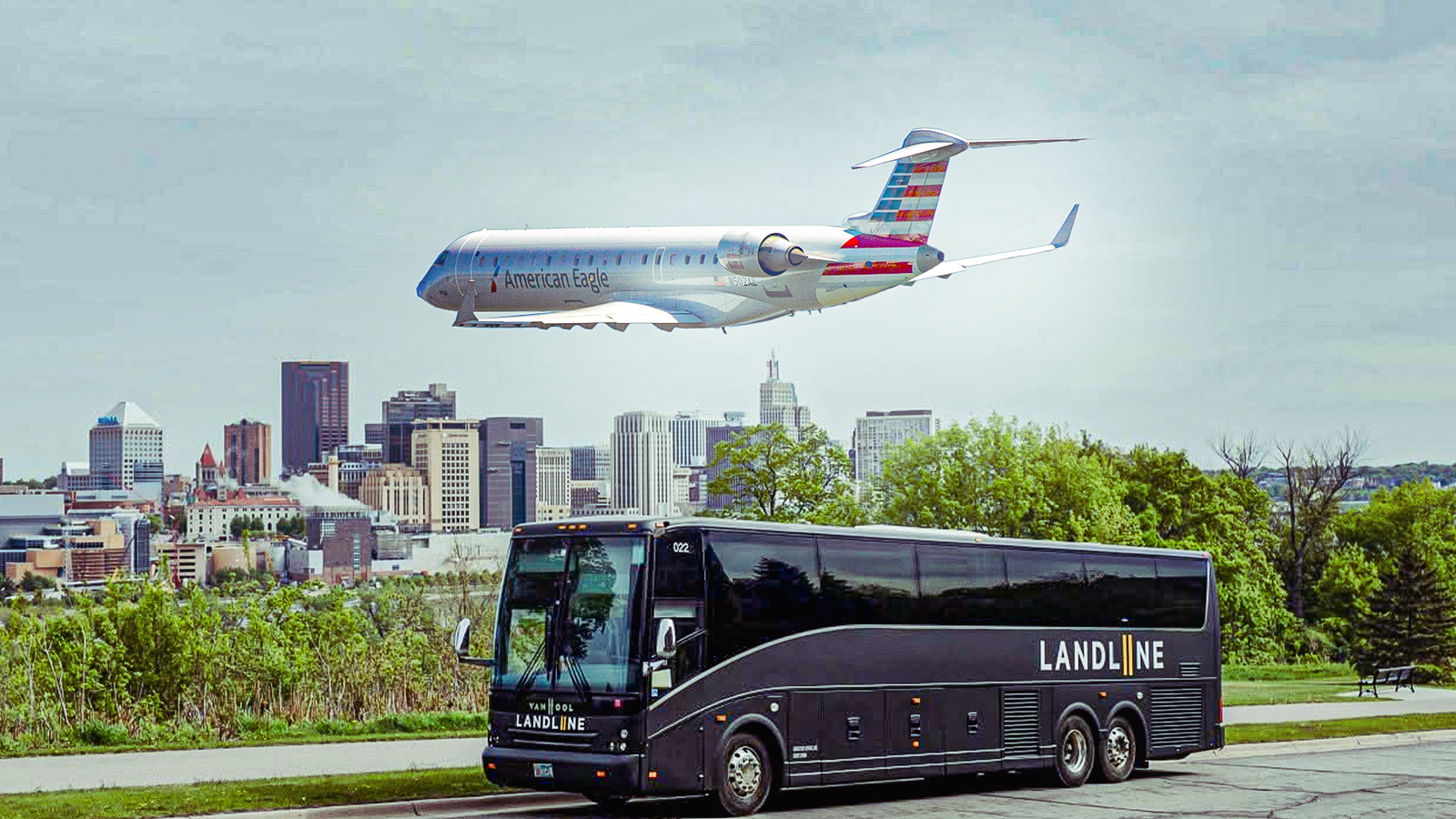
Published Oct 25, 2026, 10:00 AM EDT Passionate about promoting aviation, the beauty of flight and the science behind it, Antonio is an avid reader of aviation magazines and books, and he loves visiting airshows all over the world, taking photos and writing about airplanes and helicopters as well. He is currently based in Palermo, Sicily. American Airlines has replaced buses with jets on a route of just 84 miles (135 km), but the change comes with a catch: passengers now have fewer daily departures to choose from. The carrier had been selling a motorcoach ride between South Bend Regional Airport (SBN), Indiana, and Chicago O'Hare International Airport (ORD) as a connecting flight, complete with an airline flight number and the promise of access to its global network. According to WNDU, the airline switched to the aircraft link in October 2026. Now, the question is whether replacing the bus with jets solves the problems of this unusually short connection. Why did American replace its Landline motorcoach service with three daily round trips on Bombardier CRJ-700 regional jets, and what does the decision reveal about the economics of short-haul connections? The answer involves more than passenger complaints or the difference between a bus and an airplane. As Eye of the Flyer reported, the new service brings a different schedule and fare structure, while American's decision to end the bus service in Chicago Rockford International Airport (RFD) without a replacement, covered by the Rock River Current, raises a further question: what determines which regional markets deserve a place in the airline's network? How American Airlines Turned A Bus Ride Into A Connecting Flight Credit: Landline American launched Landline at Chicago O'Hare International Airport in October 2025 with two spokes, South Bend Regional Airport and Chicago Rockford International Airport(RFD), according to the Rock River Current. Landline is a partner company that operates motorcoaches branded and ticketed as airline segments, as described on its own American page. Passengers check in at the small airport, clear TSA screening there, and ride to a secure-side gate at O’Hare, with bags checked through to the final destination. The concept was not invented in Chicago. American had already built it around Philadelphia, where, as AirlineGeeks notes, buses still connect Allentown/Bethlehem, Atlantic City, Trenton-Mercer, Wilmington and Wilkes-Barre/Scranton. The Philadelphia program began in June 2022 with Allentown and Atlantic City, according to the Associated Press, using 35-seat coaches with WiFi, as Fox Business described at the time. American itself says the product is “booked just like any other connecting flight in our network,” as quoted by BoardingArea. The bus even carried a flight number and earned AAdvantage miles. That design worked on paper because travelers skipped a second security line at O’Hare. In practice, a ticket that looks like a flight in a booking engine behaves very differently on a highway, so what happened when travelers worked that out? The answer arrived through social media long before it reached any airline press office. Why American Airlines Passengers Were Surprised By The Landline Bus As reported by BoardingArea, one traveler heading from Indiana to Virginia only realized on the road that the first leg was a bus. The traveler described a 2.5-hour ride, missed the next connection when traffic slowed the coach, and a short video of the trip was watched more than 382,300 times. The Chicago Tribune had already examined the Landline product in April, and by late summer, frequent flyers had turned the confusion into a running joke. The irony is that the video’s author was not especially upset, noting that the bus took 2.5 hours against a flight of roughly 30 minutes, but the missed connection showed how a delay on the ground can cascade into a missed flight in the air. The same route had produced complaints before. The BoardingArea report points to an earlier case, first covered by Frommer’s, of a traveler who assumed the coach was shuttling her to an aircraft. American replied that Landline segment is clearly marketed as a premium motorcoach service. Frommer’s priced a round trip on the bus alone at $1,035, and Eye of the Flyer reported that one-way bus fares reached a whopping $1,280, while the new jet service starts at about $239. A blocked time of 2 hours 45 minutes is an airline scheduling term, meaning the whole door-to-door window the carrier plans around, and for a coach it covers traffic risk that no aircraft ever faces. Metric Landline bus Bombardier CRJ-700 jet Distance 84 miles (135 km) 84 miles (135 km) Blocked time 2 hours 45 minutes About 1 hour 15 minutes Daily frequency 6 buses 3 flights Daily seats 210 195 One-way fare As high as $1,280 From about $239 Numbers like these explain the anger, but they do not explain the airline’s motive. If the bus was so unpopular, was the jet really a response to complaints, or did something else drive the change? To answer that, it helps to look at what American is actually flying now. American's CRJ-700 Flights Cut Travel Time But Reduce Departures Credit: Angel DiBilio | Shutterstock The jets are operated by SkyWest Airlines as American Eagle, and Simple Flying reports that the dual-class cabins give South Bend travelers a premium cabin on the Chicago connection for the first time. The schedule published by AeroRoutes lists an early departure from South Bend at 7:08 AM local time, which matters for morning banks at O’Hare, plus afternoon and evening rotations, while the Chicago departures run from late morning into the evening. Because South Bend sits one time zone to the east, the printed times make the hop look longer than it feels. At roughly 1 hour 15 minutes blocked, the jet trims about an hour and a half from the bus timing. The aircraft has a history of its own. As documented by Simple Flying’s piece on the CRJ700, Delta and American both stretch it on regional sectors of more than 1,000 miles (1,609 km). The South Bend flights are the opposite extreme. Simple Flying points out that the drive between the two airports typically exceeds 100 miles (161 km), can take more than two hours in traffic, and that scheduled air service on this pair has been absent for more than a quarter of a century. Per Moody on the Market, the new Chicago flights join existing American service from South Bend to Dallas/Fort Worth International Airport(DFW) and Charlotte Douglas International Airport(CLT). That improves connectivity, but it also halves frequency compared with the six buses. The practical effect is fewer choices, particularly for travelers who prefer a midday bus. So does an apparent upgrade leave American weaker against the competitor that dominates this market? American Airlines Faces A Frequency Gap Against United At O'Hare United Airlines continues to dominate the route with up to eight daily round trips, compared with American’s three, according to a LinkedIn post by Eugeniu Munteanu. Switching from six buses to three flights cuts departures by 50%, yet daily seats slip only from 210 to 195, a drop of about 7%, according to Eye of the Flyer . Counting methods differ, though: Boltflight reports four daily bus departures, so the headline change depends on which schedule is used. What does not change in either count is the direction: American now offers fewer departures, and each one carries a higher cost per trip than a coach did. Local officials framed the switch as a vote of confidence. Simple Flying quotes South Bend Regional Airport CEO Mike Daigle saying the connection was in high demand and now offers one-stop access to more than 350 destinations. Local outlets, including WSBT, Ink Free News and Airport Improvement, covered the announcement, and the logic they describe is consistent: South Bend values the jet because it feeds a global hub, not because the city pair itself is large. A traveler going to Europe or Asia cares about the connection, not about the 84 miles (135 km) in between. South Bend, then, got an upgrade. Rockford, whose bus launched around the same time, got something far worse, and the contrast raises an uncomfortable question: why did the same product end so differently? Why American Airlines Dropped Rockford Without Replacing Its Bus Credit: Chicago Rockford International Airport The Rock River Current reported that American would end motorcoach service in Rockford after less than a year, and Deep Arrival adds that Chicago Rockford International Airport was informed of the October 4 end date on Friday, July 31, 2026. Passengers were offered refunds or alternate arrangements. Because the bus was the airport’s only link to American, Rockford effectively left the airline’s map. According to Eye of the Flyer, Rockford’s four daily coaches disappear without any new flights, so travelers must now drive farther or connect elsewhere. Boltflight describes the two markets as launching together but delivering sharply different results, which is the most plausible reason one received a jet and the other did not. American has not published load data, so that explanation remains an inference. It also means Rockford travelers lost their only simple path onto the airline’s international network, which is a heavier consequence than a change of vehicle. Market Launched Daily buses Outcome South Bend October 2025 6 Three daily CRJ-700 flights Rockford October 2025 4 No replacement; refunds or rebooking With both Chicago routes gone from the bus program, the next question is what remains of Landline for American, and whether the model survives elsewhere. WhereAmericanAirlinesStillUsesLandlineBusConnections Credit: Landline American is keeping the bus where it still makes sense. As AirlineGeeks confirms, the Philadelphia partnership continues, with buses linking five regional airports to the hub. Landline itself said in 2025 that it would feed more than 1,500 daily seats into the Philadelphia hub from five Northeast cities, a scale that South Bend and Rockford never approached. Those distances are short: Atlantic City sits about 56 miles (90 km) from Philadelphia, Allentown about 73 miles (117 km), and Trenton-Mercer is roughly a 50-minute ride away. Fleet planning may offer a clue to how American weighs these choices. As we previously reported, American received its 10th Airbus A321XLR and expects to reach 12 by year’s end, a reminder that its biggest bets sit in the mainline fleet while regional feeders like this one are judged on narrower economics. A 65-seat jet must earn its place on every rotation, and unlike a 35-seat coach, it carries real fixed costs for crew, fuel and O’Hare gate time. That is why the real test is quiet and measurable. Watch whether the three daily rotations fill at fares near $239 against United’s eight, and whether American adds a fourth. If the seats sell, Rockford may ask why it was left behind. If they do not, South Bend could find that a jet is harder to keep than a bus was.
American Airlines Replaced Its 84-Mile Chicago Bus With Bombardier CRJ700 Jets After Travelers Booked 'Flights' That Weren't
Full Article
Original Source
Read the full article at Simpleflying →KhanList aggregates and links to publicly available news content. We do not host full articles from third-party sources. Always verify important information with original sources.