
For the last dozen years, no one has tracked the mistakes and customer-unfriendly moves of American Airlines more closely than I have. All along I’ve said that no airline had the potential to be better than it was more than American Airlines. And that’s why I’m thrilled seeing all of the changes that they’re finally making for the better. I just hope that they go all the way and finish the job – before they run out of rope. Because they have done a lot very quickly to catch up to their premium competitors, but they haven’t yet figured out what angle makes them better and because Wall Street could get very impatient very quickly as they spend money on customer initiatives that could take time to pay off, as jet fuel remains elevated and there’s risk that the economy will turn. So far we’ve seen American Airlines playing rapid catch up, but each of their competitors in the premium airline set has had differentiators. For years Delta, for instance, had (3) things that really set them apart. Reliability. Under COO Gil West they simply did not cancel flights. They invested in line maintenance so that issues with planes got addressed wherever they sat overnight, and were ready to go in the morning. They were willing to go to amazing lengths to keep an old fleet moving, keep everything running on-time, and spend whatever was needed to actually operate even if it involved an overnight delay. Delta still performs well as an on-time airline overall, but no longer beating competitors by much, and when things go sideways they’re more likely to spiral. Seatback entertainment. Now that United committed and significantly rolled out its own ‘United NEXT’ program that put screens on planes, it’s easy to forget that for years Delta was alongside JetBlue in offering screens consistently, as United had tiny ones on many ex-Continental planes and American was ripping them out. With even American now committed to putting them back in starting in 2028 it’s no longer a difference-maker, but for a long time this made Delta feel more premium than the rest of the industry. Marginally friendlier employees. Delta is mostly non-union and this actually does matter, plus great marketing by the airline wasn’t just aimed at customers it was aimed at employees who were proud of where they worked and that showed through to customers. Now that United has upped its game as the most-improved U.S. airline over the past decade, it has (3) things that help to set it apart. It’s invested in clubs and screens for sure but these are catchup plays not where they actually innovate. Starlink. Starlink wifi is a game-changer. You’re sitting in the sky and your internet connection works better than it does at home. People come off United flights blown away by this. And for customers who value staying connected, will pay more to be productive because the value of their time is greater than any difference in airfare, it’s a strong reason to choose United and not consider anyone else. United wasn’t first with Starlink (JSX was, and remains the only carrier with the service on its entire fleet, but notably United was a JSX investor making the investment likely not really an accident). United soon won’t be alone with much of their fleet Starlink-equipped. Southwest, Alaska, American and even Frontier will have it. Delta, with its choice of Amazon Leo which isn’t even in beta yet and has been announced for only half the fleet, is the one at genuine risk of getting left behind – but United’s differencemaker will be short-lasting. Great mobile app. United has the best mobile app not just of any U.S. airline, or any world airline, but in all of travel. Passengers feel empowered managing their trip with it, and feel in control of their travel when they change flights, have the app automatically scout and improve their seats, and deliver plain-language information on the status of any delay. And that’s something available to every passenger, not just premium passengers. Exciting route network. United has a real claim to being the U.S. ‘flag carrier’ in the way there hasn’t been one since Pan Am. They aren’t just beefing up summer Europe schedules, they’re strong across the Pacific, too. And they fly the ‘island hopper’ that runs Honolulu–Majuro–Kwajalein–Kosrae–Pohnpei–Chuuk–Guam; Tokyo Narita – Ulaanbaatar, Mongolia; Newark – Nuuk, Greenland; Guam – Yap, Micronesia and also Saipan; Tokyo Narita – Kaohsiung, Taiwan; Newark – Funchal in the Portguese island of Madeira, Ponta Delgada in the Azores, and Santiago De Compostela in Spain. They fly to Tahiti, Bari, Split, Bilbao, Faro and Palma de Mallorca. Between technology and destinations, United wins the vibes war for sure. American Airlines has made great strides playing catch up with the industry. They’re rapidly reversing more than a decade of decline, judging their customers exactly wrong and making nearly every wrong decision possible. It’s amazing how much has been accomplished in the past year and a half. However there are two problems. Messaging to employees. Delta advertised and their messaging across all channels has been that they’re the greatest brand in the history of brands, everything they do is revolutionary, and that’s aimed at employees as much as customers. They gave employees flashy uniforms (including the red dress) which wasn’t just about their outward-facing image, it’s also about employees feeling proud and confident in their product and that conveys to customers. Unionized United copied the old Gordon Bethune Continental playbook with bonuses for meeting operational and customer metrics. Scott Kirby’s predecessor Oscar Munoz toured the system visiting with employees, doing retail politics and convincing them the airline had a bright future. Both Delta and United in their own way went to real lengths to help employees deliver for customers. We have seen American start measuring performance of flight attendants (though without consequence as yet) and ask cabin crew for new service flow but the sales efforts by top leadership haven’t quite happened and there’s no real brand advertising either. No real differentiator yet. There’s been a huge backlog of issues to address in playing catch up with Delta and United. American is doing many of those things. Some of them are taking longer than I’d like (more premium seats, seat back entertainment screens, more coach food for sale, real meals and food for sale on long regional flights). But that only starts bringing the airline to parity, which is necessary but maybe not enough to get customers to switch and to change their brand preference. There’s better coffee, but United already has Illy (I’d take American’s choice of Lavazza over Delta’s Starbucks if I’m honest). American has a few better wines, but not what United and now Delta offer. They’re improving their business class Flagship lounges, but they aren’t Delta One lounges. Many of the experiential elements of the product are better and certainly no longer reasons to avoid American. American leans on the AAdvantage program as differentiator, but the value of the program has actually declined – they eliminated fixed mileage upgrade awards, and partner awards have taken numerous hits over the past few years because of the actions of the partners themselves rather than American. Cathay Pacific, Qantas, Qatar, British Airways, Finnair and Etihad no longer make award seats nearly as available to AAdvantage members often now reserving their best inventory for their own members (or in the case of Avios airlines, for members of other Avios programs also). That’s largely new since the pandemic. And it means American’s miles are worth far less, which is a problem magnified by American’s own limited international focus. For decades we’ve seen startup airlines fail, when they thought they had an easy path to success. For instance there was a litany of all-business class airlines flying from the East Coast to London over the years. It’s such a big market! We only need 1% of the market to be successful! And yet they never found success, because they didn’t give customers a true reason to choose them 1% of the time. They lacked schedule frequency, corporate sales, frequent flyer programs, and their products often weren’t quite as good. Just existing or even being as good as what’s out there but not better isn’t enough. Whenever I see a new credit card on the market, it’s really easy to tell whether or not it’s going to succeed with customers. Often results take the issuing bank by surprise. I will ask who does this product make better off than anything in the market today? and I’ll usually get an answer about how it’s a ‘card for millennials who value experiences over things’ and I know it’s going to be a dud. Who are your customers, and why is the product better than what’s already out there if you expect to win? I expect to see some mean reversion for American Airlines. They’ve underperformed for a long time and they may succeed to some extent just by fixing that, given the scale of their operations. It could be enough for customers just not to avoid them! I still think they need to come up with a differentiator for how they’re better, like Delta (used to have more than they do today) and United. I also worry that American might not have the time to see the results. The same decisions that put them behind the curve also give them a short leash. They were carrying high debt going into the pandemic (borrowing money while spending over $12 billion in stock buybacks) and that’s constrained their ability to invest. It’s also raised their expenses and harmed their financial performance, even as their revenue performance has lagged the industry. How long will the financial community have the patience that’s needed for the new plan to show success? That’s why I’m hoping we start seeing something quickly, but this is all happening at a challenging time because of fuel price spikes stemming from the war in Iran. It takes a long time for customer behavior and brand sentiment to catch up to changes at an airline, and especially when you’re not shouting from the rooftops not just what you’ve done, but who you are and where you’re going. I want to see American begin to really tell its story (including in brand advertising) to both customers and employees to try to capture the value from their new investments, and accelerate the timeline to benefiting from those investments – because I worry they need to succeed quickly, given high fuel prices and the risk of recession (whether driven by high energy prices, or by a series of interest rate hikes to forestall inflation risk). They need their plan to succeed before the rug gets pulled out from under them. Topics on this page
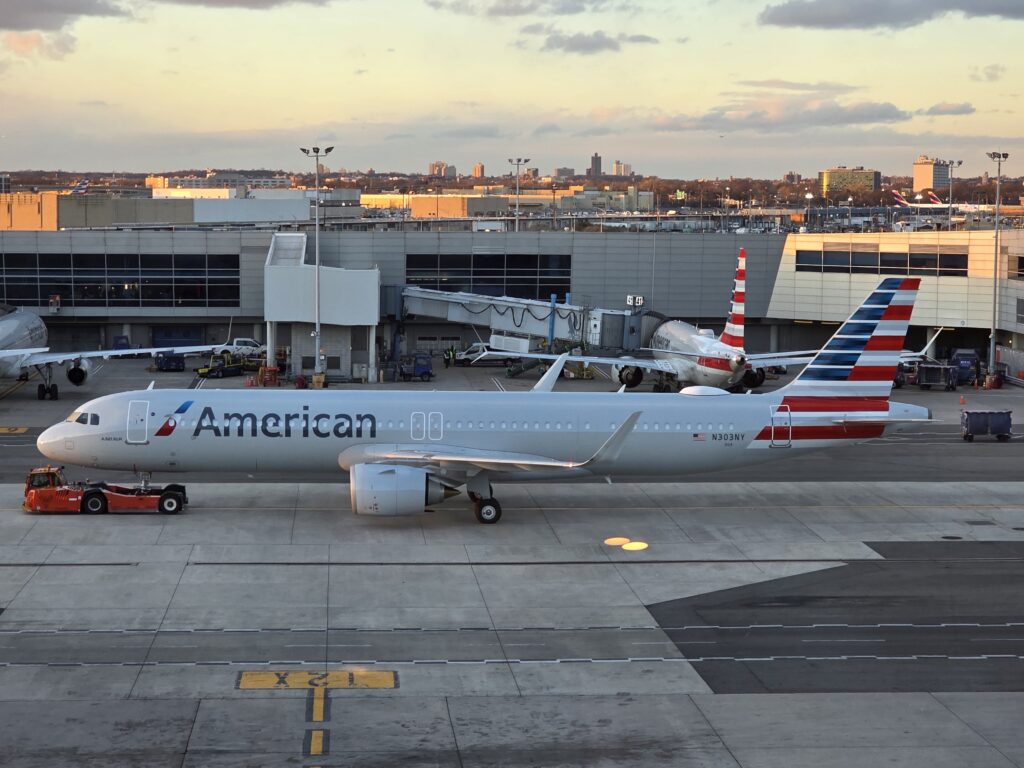
American Airlines Is Finally Getting Better—Will Wall Street Pull The Plug Before It Wins Delta And United Flyers?
Full Article
Original Source
Read the full article at Viewfromthewing →KhanList aggregates and links to publicly available news content. We do not host full articles from third-party sources. Always verify important information with original sources.