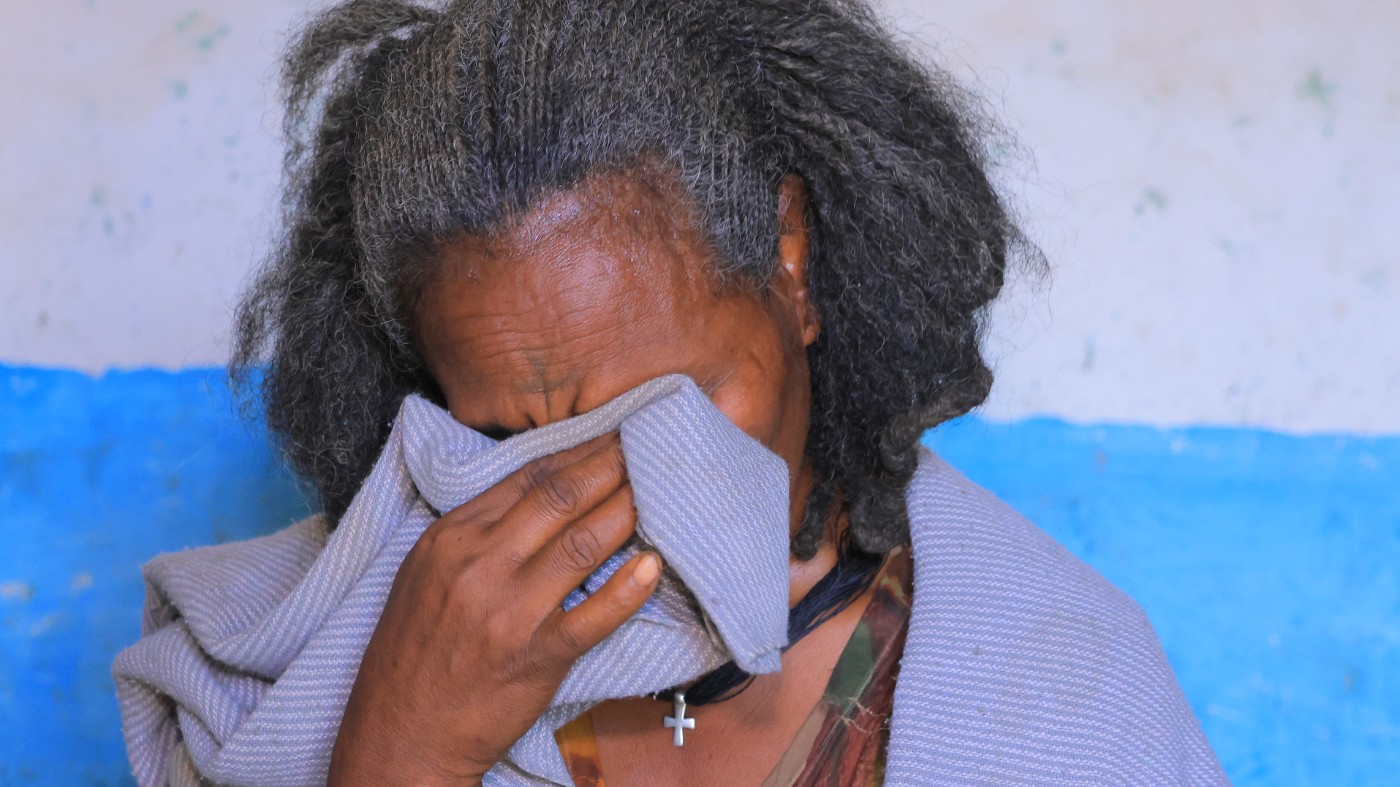
Born into poverty and with little opportunity at home, Hiwot Mehari took the dangerous smuggling route out of Ethiopia and across the Red Sea to Yemen, from where he hoped to reach Saudi Arabia. After two years in the deadly border region between Yemen and Saudi Arabia known as Rago, Mehari was caught by border security men and thrown into prison. On 28 April 2025, he became one of dozens of Ethiopians killed in a US air strike on a migrant detention in Saada, northwest Yemen. The next day, at noon, Mehari’s parents received the news at home from a neighbour in the Tsirae district of war-ravaged Tigray. The family was devastated. The day before the US strike, they had spoken to him. “They will release us soon and we will reunite,” their son had said. New MEE newsletter: Jerusalem Dispatch Sign up to get the latest insights and analysis on Israel-Palestine, alongside Turkey Unpacked and other MEE newsletters “As a parent, it was very hard to accept and we couldn’t overcome it,” his heartbroken father, Mehari Akeza, told Middle East Eye. Sitting alongside his wife at home in Tigray, northern Ethiopia, Akeza struggled to make sense of how his world had been shattered just hours after talking to his son. “I still can’t accept that my son is gone. I sometimes keep telling myself he will come back, and I wait for his call. How could I believe it? I wasn’t even able to properly bury my son,” he said. The parents of Hiwot Mehari, pictured at their home in Tigray, Ethiopia (MEE) The US air strike on the detention centre in Houthi-controlled northwest Yemen left at least 68 African migrants dead and 47 injured. Survivors of the strike who spoke to MEE said the people killed in the strike were all Ethiopians, all men and mostly in their early 20s. 'America killed my son, my pride, why?' - Mebrat Gebre, mother of US air strike victim Among the dead was Mehari, the young man whose ambition was to change his life and support his family, who are struggling with economic hardship in a remote, rural part of northern Ethiopia. “America killed my son, my pride, why?” his mother, Mebrat Gebre, asked. She paused to catch her breath as tears filled her eyes. “I have never heard of a government killing prisoners for no reason.” The US State Department did not respond to Middle East Eye’s request for comment. The grief of Hiwot Mehari’s parents’ mirrors that of many in Ethiopia, a country of close to 140 million whose youth often feel compelled to take the hazardous journey to the Gulf in the hope of finding employment. Tsiruy Hailu was another of the young men killed in the US air strike. The eldest of four children, Hailu’s father died when he was young, and his mother raised him until he was 22, when he left for Yemen. Hailu became the family’s primary breadwinner, reaching Yemen in 2022 “to realise his dream”, according to his mother, 47-year-old Berhan Akeza. “My soul is broken, he was my all,” she told MEE. “He wasn’t only my son, but also the one who carried the burden of the family after his father’s death 12 years ago.” Mebrat Gebre, the mother of Hiwot Mehari, pictured at her home in Tigray, Ethiopia (MEE) Akeza’s agony was deepened by the nature of her son’s death, after she saw graphic footage showing multiple crushed bodies covered in the rubble of a destroyed building. Having already witnessed the horror of United Arab Emirates’ drones hovering in the sky and killing civilians during the war in Tigray, Akeza is haunted by the similarity of her son’s fate. “I saw the horrific footage on someone’s mobile phone. Sometimes, I picture my son lying with his body dismembered,” she said. “I can imagine how drones kill a human being.” US air strike survivors speak The US strike didn’t just destroy the dreams of young Ethiopians and rip apart the worlds of their families. It also left many survivors with permanent disabilities, including lost limbs, serious nerve damage and other traumas. Middle East Eye spoke to three Ethiopian migrants severely injured in the deadly attack. Two are still in Yemen, while one has returned to Ethiopia. All of them are dependent on others for support. Haben Tuemzgi, 27, sustained serious injuries to both legs and both hands. He still has metal embedded in his bones and his condition is worsening because of a lack of sufficient medical care. “I am like a man between death and life. Sometimes I wish I had died instead of living like this,” Tuemzgi said via WhatsApp from the ancient Yemeni port city of Aden. Haben Tuemzgi and Haile Wolday, survivors of the US strike (MEE) Once possessed of energy and a vision for the future, the young Ethiopian migrated to Yemen seven years ago. His plan was not to stay there for long, but to return home with savings, open a business and support his family. Now, he feels as though his future has been shattered by the US and President Donald Trump’s administration. “Trump’s America has made all my dreams evaporate into thin air,” Tuemzgi said. “When I left my home, I had two legs and now I have to go back on a stretcher.” “What else can I do, I am poor. Who can sue the world's most powerful?” 'When I left my home, I had two legs and now I have to go back on a stretcher' - Haben Tuemzgi, survivor of US strike Haile Wolday, 25, said he suffered wounds to his leg and hand, and now lives in continuous pain. “I have no future to see,” he told MEE, “I came here to make money and feed my family but now people are feeding me.” Another survivor, from the Gulomekeda district of Tigray, has already returned home to live with his family. Speaking on condition of anonymity, he explained that he is suffering from severe injuries to his leg and eye, which still require medical treatment he cannot afford. “I was a man with a big dream before America turned my life upside down,” he told MEE. “I never thought that I could be a burden to my family.” No justice, no peace Despite calls for US authorities to investigate the strike, there has been no discernible progress towards justice and reparation, according to Amnesty International. “One year on, US officials have failed to hold anyone accountable or even to clarify the status or outcome of the investigations they had announced a year earlier,” Amnesty’s Erika Guevara Rosas said in April. 'The world seems to have forgotten our children’s death. We want compensation' - Mehari Akeza, father “Families of those killed in the attack on the detention centre in Yemen are still being denied basic information about what happened, [and] remain without justice for their loved ones.” Over a year after the US strike, families in the remote north of Ethiopia continue to mourn the loss of their children. Their demand for justice and answers remains. “The world seems to have forgotten our children’s death. We want compensation,” said Mehari Akeza, Hiwot’s father. “The families of Ethiopian migrants who were killed in the strike deserve justice, including a transparent investigation, accountability and appropriate compensation where warranted,” said Girmachew Adugna, a migration scholar specialising in Ethiopia and the Horn of Africa. Ethiopian migration to the Gulf In recent years, the Ethiopian government has discouraged illegal migration and has signed deals with a number of Gulf states aimed at improving labour conditions for domestic workers. Over 500,000 workers were legally dispatched abroad in 2025, according to the Ethiopian labour and skills ministry, which facilitates the repatriation of thousands of migrant workers from the Gulf with the help of humanitarian organisations. 'His death has killed a part of me': The Ethiopians awaiting execution in Saudi Arabia Read More » Despite government enforcement, many young Ethiopians - particularly from Tigray, which is still reeling from the devastating war of 2020-22 - still prefer illegal routes. Some of these migrants, most of them men, still end up detained, abused and in some cases killed. Illegal migration into Yemen continues to rise. In June 2025, over 13,300 migrants entered Yemen, with an estimated 95 percent of that inflow originating from Ethiopia, according to the International Organisation for Migration (IOM). Limited decent employment opportunities and ongoing conflict at home continue to push young people to pursue irregular migration despite the significant risks involved. “Existing bilateral labour agreements largely provide opportunities for domestic work for women, leaving many young men with few legal migration options,” said Adugna. “Ethiopia’s labour migration strategy should place greater emphasis on protecting the rights, safety and wellbeing of migrant workers from when they depart to when they return.” For some Ethiopians, the return never happens.
'America killed my son': The Ethiopians bombed by US in Yemen prison strike
Full Article
Original Source
Read the full article at Middleeasteye →KhanList aggregates and links to publicly available news content. We do not host full articles from third-party sources. Always verify important information with original sources.