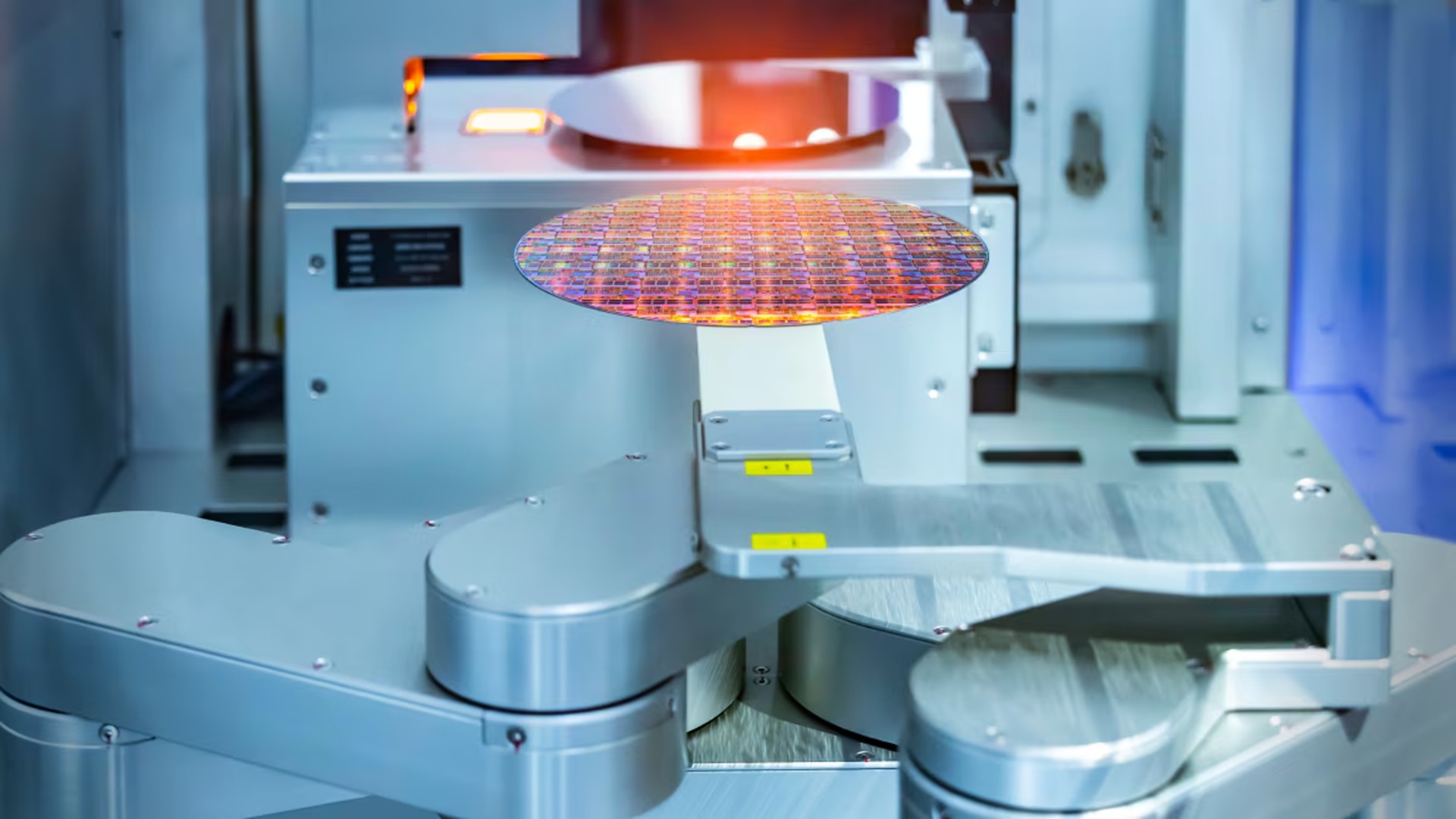
American chip giant AMD says a South Korean startup is using AMD EPYC server processors, the company’s high-performance data center CPUs, to detect semiconductor wafer defects in real time without relying on GPUs, a move the companies say could improve manufacturing yields and cut costs for chipmakers. The startup, AiBiz, has developed a platform called DutchBoy that analyzes sensor data from semiconductor fabrication equipment to identify defects as they emerge during production. According to the company, the system is already deployed at Samsung Electronics’ fabrication plants in South Korea and Xi’an, China. Unlike conventional AI workloads that typically require GPUs, DutchBoy runs entirely on AMD EPYC server CPUs. AiBiz says its lightweight AI models allow manufacturers to perform real-time inference directly on CPUs, reducing hardware costs, power consumption and heat generation inside fabrication facilities. The company projects its technology can improve semiconductor yields by 3% to 5% while preventing costly wafer losses. It estimates the system could save large chip manufacturers as much as $100 million annually by identifying defects before they spread through production. Real-time wafer monitoring AiBiz said its software is installed directly inside semiconductor etching equipment, where it continuously processes data from 20 manufacturing tools. The system collects readings every 100 milliseconds from roughly 300 sensors on each machine, using time-series anomaly detection and graph neural networks to detect abnormal operating conditions. “We can find small issues at the beginning of the fabrication process to increase the yield of the foundries,” said Hyun Jin Choi, chief technology officer at AiBiz. The company said one example is electrical arcing inside etching chambers, which can damage semiconductor wafers. DutchBoy detects unusual sensor spikes associated with those events and alerts engineers before defects occur. AiBiz also said its AI models contain fewer than 100,000 parameters, allowing them to run efficiently on CPUs instead of GPUs, which typically consume more power and require additional cooling. “Our lightweight AI process is possible only when inference is done on the CPU,” said Seung-Jae Ha, chief executive officer of AiBiz. “If the system is a CPU plus GPU system, then it will be more expensive, consume more power, and produce more heat.” CPU-first AI approach The company said it previously used Intel processors but encountered performance bottlenecks as sensor data volumes increased. After switching to AMD EPYC processors, AiBiz reported a 30 percent improvement in AI inference performance following software optimization. AMD worked with the startup to select server configurations suited for real-time inference and provided early access to EPYC hardware. Hardware vendor HPE also supported the deployment and helped identify suitable server platforms. “Our goal was to match the right EPYC CPU — the right cores, frequency, cache, and memory bandwidth — to AiBiz’s lightweight models, so the intelligence runs efficiently right where the sensor data lives,” said Varun Selvaraj, senior manager of business development at AMD. AiBiz plans to expand deployments beyond Samsung to outsourced semiconductor assembly and test facilities, LG Innotek and other manufacturers. The company also aims to enter additional global foundries, including SK Hynix, Intel and Micron.Recommended ArticlesGet the latest in engineering, tech, space & science - delivered daily to your inbox.With over a decade-long career in journalism, Neetika Walter has worked with The Economic Times, ANI, and Hindustan Times, covering politics, business, technology, and the clean energy sector. Passionate about contemporary culture, books, poetry, and storytelling, she brings depth and insight to her writing. When she isn’t chasing stories, she’s likely lost in a book or enjoying the company of her dogs.
AMD-powered software spots wafer defects without graphics processors in real time
Full Article
Original Source
Read the full article at Interestingengineering →KhanList aggregates and links to publicly available news content. We do not host full articles from third-party sources. Always verify important information with original sources.