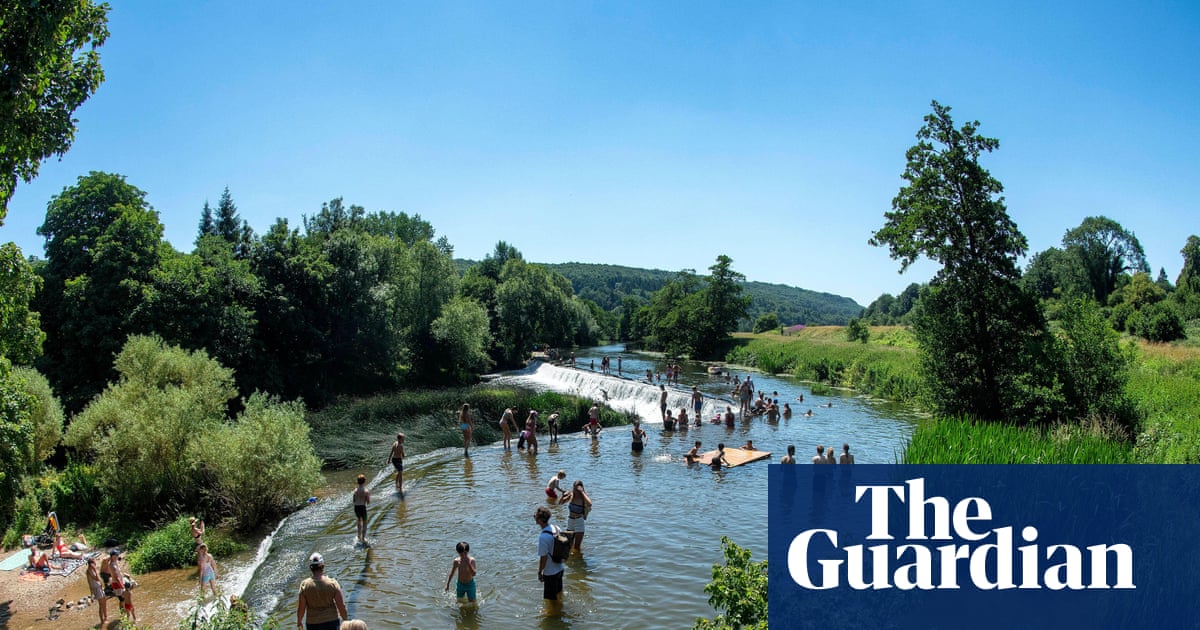
Almost three-quarters of riverbanks in England have no public access, according to data released by the Right to Roam campaign.Across the country, the public cannot use riverbanks or gain access to the rivers themselves in most of the river catchments from the west of Cornwall up to the Tweed, which flows through northern England and Scotland.Lewis Winks, an environmental social scientist from Right to Roam, who led the research, said: “Access to rivers should be a basic right, yet the vast majority remain off limits. As we continue to experience extreme heat, it’s vital the public are able to draw from the benefits that water brings.”The campaigners are calling on Angela Eagle, the new environment secretary, to launch a promised but long-delayed consultation on access – as part of an access to nature green paper – and introduce a right of responsible access to water and land in the next king’s speech.The research showed 71% of riverbanks along main rivers and tributaries in the 89 river catchments examined lacked any adjoining access to land or right of way within 100m of the water.The finding was consistent regardless of whether urban areas were included. There is also no defined statutory right to the water itself on 96% of rivers in England and Wales, which means activities such as swimming and paddling are often contested by landowners, and the vast majority of inland waters, including reservoirs and lakes, are treated as off limits.Kate Rew, from the Outdoor Swimming Society, said in 20 years time she wanted to see living rivers across England, with people free to reach them to swim, paddle, walk and spend time by the water.“Being part of the natural world makes us healthier, happier and more alive,” said Rew. “But this is not only about what rivers can give us. We need to give rivers back some of the life we’ve taken out. People rarely fight for places they’re excluded from, and right now our rivers need people to fight for them. The work of restoring our rivers begins by reconnecting people with them.”Keir Starmer’s government committed to creating nine new national river walks, but Winks said the first of these, on the River Mersey, had not created any additional access.The fight for accessible and swimmable waterways has become a major public issue, especially as record-breaking heatwaves prompt families and young people to seek free ways to cool down, although rescue services have warned people to take care when entering cold water.The data published by Right to Roam revealed what it said were significant regional disparities in river access. In the Severn Middle Shropshire catchment, 90% of the riverbank had no right of access, while in the New Forest catchment, that figure was 49%.skip past newsletter promotionafter newsletter promotionThe River Severn near its source in Hafren Forest. Photograph: itdarbs/AlamyThe lack of access is so widespread that many designated long-distance walking trails are named after rivers they cannot follow. These include the section of the Severn Way between Shrewsbury and Telford, which is almost entirely divorced from the river – diverting more than 800m away in some places, said Winks. The majority of the Test Way, a 44-mile (71km) walk named after the chalk stream, does not follow the river itself.A spokesperson for the Department for Environment, Food and Rural Affairs said: “This government is focused on the things that matter most to the British public, including restoring nature so that we have pride in local communities and access to green spaces.“We are increasing access to nature and the countryside, delivering nine new national river walks, a coast-to-coast route in the north of England and the 2,700-mile King Charles III England coast path.”
Almost 75% of England’s riverbanks ‘off limits’ to public, figures show
Full Article
Original Source
Read the full article at Theguardian →KhanList aggregates and links to publicly available news content. We do not host full articles from third-party sources. Always verify important information with original sources.