
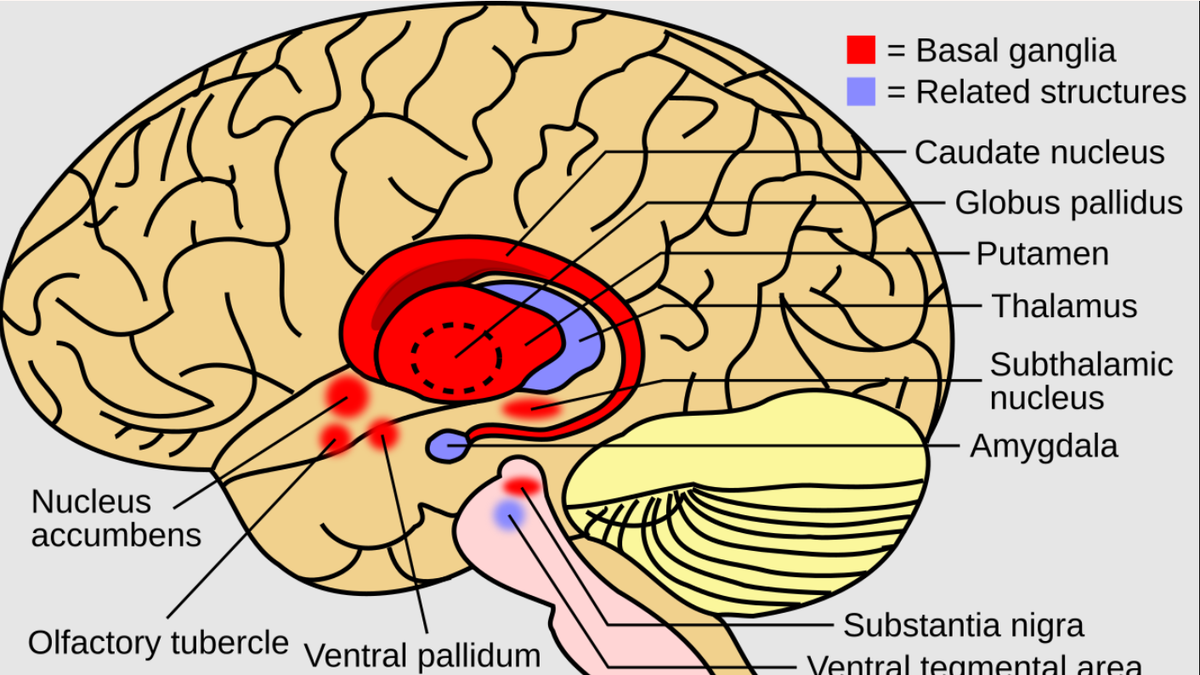
Huntington’s disease (HD) is an inherited neurological disorder in which nerve cells in parts of the brain gradually break down and die. While there is currently no cure, doctors can treat some of its symptoms and researchers are investigating therapies aimed at slowing or preventing the underlying disease process. Here’s all you need to know about it.What is Huntington’s disease?Huntington’s disease is caused by a change in the HTT gene, which carries instructions for producing the huntingtin protein. The abnormal gene contains excessive repetitions of a three-base DNA sequence called CAG (Cytosine, Adenine, and Guanine). According to information from the National Institutes of Health (NIH), most people have fewer than 27 CAG repeats and are not at risk of developing HD. Those with 27 to 35 repeats are unlikely to develop the disease but may be able to pass an expanded repeat to their children. People with 36 or more repeats may have the disease-causing expansion.The abnormal huntingtin protein can become malformed and damage brain cells. The basal ganglia, a group of brain structures involved in coordinating movement, and the cortex, which plays a role in thought, perception and memory, are among the areas most affected, according to the NIH’s National Human Genome Research Institute.HD is an autosomal dominant disorder. This means that a person needs only one copy of the altered gene to develop the disease. Each child of a parent who carries the HD gene has a 50% chance of inheriting it. If a child does not inherit the altered gene, they will not develop HD or pass the gene on to their children.What are the symptoms?The symptoms of Huntington’s disease vary from person to person and generally become more severe as the disease progresses. They broadly involve movement, thinking and behaviour or mood.According to the NIH, one of the most recognisable movement symptoms is chorea — uncontrollable, dance-like movements that can affect the fingers, feet, face or torso. These movements may become worse when a person is nervous or distracted.Early symptoms can include mild clumsiness, problems with balance or movement, difficulty walking, stiffness or rigid muscles, involuntary shaking or tremors, and dystonia, in which muscles tighten involuntarily and the body can become fixed in unusual positions. Unusual eye movements may also occur early in the disease.As the condition progresses, people may develop problems with speech, swallowing and eating. Difficulty eating and swallowing can lead to weight loss, choking and lung infections. Other physical symptoms include fatigue, low energy, sleep problems and, in some cases, seizures.HD also affects cognitive abilities. People may have difficulty concentrating, making decisions, solving problems, judging situations, organising or prioritising tasks, learning or remembering new information, or putting their thoughts into words. These problems can progressively interfere with work, driving and the ability to care for oneself.Behaviour and mood can change as well. Symptoms may include irritability, mood swings, depression, anger, loss of interest and withdrawal from friends and family. Severe depression, suicidal thoughts and psychosis can occur. How is it diagnosed?Doctors diagnose HD by considering a person’s symptoms, family history and neurological examination, supported by laboratory and genetic tests and, where appropriate, brain imaging.A neurologist may assess reflexes, balance, movement, muscle strength, walking, hearing, thinking, memory and mood. Other specialists, including mental health professionals, genetic counsellors and speech-language therapists, may also be involved in diagnosis and care.The most accurate way to confirm HD is a genetic test. A blood sample is used to analyse DNA and determine the number of CAG repeats in the HTT gene. The attached NIH material notes that people with 36 or more repeats have the disease-causing expansion, while those with fewer than 26 repeats do not have the condition.MRI and CT scans can show structural changes in the brain as HD progresses, including shrinkage in affected regions. However, such changes can occur in other conditions and scans can be normal in people with early HD. So, conventional brain imaging is not a replacement for genetic testing to confirm the disease.Latest research says that a new type of MRI technique could eventually allow researchers to see more than just the shrinkage of the brain and get an indirect picture of the cellular damage caused by HD.According to The Conversation, researchers used soma and neurite density imaging (Sandi), a diffusion MRI technique, to assess cellular changes in the brains of 56 people with HD and 57 healthy volunteers. In the basal ganglia of those with HD, the scans showed lower apparent cell-body density, larger cell bodies and more space between cells — changes resembling those seen in postmortem brain tissue. The measurements were also linked to disease severity and motor performance, and in some striatal regions helped explain up to 63% of observed brain shrinkage. Researchers say Sandi could eventually help track disease progression and assess whether treatments are protecting brain cells, but larger, longer-term studies are needed before it can be used clinically.What are the treatment options?According to the U.S. National Institute of Neurological Disorders and Stroke, there is currently no treatment that can stop or reverse HD. Treatment focuses on managing symptoms and improving quality of life.For chorea, medicines including tetrabenazine, deutetrabenazine and valbenazine can be used to affect the brain signals involved in controlling movement.Antipsychotic medicines, including risperidone and olanzapine, may help reduce chorea as well as psychiatric symptoms such as severe irritability, unusual thoughts or hallucinations. However, some antipsychotic medicines can worsen movement-related symptoms, so doctors need to monitor patients and adjust treatment where necessary.Medicines can also be used to treat depression and anxiety. Treatments may have side effects such as tiredness, sleepiness, difficulty concentrating, restlessness or increased activity. Beyond managing symptoms, research is increasingly focused on finding ways to alter the underlying disease.
All you need to know about: Huntington’s disease
Full Article
Original Source
Read the full article at Thehindu →KhanList aggregates and links to publicly available news content. We do not host full articles from third-party sources. Always verify important information with original sources.