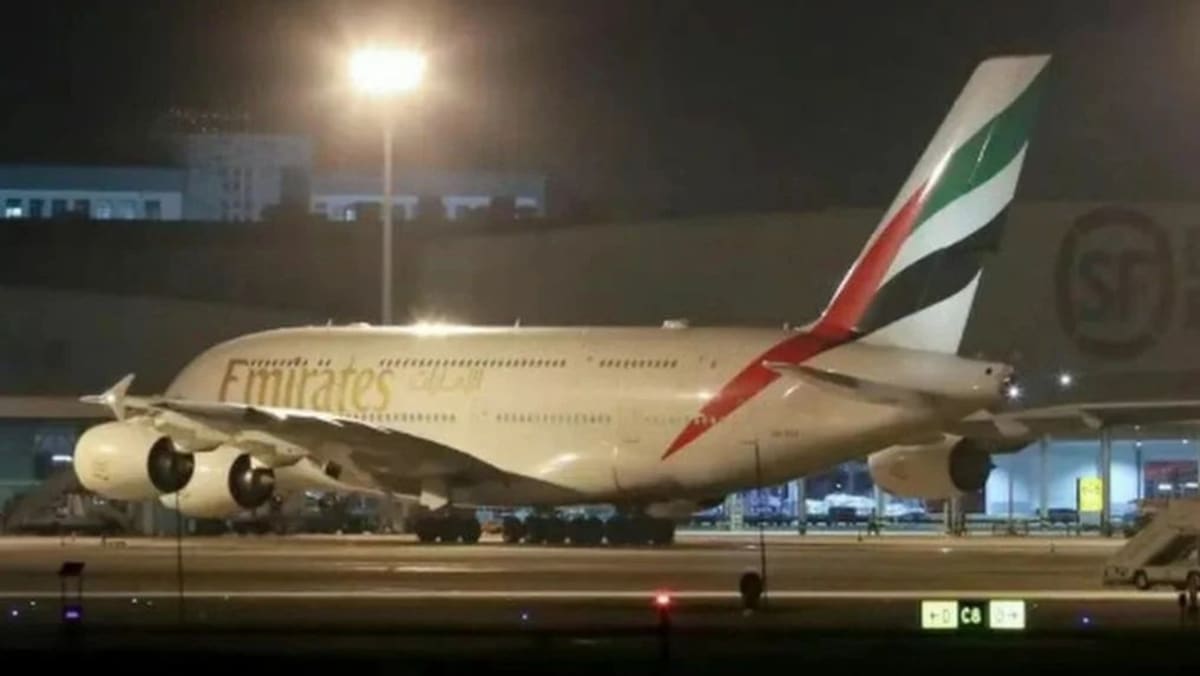
For Chinese airports jostling to open more intercontinental routes, the sight of widebody aircraft operated by global airlines can be a potent status symbol.But when an Emirates Airbus A380, the world’s largest passenger airliner, touched down at Hangzhou Xiaoshan International Airport on Jul 22 - a novelty for the city’s planespotters, mostly accustomed to seeing smaller narrowbody jets - everything that could go wrong, did.The plane’s 373 passengers endured what ultimately became a 10-hour ordeal, while the airline had to battle mechanical breakdowns and a logistical nightmare that resulted in huge losses and a reputational hit for the airport. The drama was triggered by thundery weather at Shanghai Pudong International Airport. Emirates Flight EK302 from Dubai, in the United Arab Emirates, had been scheduled to arrive in Shanghai that evening, but at 9pm - after seven hours in the air - the plane had to divert to Hangzhou, when inclement weather made the descent into Pudong too dangerous.When the passengers and crew were eventually allowed to disembark, they had been on board for 17 hours, with their time stranded on Hangzhou’s tarmac longer than the flight from Dubai itself.The Emirates crew had originally aimed to wait for Pudong airport’s weather to stabilise before flying there, so they did not ask Hangzhou to start immigration procedures to receive the 373 passengers.However, the long wait eventually exceeded the permitted flight duty period, according to reports by Shanghai media outlets that cited passenger accounts.A standard duty day for a multiple-pilot crew is capped at 14 hours. The pilots are then legally barred from starting another flight - even if they feel totally alert - and risk the imposition of fines or licence suspensions by aviation regulators if they do so.The pilot “time out” meant a last-minute midnight crew swap, with Emirates scrambling to send new crew and pilots from Shanghai to Hangzhou to fly the A380. But torrential rain reduced their bus ride to a crawl.Meanwhile, back on the plane, the A380’s air-conditioning system started to lose power at 3am. Passengers became cranky. Police and ambulances were called in when the cabin descended into chaos and some people fainted, according to social media posts.The new crew eventually arrived at Hangzhou International Airport at 4am. They rushed into the cockpit and restarted the engine, with passengers cheering during the preflight safety demonstration.That is when they discovered the state-of-the-art A380’s mechanical woes extended beyond its air-conditioning system.Another two hours lapsed before the new captain told frustrated passengers at nearly 6am that the plane could not fly and they would all have to disembark.After 17 hours on the plane, passengers were assigned hotel rooms to rest and provided with bus and train tickets to Shanghai. The A380 eventually left Hangzhou for Dubai on Friday (Jul 24), having been grounded for two days and costing the airline a significant source of revenue.With the airline flying into a barrage of online criticism, Emirates issued an apology over the weekend, promising follow-ups with affected passengers.The carrier also explained that the extended delay after touching down at Hangzhou was due to a mix of factors, particularly technical issues and the need to deploy new crew and pilots.The operator of Hangzhou’s airport, meanwhile, also came under fire for what was perceived as poor communication with Emirates and inflexibility.But the airline said it was standard procedure to hold passengers after the diversion of an international flight to a third location to avoid triggering complex immigration procedures and fees.This article was first published on SCMP.
All went wrong: A380 flight to China becomes 10-hour ordeal
Full Article
Original Source
Read the full article at Channelnewsasia →KhanList aggregates and links to publicly available news content. We do not host full articles from third-party sources. Always verify important information with original sources.