
Published Sep 10, 2026, 6:00 PM EDT Aaron is an aviation enthusiast and world traveler with a deep interest in aerospace history and technology. He has traveled around the world numerous times, often incorporating visits to aviation museums and historic aircraft collections into his journeys. A native of New Zealand, he is an expert in aviation and maintains a broad interest in a variety of other subjects. In its 2012 Investor Day presentation, Delta Air Lines explicitly said that it wanted to "develop Seattle into a premier West Coast gateway to Asia" while also describing its Alaska Airlines partnership as a way of supplementing the Seattle gateway. At the time, Delta and Alaska were partners rather than direct adversaries at Seattle. Fast-forward to today, and Alaska is building an intercontinental network from Seattle to challenge Delta's "premier gateway" and has identified Delta as its chief competition. The deterioration of relations between Alaska and Delta worsened following Alaska's acquisition of Hawaiian Airlines and its efforts to build a widebody fleet (and swell its domestic narrowbody fleet). Having enjoyed the status of operating the only intercontinental network at Seattle, Delta is responding to the new threat and is not willing to hand over its market share to Alaska. Let's examine how Alaska and Delta are set to do battle over the intercontinental Seattle-based market. Alaska's Widebody, Intercontinental Ambitions Credit: Alaska Airlines Until recently, Alaska was the fifth-largest US-based airline that was operating a model closer to Southwest than Delta, United, or American by having an all-Boeing 737 narrowbody mainline fleet. With that being said, it did overlap with some parts of the Big Three's models by having a fleet of Embraer 175s operated by Horizon Air and SkyWest Airlines, but then Alaska acquired Hawaiian Airlines. The only US-based airlines to have widebody intercontinental flights were Delta, United, American, and Hawaiian. Hawaiian operates a fleet of 24 Airbus A330ceos and was receiving a fleet of Boeing 787-9 Dreamliners. Alaska elected to take over those Dreamliner purchases and leave Hawaiian with the A330ceos. The idea is to build its own widebody intercontinental network. As of mid-2026, Alaska's widebody fleet and network is starting to take shape. With five 787-9s now in service, seven more are expected to be delivered through 2027, which are to be followed by five 787-10s starting in 2028. This will be a tiny widebody fleet by the Big Three's standards and will not be a major challenge, at least in the short term. However, it is a notable challenge specifically to Delta in its Seattle hub. Alaska Airlines Recently Announced Two New Intercontinental Routes Credit: Alaska Airlines In August 2026, Alaska Airlines announced it will schedule new long-haul flights between its West Coast stronghold and Europe. It will add nonstop flights from Seattle to Athens and Paris, "two of the world’s most iconic destinations that rank among the most requested by Atmos Rewards members." These will be launched in the spring of 2027 and will bring Alaska's intercontinental destinations to seven. At the time, Alaska Airlines reported that "starting today, tickets to Athens International Airport (ATH) and Paris Charles de Gaulle Airport (CDG) are available at alaskaair.com. To celebrate these two new routes, Alaska Airlines is offering introductory roundtrip Main Cabin fares starting at $999, available for purchase in the US through August 26." It also emphasized that the new routes will make Hawaii more accessible via Seattle after it took over Hawaiian Airlines. Alaska is the first airline to announce a nonstop service between Seattle and Athens (to begin in May 2027), which will operate three times a week. It will be the longest route Alaska Airlines has ever flown. The Paris route will also commence in May 2027, will operate five times a week, and will operate through to the fall. Alaska's 2027 Intercontinental Network Credit: Parkdolly l Shutterstock Alaska's emerging intercontinental network for 2027 is all from its primary hub in Seattle, and these are supported by a new 41,000-square-foot (3,810 square meters) flagship lounge scheduled to operate in late 2027. Despite the airline's name, its primary hub is not Anchorage in Alaska. Alaska's five routes to Europe are Rome, Reykjavík (Iceland), Athens, Paris, and London Heathrow. It also has routes to Seoul and Tokyo. The Rome route was launched in April 2026, while the Reykjavík (using Boeing 737 MAX 8s) and London routes were launched in May 2026. As stated, the Athens and Paris routes will launch in May 2027 and operate until October 2027. For now, at least, some of these routes are operated less than once a day and are seasonal. Ben Minicucci, CEO of Alaska Airlines, spoke of the airline's ambitions to build its network further. Minicucci stated that "as we build to more than 12 international long-haul routes from Seattle in the coming years, we’re giving travelers more ways to connect to the world and more opportunities to use Atmos Rewards." However, Alaska remains constrained by the number of 787 aircraft it has available. It is also worth noting that these 787-9s are configured with 34 lie-flat business suites, a new Atmos loyalty product, and complimentary Starlink WiFi. Alaska Group's Widebody Fleet Versus Big Three Credit: Alaska Airlines United Airlines currently has the largest widebody fleet in the United States and second largest in the world (after Emirates) with a fleet of 96 Boeing 777s, 53 Boeing 767s, and 91 Boeing 787s (plus 130 Dreamliners on order) for a current fleet size of around 240. Delta is the second largest with 81 Airbus A330s, 41 A350s, and 57 Boeing 767s in service for a widebody fleet of around 179 airliners. Delta also has 30 Boeing 787-10s, 20 A350-100s, 16 A330neos, and 18 A350-900s on order. American Airlines' widebody fleet is composed of 67 Boeing 777s and 70 Boeing 787 Dreamliners, with another 19 Dreamliners on order. The Alaska Group now includes the 24 Hawaiian Airlines A330CEOs and five 787-9 Dreamliners for a fleet size of 29 widebodies. However, it also has outstanding orders for seven 787-9s and five 787-10s. Alaska Airlines reported in January 2026 that, in addition to the five 787-10s, it has bigger ambitions. US-based widebody fleets (per Planespotters.net) American Airlines Delta Air Lines United Airlines Alaska Group (inc. Hawaiian) Airbus A330s none 81 none 24 Airbus A350s none 41 none none Boeing 767s none 57 53 none Boeing 777s 67 none 96 none Boeing 787 Dreamliners 70 none 91 5 Total 137 179 240 29 On order 19 86 130 12+35 Alaska Airlines stated that it has "also secured rights for an additional 35 737 MAX 10 aircraft, (...) [securing] critical delivery slots and [extending] the aircraft delivery stream through 2035." With Alaska committing to Hawaiian A330 cabin enhancements until 2028, it seems these would be to grow the fleet rather than replace the A330s. With that being said, Alaska's fleet will remain mostly narrowbody but is set to expand from 413 aircraft at the beginning of 2026 to over 475 by 2030 and 550 by 2035. Competition With Delta In Seattle Credit: aviationisa l Shutterstock Alaska's near-term intercontinental ambitions are not particularly important for the existing American Airlines and United Airlines networks, as they don't use Seattle as a major intercontinental hub. The ambitions are probably not that impactful for most of Delta's intercontinental network, as its international operations are distributed across half a dozen hubs. However, it is important for Delta's Seattle hub specifically. From Seattle, Delta operates daily flights to Tokyo, Seoul, Shanghai, Taipei, London Heathrow, Paris, Amsterdam, as well as less frequent flights to Rome and Barcelona. Alaska's announced network directly competes on five of these routes, with a number likely to increase as more routes are added. It is unclear how many widebody aircraft Delta needs to allocate to maintain these intercontinental routes, but it is likely within the ballpark of 15 widebodies. Interestingly, Alaska's firm future widebody fleet is 17 Dreamliners (12 Boeing 787-9s and five 787-10s). It is unclear if all these widebodies will be based in Seattle: it's possible Alaska could introduce some routes from Anchorage or elsewhere. However, if Alaska does focus its widebody efforts on Seattle, then by 2030 its committed intercontinental fleet could be comparable in size to Delta's local Seattle widebody fleet today. Delta Gets A Say & Can Fight Back Credit: Aurelia Blankenship | Shutterstock Alaska Airlines has ambitions to become a globe-trotting airline centered on the Pacific Northwest. In its 2025 report, Alaska Airlines specifically names Delta as its biggest competitor. It says that "competition in the airline industry can be intense and unpredictable," adding that "our largest competitor is Delta Air Lines. Approximately 78% of our capacity to and from Seattle competes with Delta." Alaska is a large and established airline, but its widebody operations remain nascent. It is important to remember that Delta gets a vote and has the ability to respond to the new threat at its Seattle hub. Delta has a massive widebody fleet with a much larger network and loyalty ecosystem. It can simply add capacity onto contested routes, use larger aircraft, attack Alaska's premium proposition, exploit its own enormous connecting network, and more. Delta appears unwilling to just give up much of the share in one of its important hubs lying down. In August 2026, Delta announced a new nonstop route from Seattle to Tokyo Narita starting in March 2027 with its A330neos, meaning it will be flying to both of Tokyo's major international airports. As competition between Alaska and Delta intensifies, the result could be more capacity, greater choice, and more competitive fares for travelers on routes where the two airlines go head-to-head.
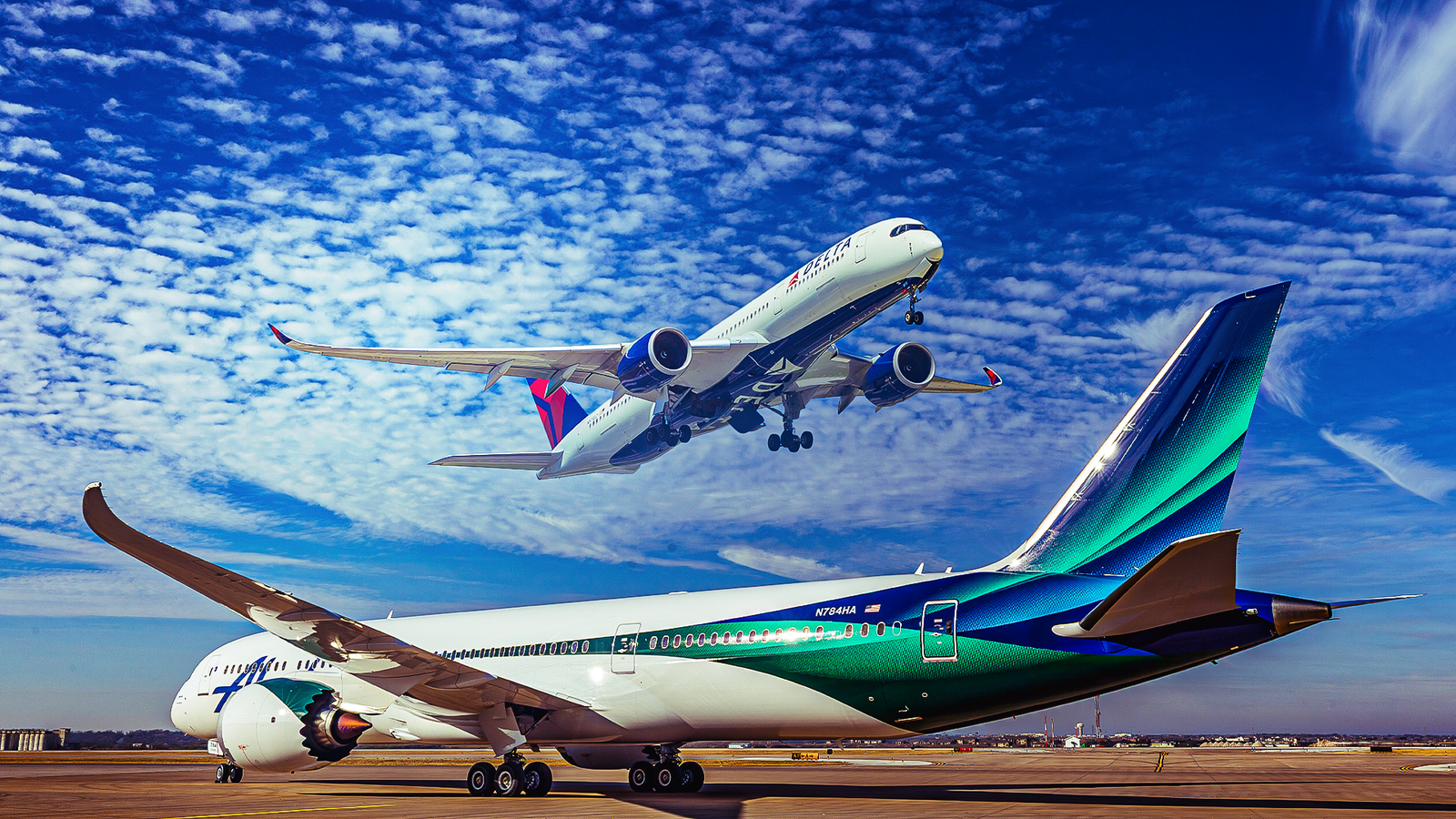
Alaska Airlines Is Fighting Delta's 180-Jet Widebody Fleet With Just 7 Boeing 787-9s
Full Article
Original Source
Read the full article at Simpleflying →KhanList aggregates and links to publicly available news content. We do not host full articles from third-party sources. Always verify important information with original sources.