
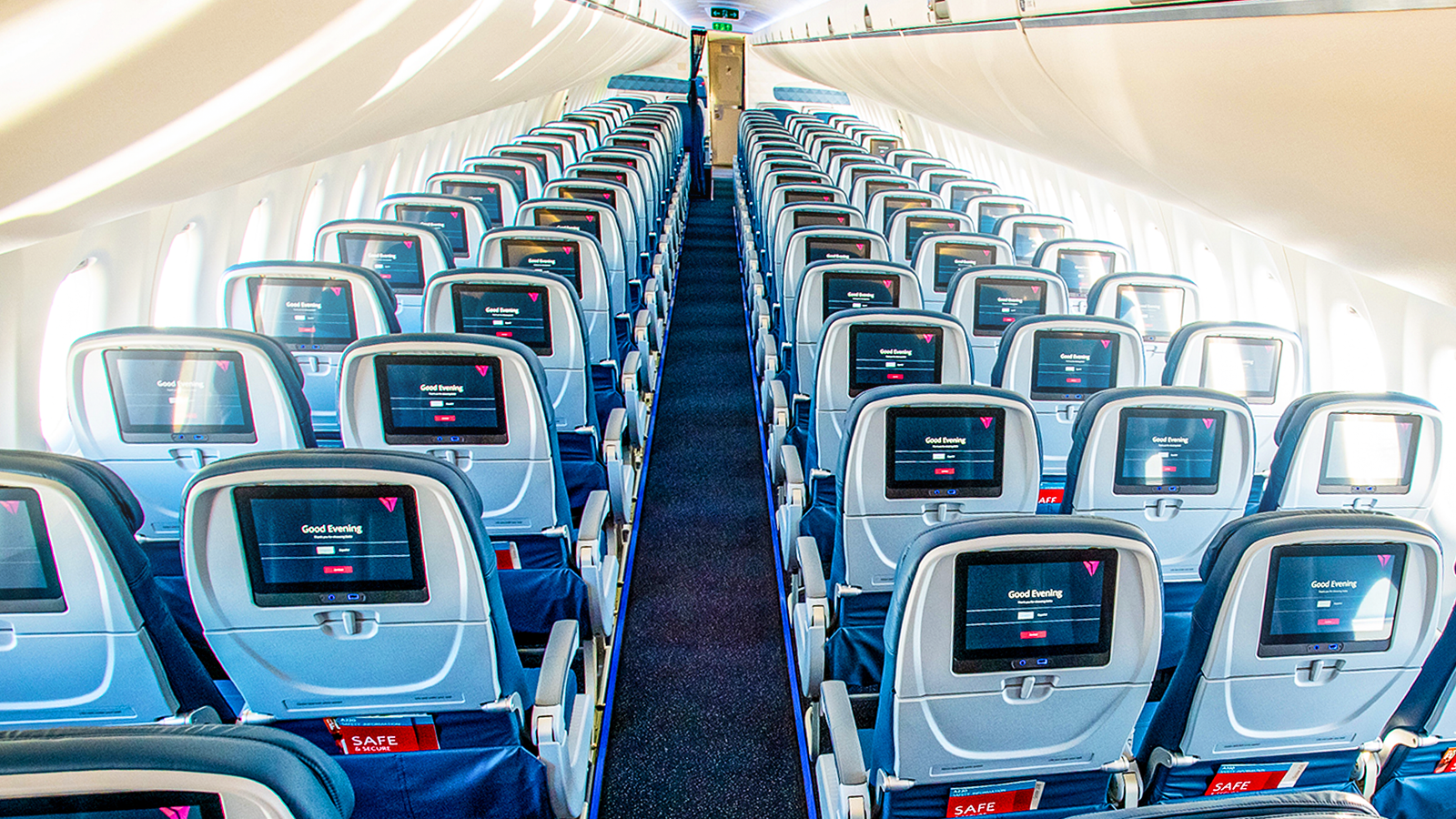
Published Oct 18, 2026, 5:00 PM EDT Jack comes to Simple Flying with a lifelong interest in all things aviation. He holds a degree in Aerospace Engineering from Georgia Tech, and is a certified private and remote pilot. Beyond these experiences, Jack previously worked for a corporate flight department where he gained first-hand experience in the world of business aviation. Currently, Jack works in the professional services industry and continues to build his flight hours outside of work. The Airbus A220 has developed a reputation for offering a more spacious, comfortable cabin than many passengers expect from a single-aisle aircraft. Originally developed as the Bombardier C Series before Airbus took over the program, the jet was designed around a passenger-focused cabin rather than adapting an older airframe. Its five-abreast economy seating, unusually large windows, and generous personal space distinguish it from larger narrowbody aircraft, which typically accommodate six passengers across each economy row. The result is an interior that can feel less crowded even when the aircraft is full. The experience also reflects a mix of established design features and newer cabin technology. Traditional A220 interiors already include large windows, pivoting overhead bins, and full-spectrum LED lighting, while the newer Airspace cabin introduces redesigned storage compartments and additional lighting options. Airlines determine their own seating arrangements, cabin finishes, and onboard amenities, so the experience varies by carrier and aircraft. Five features, however, help explain why the A220 often feels different from other narrowbody jets. A Two-Three Seating Layout Reduces Middle Seats More personal space across each economy row Credit: airBaltic One of the most noticeable features of the A220 is its economy seating configuration. Rather than arranging six seats across the cabin in a three-three layout, as on the Boeing 737 and Airbus A320 families, the A220 generally places two seats on one side of the aisle and three on the other. This five-abreast arrangement means fewer middle seats and gives couples, friends, and families more opportunities to sit together without having to occupy a middle position. Passengers traveling alone also have a greater chance of securing either a window or aisle seat. The cabin's dimensions contribute to the impression of space. Airbus says economy seats can measure up to 19 inches (48.26 cm) wide, although the exact width depends on the airline's seat selection and installation. Delta Air Lines, for example, lists its A220 Main Cabin seats at 18.6 inches (47.24 cm) wide, making them the widest Main Cabin seats in its fleet. These measurements should not be treated as universal specifications for every A220, but they illustrate how the aircraft's cabin can support comparatively generous economy seating. Delta A220 Cabin Configurations A220-100 A220-300 Domestic First Class total seats 12 12 Main Cabin total seats 97 118 The cabin's relatively straight sidewalls also help provide room around passengers' shoulders and upper bodies. On aircraft with more pronounced curved walls, the space available near the windows can feel narrower, particularly around shoulder height. Airbus designed the A220's cross-section to balance cabin width with efficient aircraft dimensions, giving passengers more usable space without moving to a larger aircraft category. The wider aisle can also make movement through the cabin feel less constrained during boarding and in-flight service. Nevertheless, the five-abreast arrangement does not guarantee identical comfort on every flight. Seat pitch, recline, padding, and the number of rows vary between operators. Some airlines offer premium seating with additional legroom, while others use different cabin layouts and service standards. Passengers choosing a seat should therefore check the operating airline's seat map and specifications rather than relying on the aircraft type alone. Oversized Windows Make The Cabin Brighter More daylight and an improved view outside The A220's windows are another defining feature. Measuring approximately 11 by 16 inches (27.94 by 40.64 cm), they are among the largest fitted to a single-aisle commercial aircraft. Their size gives passengers a broader view of the sky and landscape, while allowing more natural light to enter the cabin. Airbus positions the windows near passengers' eye level, making it easier to look outside without leaning forward or turning the head sharply. Depending on the cabin configuration, a row can have one or two windows, spreading daylight across more of the seating area. The practical benefit is not limited to the window seat. Natural light can make the interior feel more open, particularly when passengers board during daylight hours. On smaller aircraft, a combination of narrower windows and curved sidewalls can create a more enclosed impression. The A220's window dimensions and cabin geometry help counter that effect, giving the aircraft a brighter atmosphere without increasing the number of seats across each row. Airbus describes the arrangement as part of its broader effort to provide a spacious cabin experience. Some A220 configurations feature a window in a rear lavatory, a feature lauded by The Points Guy on Delta's A220 aircraft. Its availability depends on the particular aircraft and interior, so passengers should not assume every A220 restroom has one. Even so, the detail reflects how the aircraft's window design extends beyond the conventional passenger seating area. The principal advantage is the broader, brighter cabin environment, rather than a guarantee of an unobstructed view from every window seat. A Quieter Cabin Can Make The Journey More Relaxed Engine technology and the sound environment onboard Noise is a less visible feature than seat width or window size, but it can shape how comfortable a flight feels. The A220 is powered by Pratt & Whitney PW1500G geared turbofan engines, designed to improve efficiency and reduce noise compared with earlier-generation engines. The geared turbofan arrangement allows the fan and low-pressure turbine to operate at different speeds, helping each component work more efficiently. Engine design is only one contributor to cabin sound, but it is central to the A220's noise profile. Passengers may notice the difference during takeoff, when engine noise can be particularly prominent, and during cruise, when a quieter environment can make conversation or listening to audio more comfortable. Cabin noise depends on engine variant, aircraft age, seating position, flight phase, airflow, and how effectively sound is isolated from the cabin. A passenger seated near the wing may perceive a different sound level from someone farther forward or behind the engines. The A220's relatively modern design also contributes to the overall atmosphere. Its cabin layout, large windows, and available ambient lighting work alongside acoustic characteristics to create an interior that can feel less tiring on longer journeys. A quieter cabin does not mean the aircraft is silent: engine sound, airflow, ventilation, and other onboard systems remain audible. For passengers sensitive to noise, seat selection remains useful. Seats closer to the front are often farther from the engines than those around or behind the wing, although the exact pattern varies with aircraft layout. Travelers should also consider that the cabin's quietness is partly subjective. The A220's engines offer a technological basis for lower noise, but individual impressions will depend on the route, operating conditions, and where passengers sit. Larger Overhead Bins Improve Carry-On Storage More room for bags, with newer designs increasing capacity Credit: Air Canada The original A220 cabin was designed with large, curved pivoting overhead bins that provide substantial storage for a regional-sized aircraft. These compartments can accommodate carry-on luggage more easily than the smaller bins found on many older regional jets. The extra capacity can reduce the likelihood that passengers will need to surrender a bag at the aircraft door, although available space still depends on how many travelers bring cabin luggage and whether bags meet the airline's size requirements. A newer development is the Airspace XL bin, which Airbus is introducing on newly built A220s. The redesigned bins provide 20% more volume than the earlier pivoting design and increase carry-on bag capacity by approximately 15%. On the A220-300, Airbus says the configuration can accommodate up to 19 additional passenger bags. The new bins also use a simpler mechanism and are lighter, making them easier for passengers and cabin crew to handle. Air Canada became the launch customer, and Business Traveller covered the new product. The difference between the original and updated bins matters because the Airspace XL design is not present on every A220. The transition depends on aircraft delivery dates and individual airlines' decisions about cabin upgrades. The larger design is an upgrade to the existing cabin; not all A220s have identical storage. More overhead space can also affect boarding and departure operations. When bags fit close to their seats, passengers spend less time searching for room or moving luggage between compartments. Simpler bin mechanisms can help cabin crew close them more efficiently, while lighter structures reduce aircraft weight. These operational benefits are secondary to passengers' immediate concern, which is finding a secure place for a carry-on, but they explain why airlines and manufacturers have invested in the redesign. LED Mood Lighting Changes The Cabin Atmosphere Adjustable colors and illumination throughout the flight Credit: Airbus The A220's LED cabin lighting gives airlines more flexibility than fixed overhead lights. Full-spectrum lighting systems can adjust both brightness and color, allowing the cabin atmosphere to change between boarding, meal service, and rest periods. Airlines can use different settings to reinforce their visual identity or create a calmer environment during night flights. The lighting is part of the aircraft's passenger-focused design, complementing its windows and cabin proportions rather than serving only as decoration. The newer Airspace cabin extends these options. Airbus says the system can produce more than 16 million colors, while an optional third LED light strip beneath the overhead bins adds another layer of illumination. The updated design creates additional opportunities to coordinate the ceiling and bin lighting, giving the cabin a more integrated appearance. Air Canada is introducing the Airspace cabin alongside other interior changes, including a warmer design scheme and updated entertainment equipment. The precise lighting effects and colors available to passengers depend on the airline's chosen configuration. Lighting can also support comfort on flights that cross time zones. Dimming the cabin during rest periods helps reduce glare and creates a more suitable setting for sleep, while brighter illumination can make boarding and daytime service feel more natural. Lighting alone cannot prevent jet lag, which is influenced by circadian rhythms, sleep, and the timing of travel. Its role is more modest: it allows the cabin environment to be adjusted to the stage of the journey. As with the bins, passengers should distinguish the A220's established LED lighting from the additional features of the newer Airspace interior. The aircraft has offered ambient lighting for years, but the latest installation adds options rather than introducing the concept for the first time. Across both versions, adjustable illumination contributes to the A220's recognizable cabin feel, helping the interior appear brighter during daytime travel and more subdued when passengers are preparing to rest.
Airbus A220 Cabin Explained: 5 Features Passengers Notice Onboard
Full Article
Original Source
Read the full article at Simpleflying →KhanList aggregates and links to publicly available news content. We do not host full articles from third-party sources. Always verify important information with original sources.