
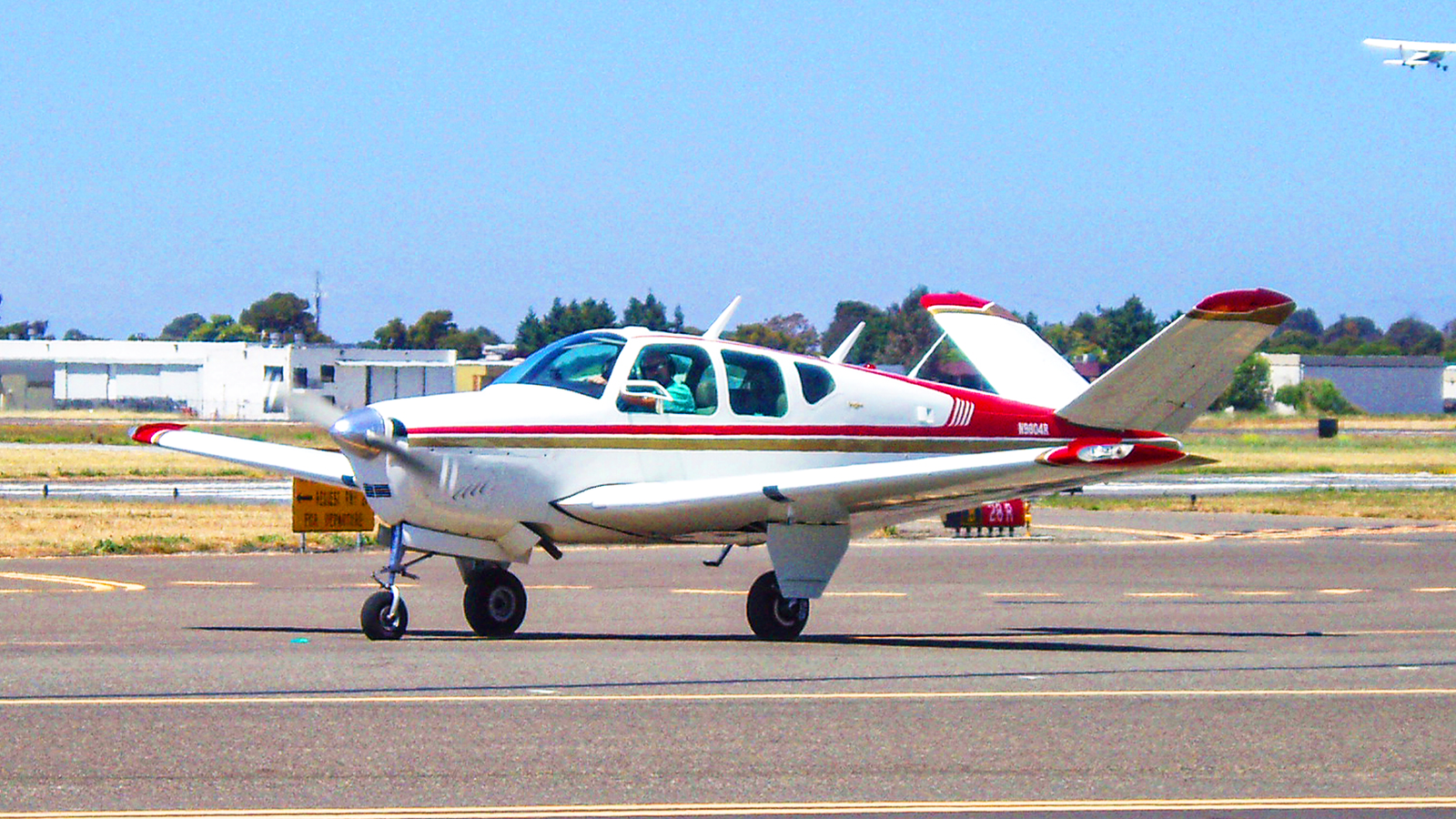
Published Oct 18, 2026, 7:00 PM EDT Aaron is an aviation enthusiast and world traveler with a deep interest in aerospace history and technology. He has traveled around the world numerous times, often incorporating visits to aviation museums and historic aircraft collections into his journeys. A native of New Zealand, he is an expert in aviation and maintains a broad interest in a variety of other subjects. The Beechcraft Bonanza is one of the world's most produced aircraft and one that has a particularly strong loyalty base. The story of the aircraft is full of paradoxes and contradictions. It was produced in some of the highest numbers, and yet in recent years its deliveries have been in single-digit numbers. It is highly valued for being durable, but it also means existing aircraft don't need replacing. Furthermore, it has a strong loyal community that Textron values. However, preserving and placating that base likely encouraged it to keep the Bonanza in production longer than its order book would have suggested. Now, demand has dropped so low that Textron is shutting down production of the Beechcraft Bonanza and moving onto other programs. Bonanza at once shows the value of a strong loyal base and the risk of increasingly investing in de facto heritage programs as new entrants emerge and start taking over the main market. The Longest Aircraft In Continuous Production Credit: betto rodrigues l Shutterstock The Beechcraft Bonanza is one of the few aircraft that have remained in production since 1947, and is one of the most successful aircraft programs in history. It was introduced in 1947 by Beech Aircraft Corporation as a four-seat, single-engined aircraft, with later variants featuring six seats. No other aircraft has remained in continuous production for so long. However, Russia is considering putting its ancient Antonov An-2 biplane back into production as the replacement UZGA LMS-901 Baikal aircraft program fails. While the Beechcraft Bonanza may have remained in continuous production, it has also evolved over time. The Bonanza has many variants and has been updated innumerable times over its production history. The Bonanza has grown in size, engine power, and model designations over the years, but it has always been able to retain its niche. Over its history, Beechcraft has delivered a total of 26,165 Bonanza-family airplanes. This includes some 17,170 Bonanzas (models 35, 36 and Bonanza-designated 33), as well as some 1,297 Debonairs (Debonair-designated 33s), some 6,978 Barons (models 55, 56 and 58) and some 720 Travel Airs. The Aircraft Is Loved By Pilots & Has Earned A Large Loyal Fanbase Credit: Kevin Porter l Shutterstock One of the reasons for the Bonanza's success is that it is loved by the pilots who fly them. AOPA writes that "for many pilots, the venerable Beechcraft Bonanza represents the ultimate piston single. From its first appearance in 1947 as a smallish, all-metal four-seater with a distinctive, futuristic-looking V-tail, the airplane has been a leader in style, speed, handling qualities, and sales." The very loyal owner base was a central pillar to the aircraft remaining in production. Owning a Bonanza became almost a community and identity, perhaps similar to how Harley-Davidson motorcycles were for bikers. Textron has explicitly attributed the longevity to its "passionate legion of owners." The loyal base generated a feedback loop that allowed the aircraft to remain in production. Critically, a loyal base doesn't necessarily want the newest and best aircraft on the market. They want the aircraft they know and love, the sorts of planes that communities like the American Bonanza Society are built around. Over time, the Bonanza became a premium product, and it didn't need to achieve the Cessna 172 numbers to remain successful. These aircraft have long commanded a substantial price premium, with a modern G36 being priced at around $1 million or more. From Mass Production To Niche Heritage Credit: Adam Loader l Shutterstock Other factors in the Bonanza's longevity are partly thanks to its very durable market niche, which did not require the aircraft to be particularly technologically advanced. It has been the premium personal/business single-engine piston aircraft for generations. When it first appeared in 1947, the Bonanza was radically sophisticated for a light aircraft and initially came with the famous V-tail. It occupied a position between a Cessna 172/182 and a turboprop, and was faster and more capable than a basic Cessna, but also simpler and cheaper than a turboprop. One of the most important factors in its success was its basic airframe. Over the years, Beechcraft didn't need to fundamentally change the basic airframe, whose configuration allowed Beechcraft to progressively modify the aircraft through various updated models. Over time, the aircraft became heavier and more powerful, but the fundamental aircraft remained. Put another way, the Bonanza started out as an efficient mass-produced aircraft, but over time its sales declined, becoming a high-margin specialist product. The high margin, and the fact that its loyal base was willing to pay it, allowed it to remain in production in relatively low numbers. However, this also eventually became a problem. The Bonanza effectively became a heritage product without becoming a museum piece. This limited it to a contracting niche, and the company effectively had its hands tied when it came to convincing conservative customers to radically update the aircraft. Why Bonanza Production Is Ending Despite Support Credit: Flying Camera l Shutterstock Eventually, the orders became too small to sustain the program economically. The days of the mass-produced Bonanza are long behind it. At its peak, Beechcraft was delivering hundreds of aircraft annually. It delivered 13 in 2017, none in 2021, three in 2022, and five more each in 2023 and 2024. The economic reality is that it is just not economical to keep a production line running, delivering just five to ten of these aircraft annually. Manufacturing the Bonanza is labor-intensive and requires management overhead, factory space, specialized tooling, a dedicated production line, and more. Beechcraft Bonanza Specs (per Textron) First deliveries 1947 Total deliveries 17,170 Other related aircraft Debonairs, Baron, Travel Airs Total family deliveries 26,165 Annual deliveries in recent years Approx. 5 Production end Anticipated 2027 This means late-delivery Bonanzas came with high fixed overhead costs. The issue could partly be an aging demographic of loyal supporters, an issue Harley-Davidson is famous for having, but this is difficult to establish with available data. Yet another issue for the aircraft is paradoxical. Part of the reason why the Bonanza is popular is that it is incredibly durable, and that means older aircraft can remain in service and owners don't necessarily need to order new replacements. For existing owners, it is often cheaper to simply overhaul their existing 1980s-era Bonanzas rather than purchase a new one. Meanwhile, new wealthy entrants into the private piston engine airplane market may not have the same enthusiasm for the Bonanza as their Baby Boomer counterparts do. Shutting Down Beechcraft Bonanza Production Credit: JSeppenen l Shutterstock All good things must come to an end, and, in 2025, Textron Aviation (the parent of Beechcraft) said that it would cease production of the Bonanza and the Beechcraft Baron after its backlog of orders is filled. Textron also reassured operators that it will continue to supply parts, maintenance, and support for the aircraft. Some industry sources now believe the final aircraft will be delivered in 2027, although Textron has not verified this. After the disappearance of the Baron and Bonanza models from its website, Textron Aviation stated that "The company will end production of the Beechcraft Baron G58 and Beechcraft Bonanza G36 models once all current orders are fulfilled. (...) This strategic shift will enable Textron Aviation to focus on welcoming the Beechcraft Denali into its product portfolio while thoughtfully assessing future investments within this segment." Order books for the aircraft had already been effectively closed, with some sources saying late 2023 or early 2024 saw the final new orders. Delivery of new units continues in 2026, but at a very low rate. Just four Bonanza and Baron aircraft were delivered in the first half of 2026. No public announcement has been made about when the final delivery will be made or what the remaining back order is, but it is clear the lines are functionally winding down. Competition From Cirrus Credit: Kevin Porter l Shutterstock As Textron delivered its Bonanzas in single digits, AOPA noted that "Cirrus Aircraft, meanwhile, sold four-seat piston singles and seven-seat jets by the dozens, or even hundreds, year after year." The threats to the Beechcraft Bonanza weren't just that other companies were making a faster or cheaper single-piston aircraft; it was that other companies were making other aircraft that affluent owner-pilots wanted from a new aircraft. Cirrus moved in with its Cirrus SR22 that came with an integrated glass cockpit, a whole-airframe parachute, Safe Return emergency autoland, and more. It was able to push the aircraft's safety and modern cockpit as selling points. Meanwhile, Textron also owns Cessna, which has models that also compete in the piston aircraft market. In 2025, Cirrus delivered an impressive 691 aircraft made up of the SR20, SR22, and SR22T models. At the same time, Textron's Cessna delivered 311 piston-engined aircraft and only five Bonanzas. Other aircraft that compete in the segment include the Diamond DA50 RG, the Piper M350, the Cessna 182 Skylane, and the Cessna Turbo Stationair HD. In the end, Bonanza survived to become the world's longest-produced aircraft not because it remained competitive. Instead, it was because it started out as a very well-designed and durable aircraft that earned it strong support from wealthy enthusiasts, which then kept the program going as a heritage aircraft.
Beechcraft Bonanza: How One Airplane Stayed In Production Since 1947
Full Article
Original Source
Read the full article at Simpleflying →KhanList aggregates and links to publicly available news content. We do not host full articles from third-party sources. Always verify important information with original sources.