
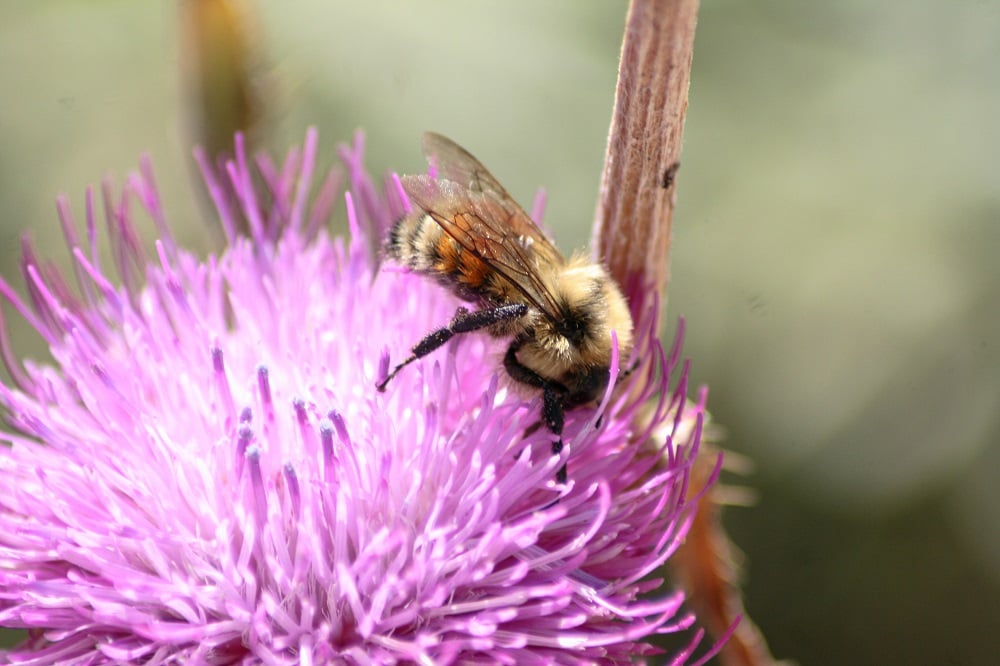
Air pollution can scramble the floral scents bees, moths and other pollinators rely on to find food, cutting their ability to locate flowers by nearly half.(CN) — Air pollution can make it harder for bees, moths and other pollinating insects to find flowers by disrupting the scents they use to locate food, according to new research.Scientists at the University of Reading analyzed 22 experimental studies examining how ozone and nitrogen oxides affect pollinators. Both pollutants can break down or alter the chemical compounds that make up floral scents.Elevated ozone reduced pollinator performance by an average of 42%, while nitrogen oxides reduced performance by 46%, researchers found. When both pollutants were present, pollinator performance fell by an average of 68%.Only a few studies examined the pollutants together, however, and the combined effect was smaller in those experiments because ozone and nitrogen oxides react with each other in the air and partly cancel each other out.The findings, published Thursday in Frontiers in Ecology and the Environment, also showed how specialist pollinators that depend on the scent of a particular plant, including some moths, face greater risks than generalists such as many bees.Day-active pollinators such as bees and butterflies encounter higher ozone levels, while many nighttime pollinators, including moths, are exposed to higher concentrations of nitrogen oxides.“Ozone levels are projected to keep rising until around 2050, even as nitrogen oxide emissions begin to fall as the world moves away from fossil fuels,” said lead author James Ryalls, a researcher at the University of Reading.“This creates a difficult period for pollinators over the next two to three decades,” Ryalls said.Researchers said most of the available evidence comes from Europe, leaving a gap in understanding how air pollution affects pollinators in more heavily polluted regions, including parts of Asia.“Most of the food we grow depends on healthy pollinators, so protecting them from pollution cannot wait until 2050,” Ryalls said.Subscribe to our free newslettersOur weekly newsletter Closing Arguments offers the latest about ongoing trials, major litigation and rulings in courthouses around the U.S. and the world, while the monthly Under the Lights dishes the legal dirt from Hollywood, sports, Big Tech and the arts.Additional Reads
Air pollution makes it harder for pollinators to find flowers
Full Article
Original Source
Read the full article at Courthousenews →KhanList aggregates and links to publicly available news content. We do not host full articles from third-party sources. Always verify important information with original sources.