
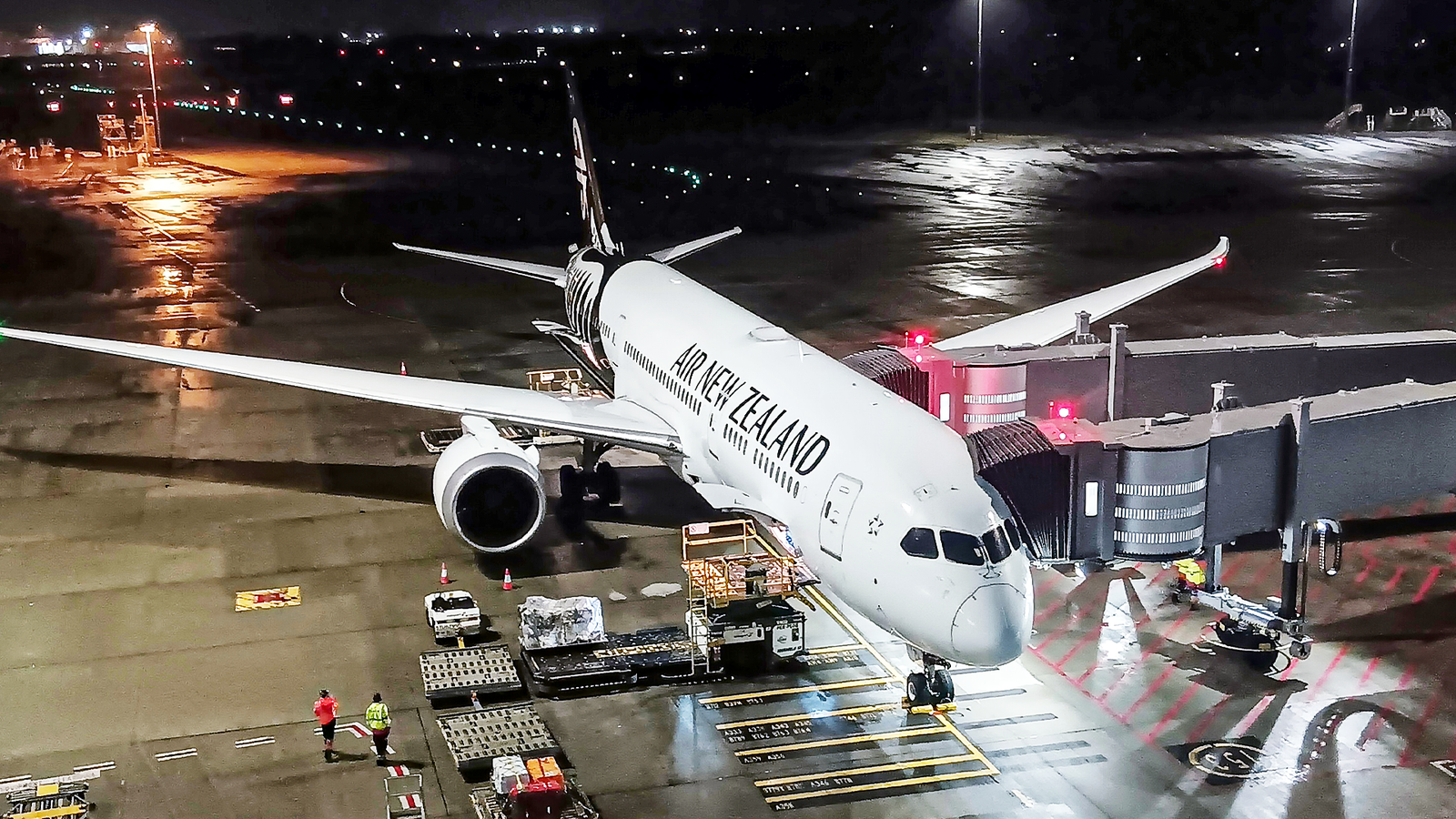
Published Sep 18, 2026, 7:00 PM EDT Prachi is a London-based journalist with extensive experience in the aviation industry. She has worked for several leading industry publications, covering a broad range of topics. Her expertise lies in aircraft maintenance, emerging technologies, and advanced air mobility. She is currently pursuing a PhD in Journalism, focusing on data journalism and its potential to transform conventional aviation reporting. For almost a decade, Rolls-Royce has been dealing with problems related to its Trent 1000 engine. The issue first came to light in 2016 when All Nippon Airways (ANA) found corrosion-related fatigue cracking on the intermediate-pressure turbine blades of several engines powering its Boeing 787s. The discovery led to inspections and engine removals across the 787 fleet worldwide. Several airlines had to ground their 787s for an extended period of time. The UK-based engine giant introduced fixes for the affected engine, but the problems continued to affect operators over the following years. Air New Zealand was among the carriers affected. The airline operates 14 Boeing 787-9s, and at the peak of the disruption, five of them were grounded. That left the airline with less capacity for its long-haul network and forced it to find other ways to cover some of its operations. The situation has gradually improved as engines have gone through overhaul and aircraft have returned to service. Now, after spending months in long-term storage in Australia, Air New Zealand’s final grounded 787-9 has left the desert and returned to the airline’s fleet. Air New Zealand’s Last Stored 787-9 Returns To Scheduled Service The final Dreamliner to return to Air New Zealand’s fleet was ZK-NZD. Flight data shows that the 787-9 was ferried to Asia Pacific Aircraft Storage at Alice Springs Airport (ASP) on September 12, 2025. It remained there for almost nine months as the airline worked through the engine issues that had kept the aircraft out of service. The carrier chose Alice Springs because it had limited space for long-term aircraft storage in Auckland. Additionally, New Zealand’s climate was not suitable for keeping aircraft parked for an extended period. The airline worked with its partners to change the Trent 1000 engines in Alice Springs and send them for overhaul. Robert Cox, Air New Zealand’s Fleet Project Lead, said there was “a significant logistical challenge, but it helped us get engines into the shop at least six months earlier than if they had remained on the aircraft.” ZK-NZD finally left Alice Springs on June 28. It operated the four-hour, 34-minute ferry flight to Auckland as NZ6022 and arrived at Auckland Airport (AKL) at 6:38 PM. The aircraft then returned to scheduled service on June 30. Its first commercial flight was NZ8 from Auckland to San Francisco International Airport (SFO). Since its return, ZK-NZD has been used on several international routes. Flight tracking data shows the aircraft operating services from Auckland to destinations including Sydney, Singapore, Denpasar, Perth, Avarua and Brisbane. The Trent 1000 Groundings Created A Major Capacity Problem Credit: Janice Chen | Shutterstock The Trent 1000 groundings created a capacity problem for Air New Zealand. The airline lost a substantial amount of long-haul seat capacity, especially on routes to North America and Asia. The pressure continued for several years. In fact, Air New Zealand’s international long-haul capacity was still down by around 1.7% in the financial year ending June 2026, even as the airline’s recovery gathered pace. The shortage also meant that the carrier needed to find other ways to maintain its international schedule. Air New Zealand eventually turned to the leasing market to cover part of the shortfall. It initially leased two Airbus A350-1000s from Cathay Pacific as some of its 787-9s underwent engine checks. The airline later agreed to wet-lease a Boeing 777-300ER from the Hong Kong-based carrier for three years starting in 2023. The situation is now different. The engine issues also came at a high financial cost. Air New Zealand reported that problems with its Rolls-Royce Trent 1000 and Pratt & Whitney PW1100G engines had an adverse impact of approximately $112 million (NZ$190 million) on its earnings in the first half of 2026. This includes the cost of lost capacity, additional aircraft and engine leases, and operational inefficiencies, after compensation from the engine manufacturers. Some of the leases are still running, and the airline expects the engine issues to create another $41–53 million (NZ$70-90 million) headwind in the current financial year, as reported by Aviation Week. Air New Zealand Returns To Growth With New 787-9s Credit: Mochammad Ray Kahn Ariga | Shutterstock With all of its grounded widebody aircraft now back in service, Air New Zealand has more room to restore capacity and expand its international network. The airline is also set to receive two more Boeing 787-9s before the end of 2026. The new aircraft will be powered by GE Aerospace's GEnx engines. At the same time, Air New Zealand is completing its 787-9 retrofit program, which includes a new Business Premier and Premium Economy cabin and several improvements to Economy. All of the airline’s 787-9s are expected to have the new interiors by the end of this year. Baden Smith, Air New Zealand’s General Manager Strategy, Networks and Fleet, said, “With the completion of our retrofit program and the delivery of our two new Boeing 787-9 aircraft by the end of this year, we'll see targeted growth in widebody capacity over the next two years.” The additional capacity will allow the airline to resume some international services from Christchurch Airport (CHC). Route Season Timing (local time) Christchurch–Singapore Returning route; Oct. 28–Mar. 26, 2027 5:05 PM - 10:40 PM Christchurch–Perth Returning route; Nov. 30–May 7, 2027 (Mon, Wed, and Fri) 4:45 PM – 7:45 PM Christchurch–Tokyo Narita Brand new non-stop route; Nov. 26–May 8, 2027 (Tue, Thu, and Sat) 11:35 AM – 8:10 PM Air New Zealand plans to restart its service to Singapore Changi Airport (SIN) on October 28. The route will operate three times a week on Wednesdays, Fridays and Sundays. The 10.5-hour service will run until the end of March. The carrier last operated the route in 2020. The airline will also resume flights between Christchurch and Perth International Airport (PER) from November 30. The service will operate three times a week on Mondays, Wednesdays and Fridays until May 2027. Air New Zealand last operated the route in 2019. In addition, it will launch a brand-new nonstop route from Christchurch to Tokyo Narita Airport (NRT) from November 26. The service will operate three times a week on Tuesdays, Thursdays, and Saturdays. What Actually Went Wrong With The Trent 1000 Credit: Davidi Vardi | Shutterstock Undoubtedly, the return of Air New Zealand’s final grounded 787 marks the end of a difficult period for the airline. But what actually caused the Trent 1000 problems in the first place? The Trent 1000 is an incredibly powerful high-bypass turbofan engine developed to power the Boeing 787 Dreamliner. Its turbine and compressor sections contain highly engineered blades designed to operate under extreme temperatures, pressure, and rotational speeds. However, several durability problems affected different parts of the engine after it entered service. One of the first major problems involved the Intermediate Pressure Turbine (IPT) blades. In 2016, ANA discovered corrosion-related fatigue cracking on the blades of its Trent 1000 engines. The problem was linked to sulfidation, a form of high-temperature corrosion that occurs when contaminants in the air react with engine components. Changes in environmental conditions at some airports meant that the blades were exposed to higher levels of pollutants than expected. This accelerated the deterioration of the blades and made them more susceptible to cracking. Furthermore, the Trent 1000 also experienced problems with its Intermediate Pressure Compressor (IPC) blades, which could develop cracks because of vibration and resonance under certain operating conditions. The High Pressure Turbine (HPT) blades presented another durability problem, particularly on the Trent 1000 TEN variant, where premature deterioration meant some blades had to be removed earlier than expected. The problems meant that engines needed to be inspected and removed much more frequently than originally planned. By 2018, inspection intervals for some Trent 1000 engines had been reduced from every 200 flights to every 80 flights. As more engines were taken out of service for inspections and repairs, there were not enough serviceable spare engines available. This created widespread capacity disruption that affected operators such as Air New Zealand for several years. Rolls-Royce Improved The Trent 1000 But Lost Ground To GE Rolls-Royce has since worked to address the Trent 1000’s durability problems. The company introduced a comprehensive Durability Enhancement Package, which includes a redesigned HPT blade and changes to its cooling system. However, the problems came at a high cost to the engine giant. The company faced an exceptional charge of around $1.8 billion (£1.4 billion) in 2019 alone. It also estimated that the total in-service cash costs related to the Trent 1000 issues would reach around $3 billion (£2.4 billion) between 2017 and 2023. Rolls-Royce later committed around $1.3 billion (£1 billion) to durability improvements across its Trent engine family, including the Trent 1000. Perhaps the most significant long-term consequence was the loss of market share on the 787. The aircraft has two engine options, the Trent 1000 and GE Aerospace’s GEnx, but the latter has become the dominant choice among 787 operators. The GEnx now powers around two-thirds of the worldwide 787 fleet. In recent years, the Trent 1000 has struggled to win new 787 orders. That said, there have been some recent exceptions. LATAM and Somon Air have both selected the Trent 1000 for new Boeing 787s. Air New Zealand Moves Beyond Years Of Trent 1000 Disruption Credit: Mehdi Photos | Shutterstock To conclude, the return of Air New Zealand’s final grounded 787 was a major moment for the airline. It effectively marked the end of a disruption that had affected its long-haul capacity for several years. The Trent 1000 problems created major challenges for airlines around the world and forced operators like Air New Zealand to find other ways to maintain its network. Rolls-Royce has spent billions of dollars addressing the engine’s durability problems and improving its support network. By mid-2026, the widespread groundings caused by the Trent 1000’s maintenance problems had largely come to an end. The engine is still in service, but it is now in a very different position from the one it was in when the problems first emerged. For Air New Zealand, the focus has now shifted back to growth. Its 787 fleet has returned to normal availability. According to ch-aviation, the airline is expecting to take delivery of ten Dreamliners in total, including five 787-9s and five 787-10s.
Air New Zealand's Last Grounded Boeing 787 Just Left The Australian Desert After 9 Months
Full Article
Original Source
Read the full article at Simpleflying →KhanList aggregates and links to publicly available news content. We do not host full articles from third-party sources. Always verify important information with original sources.