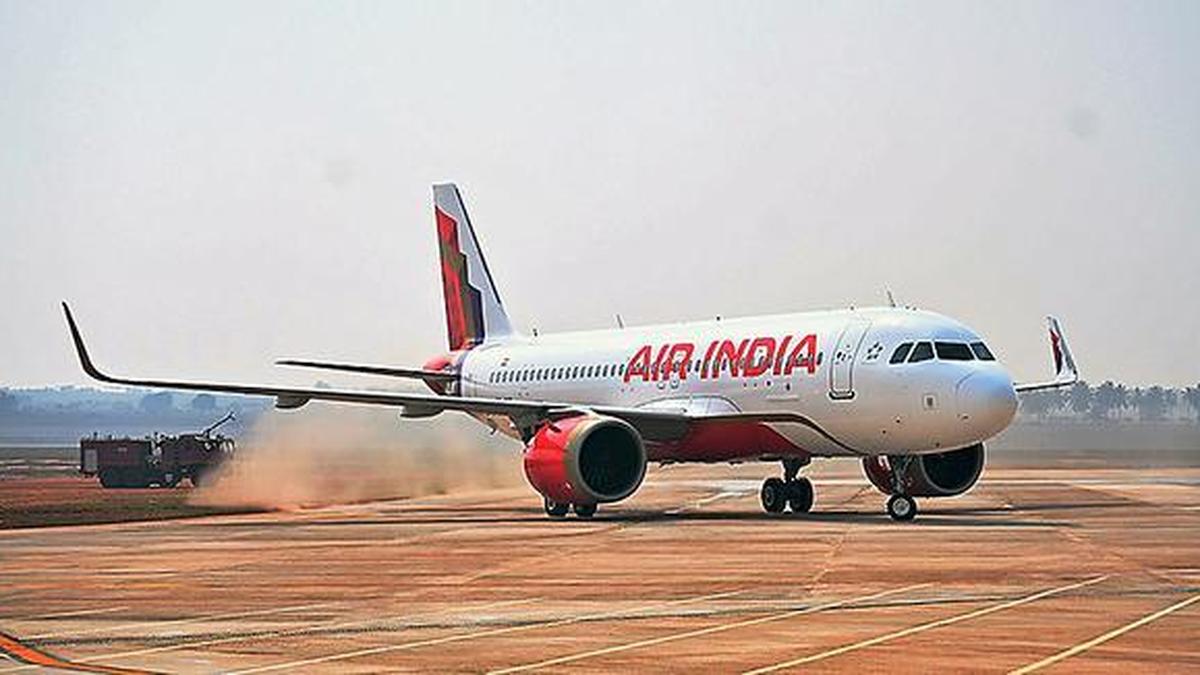
Air India’s revenue also dropped to ₹70,081 crore from ₹76,754 crore a year ago, indicating scaled-down operations amid geopolitical developments. | Photo Credit: th-online Administrator Air India’s financial turnaround suffered a major setback in FY26, with the privatised airline reporting a net loss of ₹22,238 crore, more than double the ₹10,859 crore loss suffered in the previous financial year, according to Tata Sons Annual Report for FY26. The company’s revenue also dropped to ₹70,081 crore from ₹76,754 crore a year ago, indicating the scaled down operations amidst geopolitical developments.It appears the quantum of loss at Air India during the current quarter will be increasing going by the dismal quarterly performance of Singapore Airlines which reported a loss of $58.7 million in the first quarter, the first loss since 2022 when it was impacted by COVID-19.Singapore Airlines’ quarterly losses were attributed to steep hike in jet fuel prices and mounting losses at Air India where it has 25% stake. In his message to shareholders, Tata Sons Chairman N. Chandrasekaran described FY26 as the airline’s “most challenging year” since its acquisition by the Tata Group in January 2022. He attributed the deteriorating financial performance to a combination of geopolitical tensions, operational disruptions and one-off events that significantly affected the airline’s operations.“Few businesses are as vulnerable to war and fuel pressures as aviation. This year, Air India faced three external headwinds. Air space closures; West Asia conflict-driven fuel price hikes and foreign exchange fluctuations; and the crash of AI171 made it the most challenging year for Air India,” Mr Chandrasekaran said. The annual report also indicates that Air India’s transformation will take considerably longer than originally envisaged. “Rebuilding Air India is a long journey: fleet renewal, training, service transformation, network expansion. Every great airline in history was built over decades, not quarters,” he emphasised.“Given where it began, Air India’s transformation must be seen as a five- to ten-year journey, considering the years-long supply chain disruptions in key components, the need to overhaul legacy systems, culture and fleet, and the creation of a large cadre of technical and airline professionals,” he added. It means the turnaround which was planned as a five-year programme under the Vihaan.AI strategy, could now extend to up to a decade. He said rebuilding the airline requires modernising legacy technology systems, integrating multiple airline businesses, strengthening engineering capabilities, renewing the fleet and reshaping organisational culture.Despite the mounting losses, Tata Sons reaffirmed its commitment to Air India, describing the carrier as a long-term strategic investment. The group would continue to invest heavily in fleet expansion, customer experience, digital transformation and network growth, while integrating Air India with Vistara and Air India Express to create a stronger full-service and low-cost aviation platform.Air India’s losses also weighed on Tata Sons’ broader portfolio of new businesses, contributing significantly to higher aggregate losses during FY26. However, it maintained that sustained investments are essential to build a globally competitive airline capable of capitalising on India’s rapidly expanding aviation market.For FY26, Tata Sons’ revenue grew by 9.1% t o₹42,367 crore in FY26, while profit (after tax) climbed 21.8% to ₹31,961 crore.The Board of Tata Sons has recommended a final dividend of ₹ 1,10,717 per share. Published - July 28, 2026 09:09 pm IST
Air India’s FY26 losses more than double to ₹22,238 crore, turnaround deadline extended
Full Article
Original Source
Read the full article at Thehindu →KhanList aggregates and links to publicly available news content. We do not host full articles from third-party sources. Always verify important information with original sources.