
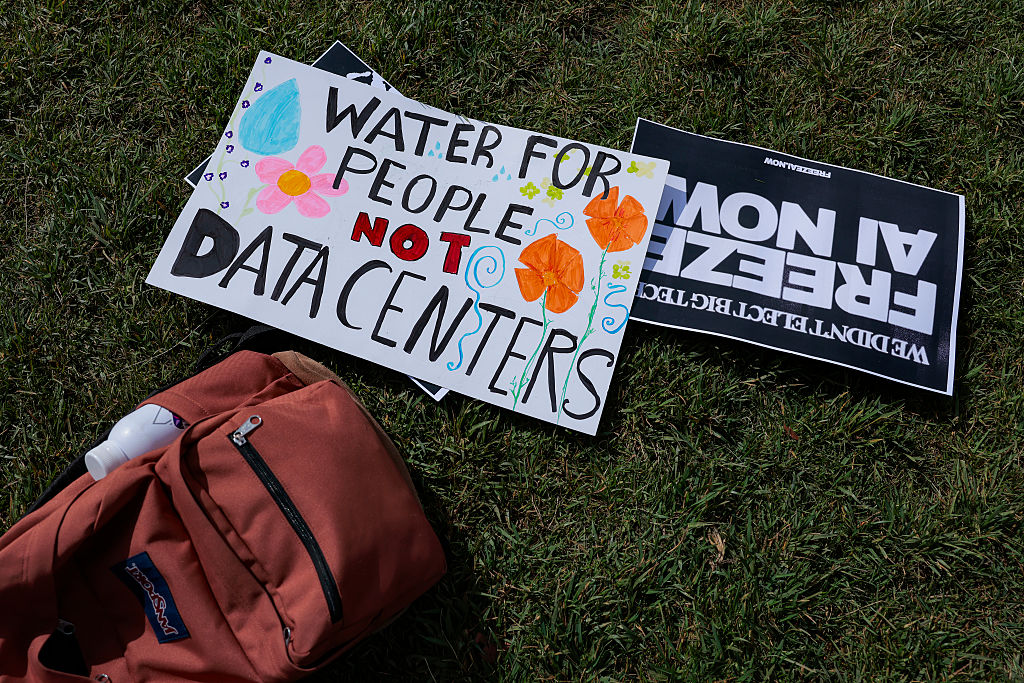
OpenAI is shifting its marketing strategy after the US midterm elections conclude this week, proposing to rebrand its data centers as “AI compute campuses.” The creator of ChatGPT is preparing a public relations campaign that could include regulatory lobbying and efforts to rehabilitate AI’s image, according to Axios. The push coincides with a potential blue wave in Congress. OpenAI Global Affairs Officer Chris Lehane is reportedly trying to steer the AI policy debate and to send a message that “AI should be built by and for people,” as Axios reports. The effort is a response to an increasingly enraged electorate, as backlash to AI data center construction becomes a unifying issue across party lines. A July Gallup poll found that as many as 70% of US adults are opposed to local data center construction, including Democrats, Republicans and independents. Supporters of AI data centers often argue that the construction and operation of these massive AI server farms bring job growth to local communities. But studies show that employment is limited, and in some cases temporary. Residents continue to rally against the environmental impacts of water contamination, the burning of fossil fuels and noise pollution. Lehane told Axios that OpenAI views the conversation as healthy and that “communities should hold companies responsible and accountable so they really and truly get a transformative benefit from these projects.” The company is trying to reframe AI adoption as a means to access economic opportunities. OpenAI’s new PR campaign aligns with Silicon Valley’s effort to repackage the controversial technology so it can move full speed ahead with building more data centers, which the White House has touted as vital engines for the US economy. President Donald Trump’s recent move to rename AI as “super intelligence” was another bid to dress up the capabilities of frontier labs, which have been under increased financial scrutiny by investors. A representative from OpenAI didn’t immediately respond to a request for comment. (Disclosure: Ziff Davis, CNET’s parent company, in 2025 filed a lawsuit against OpenAI, alleging it infringed Ziff Davis copyrights in training and operating its AI systems.) Voters will decide how much control Trump’s administration retains over Congress on Tuesday — and the AI industry is a big-ticket issue this cycle.Timothy A. Clary/AFP/Getty Images The lobbying loophole OpenAI’s post-midterms marketing package includes implementing speed limits and mandatory safeguards for AI model development, largely echoing Anthropic’s “pacing” talking points. The company is also trying to shape the international standards that dictate the technology’s development. Up to now, a lack of regulatory oversight has left top AI labs largely unchecked, leading to incidents where frontier models slipped past flimsy safety guardrails and caused real-world disruptions across the web. OpenAI’s lobbying strategy for an alleged “human-centered” path based on “trust” fits squarely in the company’s data center rebrand — all calculated to help deflect public criticism. If the company publicly advocates slowing its own AI development, it can be more effective in what critics call “regulatory capture,” a tactic that gives large AI companies significant advantages. In other words, if OpenAI helps write the rules meant to govern the industry, it can shape regulations to protect its market dominance. If frontier labs are considered the experts in constraining the industry, they can create a legal moat around themselves, making it more difficult for smaller competitors to enter the AI industry, while protecting their bottom lines from any real damage. Make no mistake: OpenAI wouldn’t advocate for any law that would explicitly disadvantage its market position.Thomas Fuller/SOPA Images/LightRocket/Getty Images Big Tech political alliances The Trump administration has been a major boon to the “Magnificent Seven,” the group of major tech companies that heavily influence the S&P 500 and global financial markets. After cozying up to the White House during the past two years, the most influential figures in Silicon Valley have been rewarded with a lax regulatory environment and expensive federal contracts. Many of the biggest tech and AI companies donated millions of dollars to the president’s inaugural fund and, more recently, to his $330 million White House ballroom project. (Apple and Nvidia were among the top contributors, at $25 million each.) As it stands, Trump is working directly with AI companies to define security threats and respond on their own terms. If the political tide turns in DC, however, it would make sense for Big Tech to make contingency plans for operating in a potentially less favorable environment. Democratic politicians have generally eyed the AI gold rush with greater outward skepticism and scrutiny, with some members of Congress even backing a resolution opposing AI company bailouts in the event of a financial bubble popping. Lehane told Axios he believes AI will be the primary issue voters care about in the next presidential election cycle, and that the midterms are a “bit of a movie trailer for what you’re going to see in 2028.” If nothing else, OpenAI is angling to make new political alliances before that time comes.
AI Data Centers Have a PR Problem. OpenAI Is Proposing a Rebrand
Full Article
Original Source
Read the full article at Cnet →KhanList aggregates and links to publicly available news content. We do not host full articles from third-party sources. Always verify important information with original sources.