
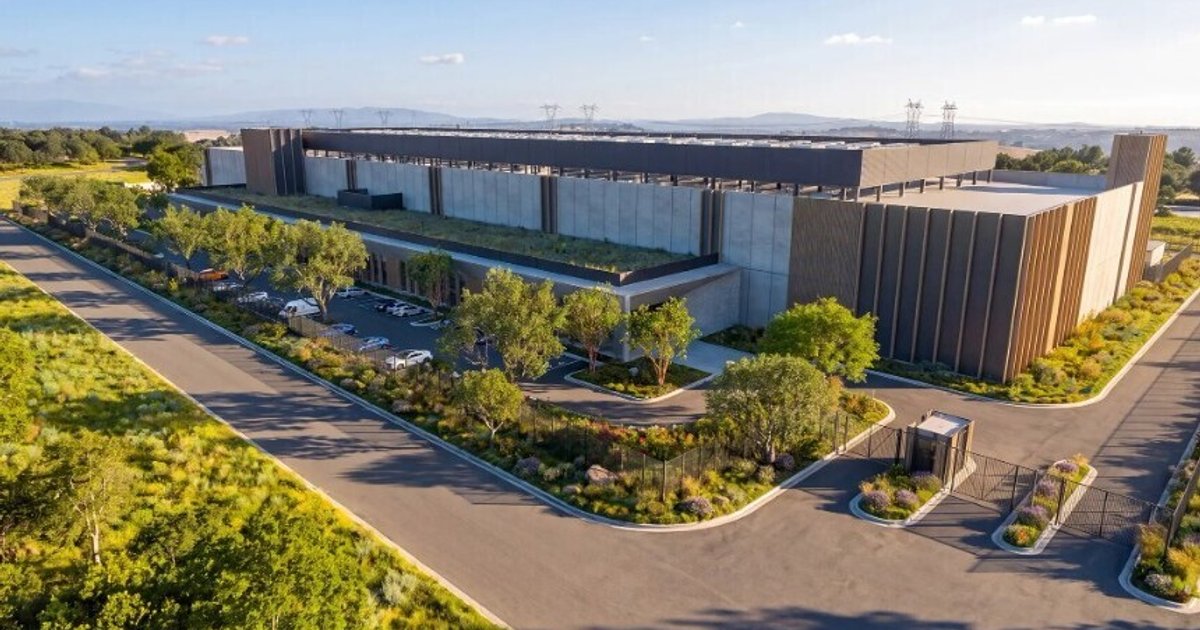
To counter the data centre backlash that has become an animating political force across the US, developers in California are suggesting an eco-friendly swop: Trade in a golf course – and its profligate water usage – for less-thirsty computer servers.In the City of Industry, a municipality in the suburban San Gabriel Valley region of Southern California, the owners of the 18-hole California Country Club have submitted plans to add a 99MW data centre to the 50ha site. The project, called the Los Angeles Recreation and Technology Park (LARTP), would also include a large green space and a smaller nine-hole course.By leveraging the private links for compute, LA-based Ramus Development says the new tech redevelopment will reduce overall water usage on the site. “It’s a unicorn site where we can reduce impacts and provide edge computing, if that is the use case, to a major metropolitan area like Los Angeles,” said Ramus president Stephen Cho. The proposal, submitted on Nov 3 by Ramus and contractors from Birtcher Development, is built to fend off the kind of community concerns about noise, utility bill increases and transparency that have engulfed data projects across the US in recent months.The 373,000 sq ft computing facility would be sited near the centre of the club’s property, with generators and mechanical gear facing the roar of the 605 freeway, the interstate highway that spans most of the length of the San Gabriel River.That placement is designed to reduce the impact of noise of the servers and 43 planned backup diesel generators away from surrounding neighbourhoods.Suburban homes in the neighbouring city of Whittier back up to the eastern side of the course, roughly 182m to 213m from the proposed data centre. Developers say that a local community benefits board will give those residents the opportunity to choose how best to utilise the remaining site.“We are committed to a transparent entitlement process and community-focused design,” said Cho. The LA tech park proposal serves as an example of how data centre developers are now packaging their projects to win over reluctant residents.Data centre bans are on the ballot this Election Day, and many candidates for local and state office have made data centre opposition a core part of their platform.The project also touches on another development trend: adapting current or former golf courses to other uses in areas where developable sites are at a premium.Greater Los Angeles alone, for instance, allocates roughly 4,046ha to the sport.In Northern Virginia’s “data centre alley”, some companies have bought up defunct courses to use as “nutrient banks” to partially offset the environmental damage their data centres wreak.One county-owned public course near Harrisburg, Pennsylvania, recently sold for more than US$45 million (S$57.6 million) to a developer who plans to plant an AI data centre on the property. In Northern California, another golf-course-to-data-centre transformation has been proposed for Pittsburg, a city in the East Bay region. The Avaio data centre project would create a hyperscale campus on the site of the Delta View Golf course, which closed in 2018.Initial approval of the project – which has not been rescinded – generated so much community pushback that the city enacted a temporary data center moratorium. Tough sellIn both the golf and data centre worlds, water usage can be a sore spot.A typical 18-hole course in the US Southwest soaks up 0.49 hectare-metre – or about 4,921 cu m – of water for every 0.4ha of irrigated area per year, according to the US Golf Association.The pitch for LARTP includes a promise that the computing facility will be far more water efficient. The California Country Club, built in the 1950s, currently uses about 548,884 cu m of water annually; shrinking it to a nine-hole course cuts the amount of irrigated turf from 39.2ha to 13.4ha, a 66% reduction.The data centre portion of the site is anticipated to consume just 1,135 cu m a year, thanks to the closed-loop system used to chill the servers, and the reconfigured golf course and computing infrastructure together will use 13% less water, said Brooke Birtcher Gustafson, president of Birtcher Development.Still, selling residents on new projects is an uphill battle – 71% of Americans would oppose a data centre in their backyard, according to a recent Heatmap poll. This part of Southern California has been a national leader in the fight against data centres and battery energy storage sites.In June, voters in nearby Monterey Park became the first in the US to ban new data centres by a public vote, and another data centre proposal at the Puente Hills Malls – famous for portraying the Twin Pines Mall in the 1985 film Back To The Future – has already met with fierce opposition. Bri Serrano and Andrew Chen, both community activists active in the No Data Centers San Gabriel Valley Coalition, are sceptical of any developers’ promises to address concerns over resource usage, energy costs and noise. (They haven’t been briefed on the specifics of the LARTP project.)“I don’t think there’s enough that they could do to make it to where they’re net neutral or net positive influence to the community,” said Chen. “It’s all net negative.” Another group in the San Gabriel Valley Coalition is fighting a 400MW battery storage site that the City of Industry approved in January. Backers of data centre projects have responded to the backlash by pointing to community benefit agreements that promise financial incentives like new fire stations and school investments; others make an effort to muffle the facilities’ low-frequency din or disguise the warehouse-like buildings with trees and landscaped buffers. Many communities remain unconvinced.In October in Hazle Township, Pennsylvania, locals rejected the developers’ offer of US$10,000 checks per household to allow a new development.“It’s not about the components of the benefit agreement, but the process,” said Adam Waitkunas of Milldam Public Relations, a firm that works with the data centre industry and has been tracking public opinion about new developments.“These communities feel like they are being told how things are going to go, and we’re giving you all this stuff without really getting their input.”Built for businessSiting LARTP in the City of Industry stands to be a big advantage.Shaped like a gerrymandered congressional district, it has fewer than 300 residents, with more than 90% of its land devoted to industrial development.Major power lines from Southern California Edison run adjacent to the proposed site, offering easy access to electricity.“We’re trying to really be smart about land planning and use,” said Gustafson. City of Industry spokeswoman Elizabeth Hansell, said that the city has only received one other data centre proposal, at the Puente Hills site.Its planning commission recommended a code amendment related to data centres in late 2025 that would allow more of such development.“The City of Industry was established as a business-friendly city, with a long history of supporting economic development, job creation and investment,” said Hansell.“As industries and technologies continue to evolve, the City regularly evaluates its zoning regulations to reflect changing business needs and opportunities.” LARTP’s developers have negotiated a Project Labor Agreement with the California Building Trades and estimate the project will create more than 1,500 jobs during construction. Ernesto Medrano, executive secretary of the Los Angeles/Orange Counties Building and Construction Trades Council, said in a statement that the proposal “represents a strong commitment to equity and opportunity embedded in how the project will be built”. Planning and entitlements is expected to take at least 18 to 24 months, during which the California Country Club will remain open.The club has been doing well, Cho said, but converting it into a nine-hole course would be a better fit for time-constrained golfers. Club representatives did not immediately respond to a request for comment. Even without a data centre element in the mix, converting golf courses can be a contentious process, as nearby residents often object to the loss of open space and raise concerns about density, traffic and loss of neighbourhood character.In nearby Woodland Hills, for example, neighbours complained that a 400-unit residential development proposed for a portion of the 37.6ha Woodland Hills Country club would imperil local wildfire evacuation routes. With the LARTP, a different kind of local debate has now been teed up. BLOOMBERG
California developers eye golf courses for data centre projects
Full Article
Original Source
Read the full article at Straitstimes →KhanList aggregates and links to publicly available news content. We do not host full articles from third-party sources. Always verify important information with original sources.