
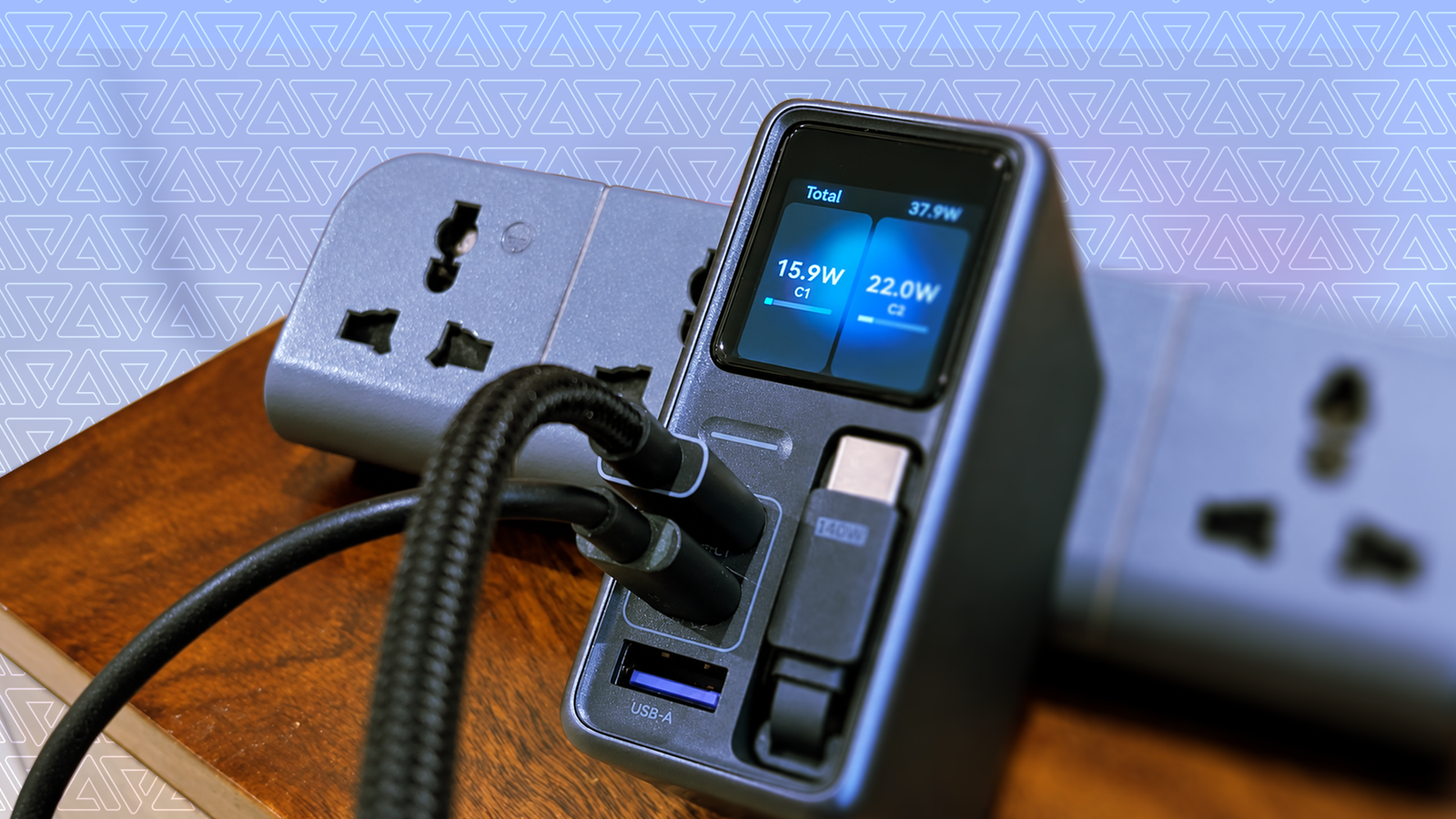
Published Sep 12, 2026, 10:15 AM EDT Akshay Bhalla was the former game guides editor for Screen Rant and the technology editor at MensXP. He has previously written about smartphones, apps, streaming, gadgets, and games for print, digital, and TV media outlets. When he isn’t writing about tech, he can often be found playing JRPGs, listening to music, or playing with his three dogs. You can reach Akshay at bhallanator @ proton dot me. I've used the same charger I got with my OnePlus device for years. But like many users, I also have multiple devices that need charging every day. Most smartphones have gotten rid of them altogether, while the few that provide one are basic Power Delivery (PD) chargers. Juggling multiple chargers for each device was becoming cumbersome, and some took their sweet time to charge fully. That's when I came across a GaN (Gallium Nitride) charger and wanted to test what it claimed. The GaN charger was the answer to all my charging needs A charger for all my devices To put things into perspective, I have to charge two phones, a MacBook Pro, a Nintendo Switch/Steam Deck, TWS earbuds, and an iPad almost every day. I use all of these devices regularly for work and entertainment, often at the same time. I work on my MacBook Pro while using my TWS buds for calls, or I have a short gaming session on my portable consoles during a break. But by evening, they all need charging after constant use. There have been many times when these devices were in constant use and needed charging at the same time. That's when I struggled to find enough outlets to charge them all at once and wished for a fast charger with multiple ports. After years of frustration, I upgraded to UGREEN's Nexode Pro 160W charger, which can fast-charge four devices at once. A GaN charger might not be familiar to everyone, but to keep it simple, GaN chargers are more efficient and smaller than their traditional silicon counterparts. These chargers often offer smart power management, low resistance, lower energy loss, and better heat dissipation. They're perfect for devices like the Google Pixel 11 that support faster charging speeds. But a GaN charger does more than stay cool. Traditional PD multi-port chargers often sacrifice speed, get absurdly large, and aren't smart enough to handle multiple loads. With the GaN charger, I can fast-charge four devices simultaneously, each at its own charging protocol, without sacrificing speed. When charging my devices, I no longer have to second-guess whether they're getting the right charging speed, either. The Nexode Pro has a TFT display that shows the exact power being drawn by a particular port. Speaking of ports, not all of them output the same power, though. The retractable USB-C cable and the USB-C1 port can deliver up to 140W, the C2 port up to 100W, and the USB-A port up to 22.5W. Charging speeds are limited to a device's negotiated protocol. For example, the Pixel 11 Pro/Pro XL only supports 30W/45W wired Power Delivery PPS fast charging, whereas other devices, such as laptops, require higher-wattage charging. For comparison purposes, I have a multi-port silicon PD charger that's more than a few years old. But when I connect my phone and the Nintendo Switch, it often gets confused between the two and charges them very slowly or fails to charge the Nintendo Switch. Unlike a GaN charger, my regular multi-port PD charger lacked smart power management, so it could not determine the optimal charging speed for each device. That was the main reason I upgraded to a GaN charger, and after spending a few weeks with it, I have zero complaints. Trying out the alternatives I was impressed with my experience with the UGREEN charger, but I needed a lighter travel charger. While I appreciate the Nexode Pro's heavy-duty build, it is a tad too heavy to lug around. It's perfect for my home workstation, but I needed something lighter. I needed a different GaN charger for my office bag that could handle my charging needs without costing as much. I bought two GaN chargers for testing: one from CMF Nothing and another from a relatively obscure brand called Chargeasap; both costing about $40 to $45. Both chargers gave me similar results, as they were rated for 100W output, had multiple USB-C ports, and supported most of the same charging protocols as the UGREEN. While both GaN chargers don't have a fancy display, they both output a respectable wattage, more than enough for me to charge multiple devices at work. But if I ever want to track how much power each port delivers, I can use a USB-C cable with a built-in display to show that information. A GaN charger doesn't deliver the full advertised power to each port; it divides power based on how many ports are in use at the same time. For example, if I'm using only the first USB-C port on either charger, it can fully charge my M1 MacBook Pro in about 30 to 45 minutes. But if I use multiple USB-C ports at the same time, the output from each port drops so that it can fast-charge every device at the optimal speed without overheating the brick. When I want to charge other devices, such as TWS earbuds or a smartwatch, I use the USB-A ports because these devices don't draw much power, and I can still charge other devices as a priority. A GaN charger unlocked a new level of versatility for me that wasn't possible with my regular PD charger, and I no longer have to scramble for multiple outlets either. UGREEN Nexode Pro 160W Charger with Retractable Cable Output Power 160W Cable included Yes Charging Ports 2X USB-C, USB-A The Ugreen Nexode Pro 160W GaN charger comes with a retractable USB-C cable, two USB-C ports, and a USB-A port. The charger lets users charge four devices at once and supports all modern charging protocols. Why upgrading to a GaN charger is essential It's worth the time and money saved If you're like me and charge multiple devices every day, I recommend upgrading to a GaN charger. GaN chargers are handy when you are traveling, since hotels and office spaces often don't provide multiple outlets for every device. Now that many phones and other devices don't come with a charger in the box, it no longer makes sense to buy a charger for each device or use a single-port charger for multiple devices. With a multi-port GaN charger, you won't need to carry multiple chargers. A GaN charger's multiple ports also help reduce clutter since I only need one for all of my devices. I initially avoided GaN chargers when they launched because of their high asking price, but that is no longer the case. I don't need a 160W charger or a four-port brick. UGREEN, Anker, Baseus, Nothing, and Chargeasap also sell affordable GaN chargers that might suit your needs. While I don't recommend buying a GaN charger from unknown brands, the brands mentioned above are a few you can trust. Why I'm never going back to regular chargers After using and testing three GaN chargers, a regular charging brick feels outdated and inadequate for modern devices. GaN chargers deliver the right speeds when you need to charge multiple devices simultaneously. They reduce clutter and free up space in your bag or on your bedside table. I now see chargers as a long-term investment, not an afterthought after buying a new gadget. They've become an essential accessory for all my devices, whether I'm at my workstation or in a hotel room.
After years of outlet hunting, a GaN charger finally solved my multi-device nightmare
Full Article
Original Source
Read the full article at Androidpolice →KhanList aggregates and links to publicly available news content. We do not host full articles from third-party sources. Always verify important information with original sources.